Tissue engineering aims to develop biological substitutes that can restore, maintain, or improve the function of damaged tissues and organs. As researchers continue to explore advanced biomaterials, electrospinning has emerged as an important technology for creating structures that closely resemble the natural extracellular matrix. By producing extremely thin fibers with controllable properties, electrospinning supports the development of scaffolds for a wide range of tissue engineering applications.
Matregenix works with advanced nanofiber technologies that help researchers and manufacturers explore new possibilities in biomedical materials. Understanding how electrospinning works and why it matters can provide valuable insight into the future of regenerative medicine.
What Is Electrospinning?
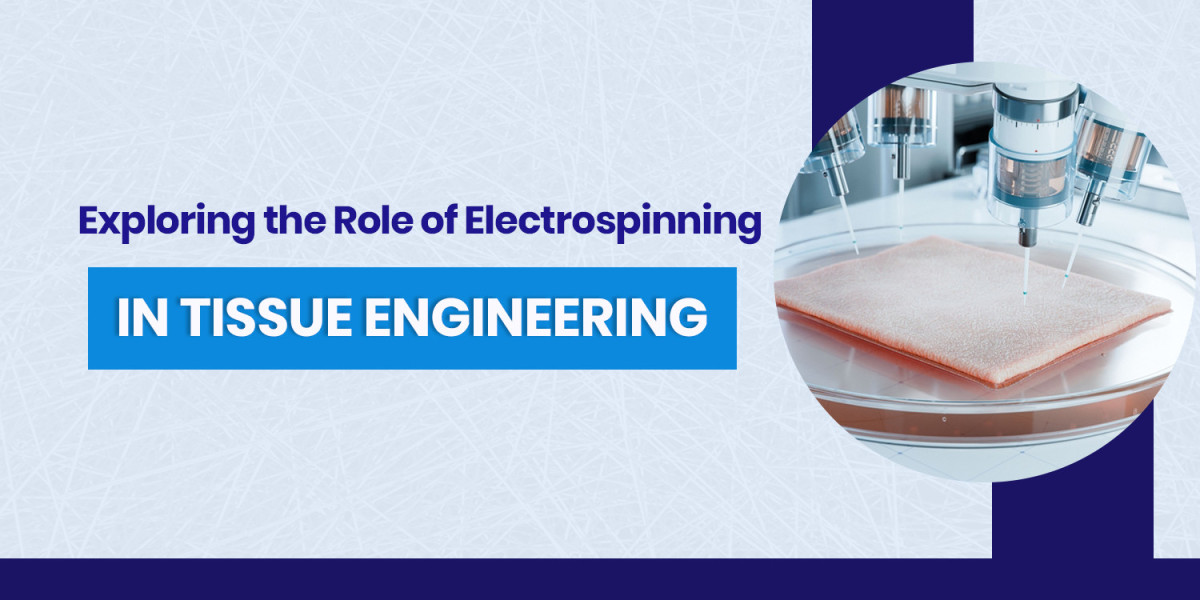
Electrospinning is a versatile fiber fabrication technique that uses an electric field to produce microfibers and nanofibers from polymer solutions or melts. During the process, a polymer solution moves through a small needle while a high voltage creates an electrically charged jet. As the jet travels toward a grounded collector, the solvent evaporates and leaves behind a network of fine fibers.
Researchers can adjust parameters such as polymer concentration, applied voltage, flow rate, collector distance, and collector design. These controls allow them to create fibers with different diameters, orientations, porosities, and surface characteristics.
This flexibility makes electrospinning particularly useful for tissue engineering, where scaffold structure can strongly influence cell behavior.
Why Scaffolds Matter in Tissue Engineering
Tissue engineering often relies on scaffolds that provide structural support while cells grow, organize, and produce new tissue. An effective scaffold should provide an environment that supports cell attachment, proliferation, migration, and differentiation.
The natural extracellular matrix contains a complex network of nanoscale fibers. Electrospinning can produce fibrous structures that mimic several physical characteristics of this environment.
Electrospun scaffolds can offer:
- High surface area for cell attachment
- Adjustable fiber diameter
- Controlled fiber orientation
- Interconnected porous structures
- Tunable mechanical properties
- Opportunities for incorporating bioactive materials
These characteristics make electrospun nanofibers valuable candidates for different regenerative medicine strategies.
Electrospinning for Skin Tissue Engineering
Skin is one of the most widely studied applications of electrospun scaffolds. Researchers can develop nanofibrous membranes that support wound healing while providing a protective structure over damaged tissue.
Electrospun materials can be engineered to support cell growth and create an environment suitable for tissue regeneration. Depending on the polymer and fabrication approach, researchers can also modify scaffold characteristics such as moisture management, degradation rate, and mechanical strength.
Bioactive compounds can sometimes be incorporated into electrospun fibers to create multifunctional scaffolds. This approach can help researchers investigate advanced wound care materials and controlled delivery systems.
Applications in Bone and Cartilage Regeneration
Electrospinning also has potential in bone and cartilage tissue engineering. Bone regeneration requires scaffolds with suitable mechanical and biological characteristics, while cartilage presents unique challenges because of its specialized structure and limited natural regenerative capacity.
Researchers can combine electrospun fibers with other materials to develop composite scaffolds. For example, electrospun polymers can provide a fibrous framework while ceramic or bioactive components contribute additional properties.
Fiber alignment can also play an important role. Controlling fiber orientation may help researchers create scaffolds that better reflect the structural organization of specific tissues.
Supporting Nerve Tissue Engineering
The nervous system presents complex regenerative challenges. Electrospinning provides researchers with a method for producing aligned nanofibrous structures that can potentially guide cellular growth.
Aligned fibers can provide physical cues that influence the direction of cell movement and neurite extension. Researchers are therefore investigating electrospun scaffolds for applications involving nerve repair and regeneration.
The ability to customize fiber alignment, material composition, and scaffold architecture makes electrospinning an attractive platform for developing experimental nerve tissue engineering solutions.
Electrospinning in Cardiovascular Tissue Engineering
Cardiovascular tissue engineering requires materials that can withstand mechanical forces while supporting appropriate cellular interactions. Electrospun scaffolds can be designed with different fiber structures and mechanical properties to investigate applications involving blood vessels and other cardiovascular tissues.
Researchers can also explore multilayered or composite structures that combine different materials within a single scaffold. Such approaches may help address the complex requirements of vascular tissue regeneration.
Incorporating Bioactive Materials
One of the major advantages of electrospinning is the ability to combine polymers with other functional components. Researchers can investigate the incorporation of growth factors, proteins, nanoparticles, drugs, or other bioactive substances into electrospun fibers.
These materials can potentially provide additional biological functions while maintaining the structural advantages of nanofibrous scaffolds.
However, successful incorporation requires careful control. Processing conditions must preserve the desired properties of sensitive biological materials while producing consistent fibers.
Challenges in Electrospinning for Tissue Engineering
Despite its advantages, electrospinning still presents several challenges. Many tissue engineering applications require scaffolds with sufficient thickness, mechanical strength, controlled degradation, and suitable pore structures.
Traditional electrospun membranes can sometimes have densely packed fibers that restrict cell penetration. Researchers are therefore developing techniques such as multilayer structures, 3D electrospinning, fiber patterning, and hybrid fabrication methods to improve scaffold architecture.
Scalability and manufacturing consistency also remain important considerations. Moving from laboratory research to commercial production requires reliable processes, quality control, reproducibility, and suitable material selection.
The Future of Electrospinning in Tissue Engineering
The future of electrospinning will likely involve increasingly sophisticated scaffold designs. Researchers are exploring advanced manufacturing approaches that combine electrospinning with 3D fabrication, biomaterials engineering, surface modification, and controlled delivery technologies.
Improved control over fiber architecture may enable the development of scaffolds that more closely reproduce the physical and biological characteristics of specific tissues. Automation and scalable production methods could also help make advanced electrospun materials more practical for larger research and manufacturing applications.
Matregenix contributes to the broader nanofiber technology landscape by developing materials and solutions that support research across biomedical and other advanced applications. As tissue engineering continues to evolve, nanofiber technology can remain an important tool for creating innovative biomaterial platforms.
Conclusion
Electrospinning offers tissue engineering researchers a flexible way to create nanofibrous scaffolds with customizable structures and properties. From skin and bone regeneration to nerve and cardiovascular applications, electrospun materials can provide valuable structural and functional characteristics for regenerative research.
While challenges such as scalability, pore control, mechanical performance, and biological compatibility remain, continued innovation is expanding the possibilities of this technology. With advances in materials, fabrication, and scaffold design, electrospinning can play an increasingly important role in the development of next generation tissue engineering solutions.