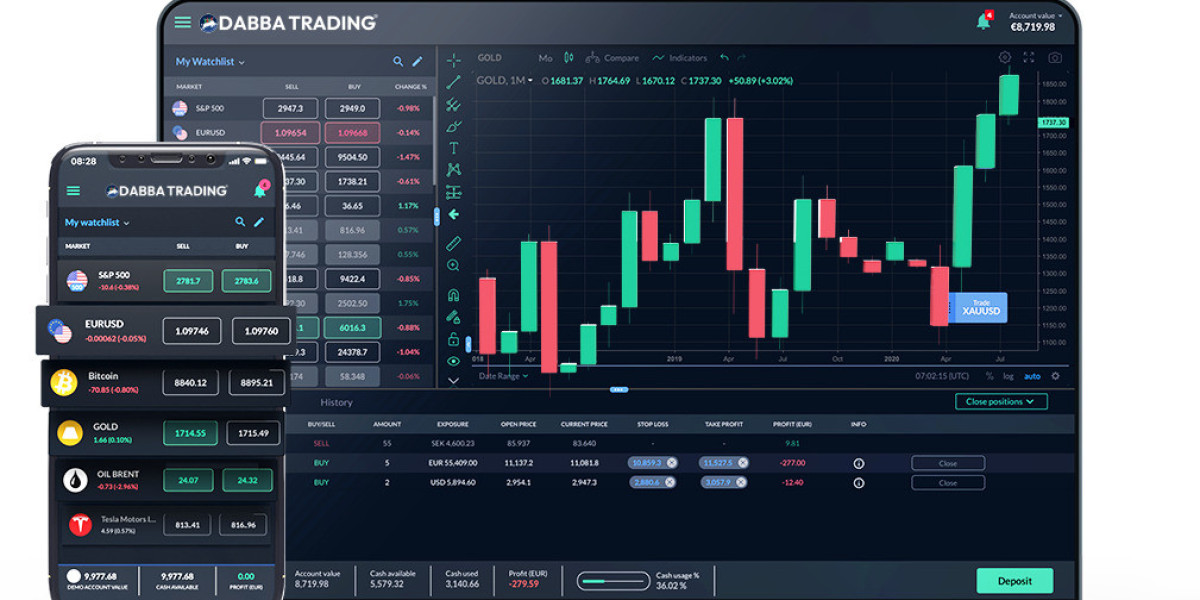
Online trading has made financial markets more accessible across India. Investors can now buy and sell shares, commodities, derivatives, and other financial instruments through registered brokers using smartphones and computers.
However, the growth of online trading has also created opportunities for unauthorized trading systems. One such practice is Dabba Trading, sometimes promoted online through websites, mobile applications, Telegram groups, WhatsApp groups, Instagram pages, or private networks.
If you have searched for Dabba Trading Online in India, it is important to understand what the term actually means before considering any platform offering such services.
Dabba trading is not simply another form of stock trading. It operates outside recognized stock exchanges and outside the regulated trading infrastructure.
The National Stock Exchange states that trades carried out outside the stock-exchange mechanism by unregistered entities or individuals are considered dabba trading. Organizing, assisting, or participating in dabba trading is illegal and punishable under Indian law.
This guide explains how online dabba trading works at a general level, why people are attracted to it, the risks involved, its legal status in India, and safer alternatives for traders.
What Is Dabba Trading?
Dabba trading is an unofficial form of trading in which transactions are recorded privately by an operator instead of being executed through a recognized stock exchange.
The word “dabba” is commonly used to describe an informal or parallel trading system.
In normal stock-market trading, an investor places an order through a broker registered with the Securities and Exchange Board of India. That trade is routed to an exchange such as the NSE or BSE and becomes part of the regulated market infrastructure.
In dabba trading, the transaction may only exist inside the operator's private records.
NSE investor education material explains that dabba trading uses prices from recognized stock exchanges as benchmarks, but the customer's transaction itself does not get executed through the exchange system.
That distinction is extremely important.
A trader may see prices that look similar to genuine stock-market prices while the actual transaction remains outside the regulated market.
What Is Online Dabba Trading?
Traditionally, dabba trading was associated with local operators who accepted trades through telephone calls or informal networks.
Technology has changed how these networks may operate.
Today, unauthorized trading services can appear through:
Websites
Private mobile applications
Social-media accounts
Messaging groups
Online trading communities
Unregistered trading portals
NSE has specifically warned investors about unregulated trading platforms, unauthorized trading applications, guaranteed-return schemes, and entities offering dabba or illegal trading services.
This means online dabba trading is still dabba trading simply delivered through digital technology.
Using a website or mobile application does not make an unauthorized trading operation legal.
How Does Dabba Trading Online Work?
The basic concept behind dabba trading is comparatively simple.
A customer may place a trade based on the market price of a stock, index, commodity, or another financial instrument.
Instead of sending the order to a recognized exchange, the dabba operator records the position internally.
For example, the market price displayed may follow an NSE-listed instrument. The customer may believe they have taken a trading position based on that price.
However, the position may exist only in the operator's internal system.
Profits and losses are then calculated according to price movements.
The key issue is that the underlying transaction has not necessarily taken place through the recognized exchange.
This removes several protections associated with regulated market trading.
Is Dabba Trading Legal in India?
No.
Dabba trading is illegal in India.
NSE explicitly states that organizing, assisting in organizing, or participating in dabba trading is illegal, prohibited by law, and punishable.
Investors should therefore distinguish between legitimate online trading and unauthorized trading platforms.
A polished application, professional website, active Telegram group, or large social-media following does not establish that an entity is legally authorized to provide securities trading services.
Why Do People Search for Dabba Trading Online in India?
Several features may attract people toward unregulated trading arrangements.
Some operators may advertise simplified account access, highly leveraged trades, reduced charges, fast settlements, trading tips, or unusually high returns.
Certain schemes may also market themselves as alternatives to conventional stockbrokers.
But convenience does not eliminate regulatory risk.
One particularly important warning sign is the promise of guaranteed or assured profits.
NSE advises investors to be cautious of entities promising assured returns, handling trading accounts, providing unauthorized trading applications, or operating illegal trading services.
Financial markets involve risk. Claims suggesting consistent or guaranteed profits should therefore be treated cautiously.
Major Risks of Online Dabba Trading
The dangers associated with dabba trading go beyond ordinary market losses.
1. No Exchange Protection
Trades executed outside recognized exchanges do not receive the same protections available through regulated exchange transactions.
NSE says dabba transactions are not eligible for exchange compensation, claims, or support.
2. Counterparty Risk
In normal exchange trading, established clearing and settlement systems help manage transaction risk.
With dabba trading, customers can become dependent entirely on the private operator.
If the operator refuses to pay, disappears, blocks the user's account, or closes the platform, recovering funds may become extremely difficult.
3. Manipulated Trading Platforms
An unauthorized application can display almost anything its operator chooses.
The user may have limited ability to verify whether:
Trades are genuine
Prices are accurate
Profits are real
Balances represent actual funds
Withdrawals will be honored
The appearance of a sophisticated trading interface should not be confused with regulatory authorization.
4. No Normal Exchange Dispute Resolution
Investors trading through legitimate exchange systems have access to various complaint and dispute-resolution mechanisms.
People dealing through prohibited schemes generally do not receive those protections.
NSE specifically warns that investors dealing with unauthorized schemes may lose access to exchange investor protection, dispute resolution, and grievance mechanisms.
5. Risk of Fraud
Online dabba trading can overlap with other forms of financial fraud.
Users may encounter fake trading applications, impersonation of registered brokers, fabricated profit dashboards, guaranteed-return claims, or pressure to deposit additional money.
6. Legal Risk
Participating in unauthorized trading does not merely create financial risk.
Dabba trading itself is prohibited.
That makes its risk profile substantially different from losing money during normal market trading.
Dabba Trading vs Legal Online Trading
Understanding the difference between the two is essential.
| Feature | Regulated Online Trading | Dabba Trading |
|---|---|---|
| Executed on recognized exchange | Yes | Generally no |
| SEBI-registered intermediary | Required | Often absent |
| Official exchange transaction | Yes | No |
| Regulatory oversight | Yes | Outside normal framework |
| Exchange grievance mechanisms | Available | Generally unavailable |
| Investor protection mechanisms | Available subject to applicable rules | Not available through exchange |
| Legality | Legal when conducted properly | Illegal |
The biggest difference is therefore not whether trading happens online.
It is where and through whom the transaction is executed.
How to Identify a Suspicious Online Trading Platform
Several warning signs should make investors cautious.
Be particularly careful when a platform:
Cannot demonstrate registration with SEBI
Promises guaranteed investment returns
Claims there is no possibility of loss
Operates mainly through Telegram or WhatsApp
Pressures users to deposit money quickly
Requests trading passwords or login credentials
Uses unofficial applications
Claims unusually high returns with little risk
Offers securities trading without a normal broker account
Cannot provide verifiable exchange trade records
NSE advises investors to deal only with SEBI-registered brokers and intermediaries.
Dabba Trading Apps in India
People sometimes search online for terms such as:
Dabba Trading App
Dabba Trading APK
Online Dabba Trading App
Dabba Trading App India
The existence of an application does not change the regulatory status of the activity.
An app can be designed to resemble a legitimate brokerage platform even when it does not route orders through a recognized stock exchange.
NSE has warned that unauthorized entities may operate unregulated trading platforms or applications that resemble legitimate trading services.
For this reason, downloading an unknown trading APK from unofficial sources can introduce both financial and cybersecurity risks.
Is Dabba Trading the Same as Intraday Trading?
No.
Intraday trading is not automatically illegal.
Intraday trading generally means opening and closing a trading position within the same trading day.
When intraday transactions are executed through registered intermediaries and recognized exchanges according to applicable regulations, they operate within the regulated market framework.
Dabba trading refers to trades occurring outside that authorized exchange mechanism.
The trading duration is therefore not what makes dabba trading illegal.
The issue is the unauthorized trading structure.
Dabba Trading and Futures & Options
Dabba operators may reference prices from several market instruments, including equities, indices, commodities, futures, or options.
However, using prices from a legitimate exchange does not transform an off-exchange transaction into an official exchange trade.
NSE investor material explains that dabba transactions may use recognized exchange prices as benchmarks while the actual transactions remain recorded only in the operator's books.
Anyone interested in derivatives should instead use regulated market channels and understand that futures and options involve significant financial risk.
What Should Investors Use Instead?
Investors who want to participate in Indian securities markets should use regulated market infrastructure.
A safer approach includes:
Verify that the broker or intermediary is registered with SEBI.
Use official broker websites or applications.
Confirm that transactions appear in legitimate trading records.
Review contract notes and account statements.
Keep registered mobile numbers and email addresses updated.
Never share trading passwords or sensitive login details.
Be skeptical of guaranteed-return schemes.
SEBI's investor education material also advises investors not to deal with unregistered brokers and specifically warns against dabba trading.
Why Regulatory Protection Matters
Financial regulation does not eliminate investment losses.
Stocks, derivatives, commodities, and other market instruments can still lose value.
What regulation provides is a structured system for trading, settlement, record keeping, intermediary oversight, complaints, and investor protection.
Dabba trading moves transactions outside much of this framework.
That is why apparently lower costs or easier access should be considered alongside the substantially higher legal and counterparty risks involved.
Read More Article:-
Final Thoughts
Searching for Dabba Trading Online in India may lead to websites, groups, applications, and social-media accounts presenting themselves as trading platforms.
The most important fact to understand is that dabba trading is not a legitimate alternative version of normal stock-market trading.
It involves transactions conducted outside recognized exchange mechanisms and through unauthorized arrangements.
NSE clearly categorizes dabba trading as illegal and warns investors that such transactions do not qualify for normal exchange compensation, claims, or investor support.
For anyone interested in trading or investing in India, using SEBI-registered intermediaries and recognized exchanges provides a regulated and significantly more transparent framework.
Frequently Asked Questions
Is dabba trading legal in India?
No. Dabba trading is prohibited in India. NSE states that organizing, assisting, or participating in dabba trading is illegal and punishable.
What is online dabba trading?
Online dabba trading refers to unauthorized off-exchange trading conducted through digital channels such as websites, apps, messaging services, or other private platforms. The trades are not executed through the normal recognized stock-exchange mechanism.
Is a dabba trading app legal in India?
An application does not become legal simply because it provides a professional trading interface. If it facilitates unauthorized off-exchange securities trading, the underlying activity remains prohibited.
Is dabba trading the same as stock trading?
No. Normal stock trading through a SEBI-registered intermediary routes eligible transactions through recognized exchange infrastructure. Dabba trades are generally maintained outside that system.
Can I recover money lost through dabba trading?
Recovery can be significantly more difficult because prohibited transactions do not receive normal exchange investor protections or dispute-resolution support. NSE advises investors that exchange compensation and support are not available for dabba transactions.
Why is dabba trading risky?
Major risks include fraud, operator default, manipulated balances, withdrawal problems, lack of exchange protection, absence of normal grievance mechanisms, and legal consequences.
How can I check whether a trading broker is legitimate?
Investors should verify that the broker or intermediary is registered with SEBI and use recognized exchange or regulatory resources to confirm its credentials.
Does dabba trading happen through Telegram and WhatsApp?
Unauthorized trading operations can use social-media and messaging platforms to reach potential customers. NSE has warned investors about illegal trading services and unregulated platforms promoted through digital channels.
Is intraday trading illegal in India?
No. Intraday trading itself is not illegal when conducted through authorized intermediaries and recognized market infrastructure according to applicable regulations.
What is the safest alternative to dabba trading?
People who want exposure to Indian financial markets should use SEBI-registered intermediaries and recognized exchanges while understanding the investment risks associated with the products they trade.