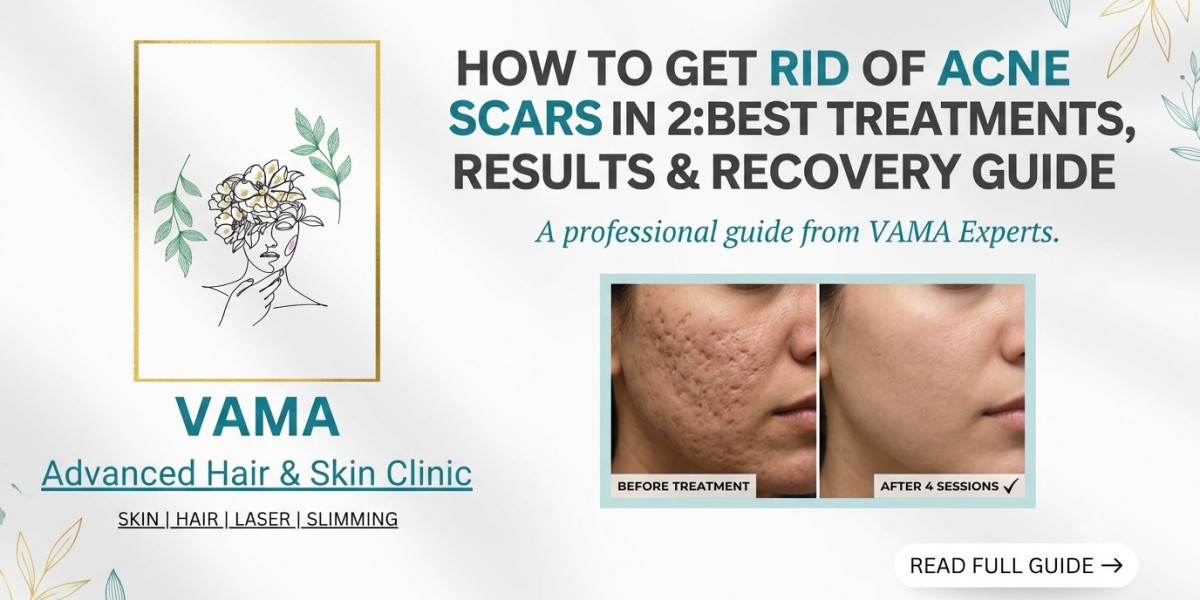
Acne may disappear, but the marks and scars it leaves behind can remain for months or even years. Fortunately, advances in dermatology have made it possible to significantly improve the appearance of many types of acne scars through personalized treatments.
If you are searching for acne scar removal, it is important to understand that there is no single treatment that works equally well for every scar. The right approach depends on whether you have depressed scars, rolling scars, boxcar scars, ice-pick scars, pigmentation, or raised scars.
In 2026, modern dermatology increasingly focuses on combination treatment plans tailored to scar type, skin tone, severity, and individual goals. The American Academy of Dermatology (AAD) also emphasizes that different acne scars require different treatments and that a dermatologist should assess the scars before treatment.
What Causes Acne Scars?
Acne scars usually develop after significant inflammation damages the deeper layers of the skin. Picking, squeezing, or repeatedly irritating acne can increase the risk of permanent scarring.
There are two broad categories:
- Depressed Acne Scars
These appear as indentations in the skin and include:
- Ice-pick scars
- Boxcar scars
- Rolling scars
These scars are often associated with changes in collagen and the deeper structure of the skin.
- Raised Acne Scars
These develop when the skin produces excessive collagen during healing. Hypertrophic scars and keloids fall into this category and require different treatment approaches from depressed scars.
It is also important to distinguish acne scars from post-acne dark or red marks. Pigmentation may improve with appropriate skincare and treatment, while true depressed scars generally require procedures to improve texture.
Can Acne Scars Be Completely Removed?
This is one of the most common questions people ask when researching acne scars treatment.
The realistic answer is that treatment can make many acne scars significantly less noticeable, but completely erasing every scar is not always possible.
Different treatments work on different aspects of scarring. Some stimulate collagen, some resurface the skin, and others release scar tissue beneath the surface.
The American Academy of Dermatology notes that treatment can reduce the appearance of depressed acne scars, but selecting the right treatment requires identifying the type of scar first.
Therefore, be cautious of clinics or products promising 100% permanent acne scar removal.
Best Acne Scar Treatments in 2026
There are several professional treatments available today. The best option depends on your specific scar type and skin condition.
- Micro needling
Micro needling uses very fine needles to create controlled micro-injuries in the skin. This stimulates the body's natural collagen-production process.
As collagen develops, the skin may gradually become smoother and acne scars may become less noticeable.
Micro needling is commonly considered for depressed acne scars and can also be combined with other treatments. The AAD notes that multiple sessions are often needed, and visible improvement develops gradually as collagen forms.
Potential benefits
- Improves uneven skin texture
- Supports collagen production
- Can reduce the appearance of depressed scars
- Minimal invasiveness
- Suitable for many skin tones
The number of sessions depends on the severity and type of scarring.
- Fractional Laser Treatment
Laser resurfacing can improve skin texture and reduce the appearance of certain acne scars by stimulating collagen and remodeling the skin.
Depending on the laser used, downtime can vary. Some treatments require more recovery than others.
Laser treatment should be selected carefully according to scar type and skin characteristics. The AAD explains that lasers may be used as part of a personalized acne-scar treatment plan and that more than one treatment may sometimes be required.
Potential benefits
- Improves uneven texture
- Supports collagen remodeling
- Can reduce the appearance of certain depressed scars
- May improve overall skin smoothness
- Subcision for Rolling Acne Scars
Subcision is particularly useful for certain rolling scars that are tethered to the underlying tissue.
During the procedure, a specialized needle is used beneath the skin to release fibrous bands pulling the scar downward.
Once the tethering is released, the depressed area can become less noticeable. Depending on the scar, subcision may be combined with another procedure.
A dermatologist should determine whether your scars are actually tethered before recommending this procedure.
- Chemical Peels
Chemical peels use professionally selected chemical solutions to exfoliate the skin and encourage skin renewal.
Certain peels can be useful for acne, pigmentation and some forms of acne scarring. The strength and type of peel should be selected according to the patient's skin and treatment objective.
The AAD notes that chemical peels may be used as part of acne-scar treatment and that mild or medium peels may require multiple sessions.
Important: Strong chemical peels should not be performed at home without appropriate medical supervision.
- PRP with Micro needling
Platelet-rich plasma (PRP) may be combined with micro needling as part of an acne-scar treatment plan.
In this approach, a small quantity of the patient's blood is processed to obtain platelet-rich plasma, which can then be applied or used according to the treatment protocol.
The AAD notes that micro needling with PRP can be used to improve acne scarring and that studies have reported improved scar appearance with combination approaches.
- Combination Acne Scar Treatment
One of the most important developments in modern scar management is the use of combination treatments.
Why?
Because acne scars are not always identical.
One person may have rolling scars, another may have deep ice-pick scars, while someone else may have pigmentation combined with uneven texture.
A personalized plan could potentially combine procedures such as:
- Micro needling
- Fractional laser
- Subcision
- Chemical peels
- PRP
- Other dermatologist-recommended procedures
The AAD specifically notes that dermatologists may use more than one treatment to achieve better results for certain patients.
What About Back Acne Treatment?
Acne scars are not limited to the face.
Back acne can leave behind dark marks, discoloration, and sometimes permanent scars. If you are looking for back acne treatment, the first step is to control active acne before focusing primarily on the scars.
Treating ongoing acne is important because new breakouts can create additional scars.
Depending on the condition, a dermatologist may recommend topical medications, oral medications, procedures, or a combination approach. The appropriate treatment depends on the severity and type of acne.
Once active acne is controlled, remaining scars or pigmentation can be assessed separately.
How Many Sessions Are Needed?
There is no universal number of sessions for acne-scar treatment.
The number can depend on:
- Type of acne scars
- Depth of scars
- Skin type
- Number of affected areas
- Treatment selected
- Previous treatments
- Individual healing response
For example, the AAD notes that micro needling for acne scars may require a series of treatments rather than a single session.
Your dermatologist can create a treatment schedule after examining your skin.
Acne Scar Treatment Recovery
Recovery depends heavily on the procedure.
After Micro needling
Temporary redness, sensitivity, or mild swelling may occur. Skin generally needs gentle care while it recovers.
After Laser Treatment
Redness, swelling, sensitivity, peeling, or other temporary effects may occur depending on the laser and treatment intensity.
After Chemical Peel
Depending on the peel, you may experience redness, dryness, peeling, or temporary sensitivity.
After Subcision
Temporary swelling or bruising can occur around the treated area.
Your provider should give you personalized aftercare instructions. The AAD recommends following post-treatment skincare guidance and emphasizes that swelling or discoloration can occur temporarily after some acne-scar procedures.
When Will You See Results?
Acne-scar improvement is usually gradual.
Treatments that stimulate collagen do not produce their full effect immediately because the skin needs time to remodel collagen and improve its structure.
You may notice some improvement after the initial healing period, but meaningful results can require multiple sessions and several months.
The AAD notes that collagen-based treatments such as microneedling produce gradual results, with full improvement taking time.
Therefore, patience is an important part of the treatment process.
How to Choose an Acne Scar Treatment Clinic?
If you are searching for acne scar treatment near me, don't choose a clinic only based on price or promotional offers.
Consider the following:
✔ Proper Skin Assessment
The clinic should identify the type and severity of your scars before recommending treatment.
✔ Personalized Treatment Plan
Different scars often require different approaches.
✔ Qualified Medical Professional
Procedures such as lasers, micro needling and chemical peels should be performed or supervised by appropriately trained professionals.
✔ Realistic Expectations
A responsible provider should explain what improvement is realistically achievable.
✔ Appropriate Aftercare
Good aftercare is important for healing and minimizing potential complications.
VAMA Clinics: Personalized Acne Scar Treatment
At VAMA Clinics, acne-scar management should begin with understanding your skin rather than simply selecting a popular procedure.
A personalized consultation can help evaluate:
- Acne activity
- Scar type
- Scar depth
- Skin texture
- Pigmentation
- Skin tone
- Previous treatments
- Treatment goals
Based on the assessment, an appropriate treatment approach can be discussed.
The objective is to improve the appearance and texture of acne-scarred skin while maintaining realistic expectations about the treatment process.
Acne & Scar Treatment: Why Treat Active Acne First?
If you continue to experience frequent acne breakouts, treating existing scars alone may not be enough.
New acne lesions can potentially create additional scars.
Therefore, a complete acne & scar treatment plan may involve two stages:
Stage 1: Control active acne and inflammation.
Stage 2: Assess and treat the remaining scars and pigmentation.
The AAD recommends controlling active acne before beginning many acne-scar procedures because preventing new breakouts can help prevent additional scarring.
Frequently Asked Questions
What is the best treatment for acne scars?
There is no single best treatment for everyone. Micro needling, fractional laser, chemical peels, PRP and other procedures may be considered depending on the type of scar and individual skin characteristics.
Can acne scars be removed permanently?
Professional treatment can significantly reduce the appearance of many scars, but complete removal cannot always be guaranteed. The goal is usually to make scars less noticeable and improve overall skin texture.
How long does acne scar treatment take?
Treatment timelines vary. Some patients may require several sessions spaced weeks apart, followed by time for collagen remodeling and skin recovery.
Is micro needling good for acne scars?
Micro needling can be useful for certain acne scars because it stimulates collagen production. Multiple sessions may be recommended depending on scar severity.
Is laser treatment effective for acne scars?
Laser resurfacing can improve the appearance of certain acne scars and skin texture. The appropriate laser and number of sessions depend on the scar type, skin characteristics and treatment goals.
Can back acne leave scars?
Yes. Persistent or inflammatory acne on the back can leave pigmentation and permanent scars. Treating active acne early can help reduce the risk of additional scarring.
How should I care for my skin after acne-scar treatment?
Follow your dermatologist's instructions, keep the treated area appropriately clean, avoid unnecessary irritation, protect your skin from the sun, and use only the recommended skincare products. Proper aftercare supports healing and treatment outcomes.
Final Thoughts
Acne scars can be frustrating, but modern dermatology offers several options for improving their appearance. The most important step is identifying the type of scar before choosing a treatment.
Micro needling, fractional laser, chemical peels, PRP and combination approaches may all have a role, depending on the individual.
If you are considering acne scar removal treatment, avoid choosing a procedure solely because it is trending or advertised as a quick fix. A professional skin assessment can help determine which approach is appropriate for your scar type, skin condition and expectations.
At VAMA Clinics, you can discuss your concerns and explore a personalized approach to acne and scar management.