Real-world assets such as real estate, private credit, commodities, funds, infrastructure, and collectibles have traditionally depended on separate systems for valuation, ownership records, compliance checks, and settlement. These processes often involve custodians, brokers, administrators, legal entities, registrars, and financial institutions. Each participant may maintain its own records, which can create delays when information has to move from one system to another.
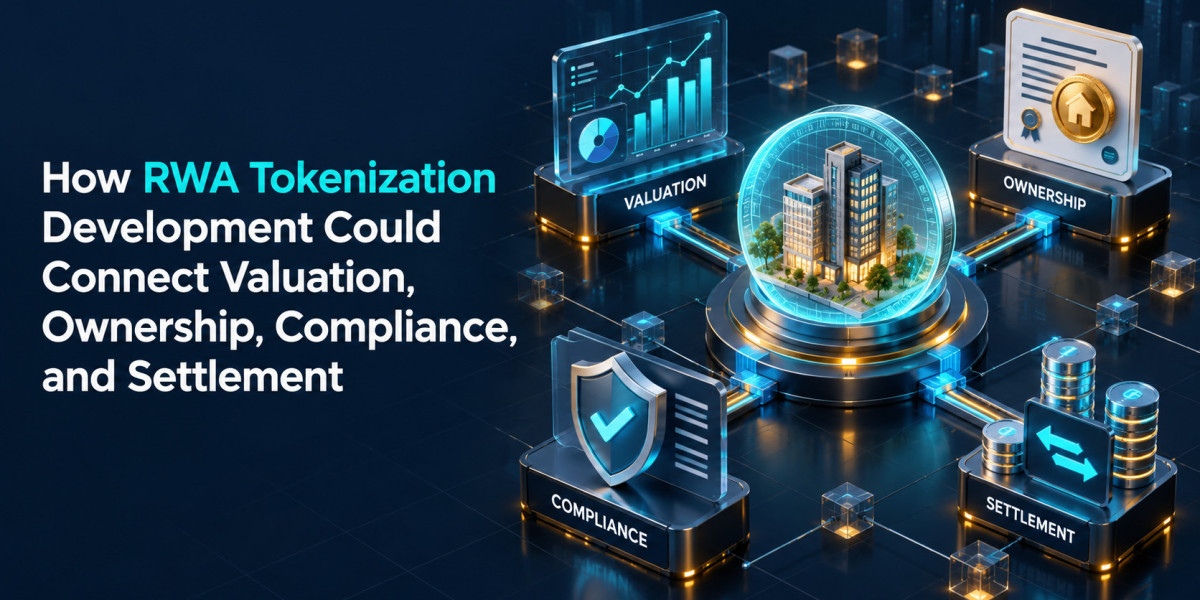
RWA tokenization development is introducing a different way to organize these activities. Instead of treating the asset, ownership record, investor identity, compliance status, and settlement process as completely separate layers, a tokenized asset platform can connect them through blockchain-based records and smart contracts.
The idea goes beyond putting an asset into token form. A well-planned RWA tokenization system can associate a token with valuation information, ownership rights, investor permissions, compliance conditions, and settlement instructions. This creates a framework where several parts of the asset lifecycle can communicate through a shared digital infrastructure.
Why Valuation Matters in RWA Tokenization
Valuation sits at the beginning of many asset transactions. Before investors purchase a tokenized property, private credit instrument, fund interest, or commodity-linked asset, they need information about what the underlying asset is worth.
In conventional markets, valuation data can come from appraisers, financial statements, market data providers, auditors, brokers, or specialist valuation firms. The information may then move through several systems before it reaches an investor or trading venue.
RWA tokenization can connect valuation data with the digital representation of an asset. A token may carry a reference to valuation information while an external data service provides updated figures. For example, a token representing an interest in commercial property could be associated with periodic property valuations, rental income information, occupancy data, and relevant market indicators.
This does not mean that blockchain itself determines whether an asset is correctly valued. The quality of the valuation still depends on the source, methodology, frequency, and verification process. Blockchain can record and distribute the information, while independent valuation providers remain responsible for producing the underlying data.
Linking Valuation With Ownership
Ownership is another important layer in tokenized asset markets. A token can represent a legal or economic interest, but the exact rights attached to that token depend on the legal structure surrounding the asset.
An RWA tokenization company may design a system in which token ownership records correspond with interests held through an SPV, trust, fund, company, or another legal arrangement. The blockchain record can then show who holds the relevant digital units, subject to the rules of the platform and applicable law.
When valuation information and ownership records are connected, investors can receive a more complete view of their position. For example, a tokenized property investment could show the number of units held, the latest valuation reference, distributions received, and relevant ownership conditions.
The relationship is particularly useful when ownership changes. A transfer of tokens may automatically update the digital ownership record, while the system can also check whether the receiving party meets the requirements for holding that asset.
Compliance Can Become Part of the Asset Lifecycle
Compliance is often handled before or during a transaction rather than being treated as part of the asset itself. Tokenization can bring certain compliance checks closer to the transaction layer.
An RWA tokenization platform development project may include identity verification, investor classification, jurisdiction restrictions, holding limits, transfer rules, sanctions screening, and other requirements. Smart contracts can then apply predefined conditions when an investor attempts to purchase or transfer an asset token.
For example, suppose a private credit token is available only to verified investors in selected jurisdictions. The platform can check the investor's status before allowing a transaction. If the wallet is not approved, the transfer can be rejected according to the platform's rules.
This approach does not replace legal or regulatory oversight. Instead, it creates a digital layer where certain rules can be applied consistently during transactions.
Connecting Identity With Token Ownership
A major consideration for RWA tokenization is the relationship between blockchain addresses and real-world identities. A public blockchain address does not automatically show who owns it.
A regulated tokenization platform may therefore maintain a permissioned identity layer. Investors can complete identity checks through an approved process, after which their wallet address can be associated with an eligible investor record.
The platform does not necessarily need to publish personal information on-chain. Sensitive information can remain within appropriate off-chain systems while the blockchain stores the necessary permission or verification status.
This structure can support a distinction between public transaction records and private investor information. The exact architecture depends on the asset type, jurisdiction, regulatory framework, and privacy requirements.
How Smart Contracts Can Connect the Four Layers
Smart contracts can sit between valuation, ownership, compliance, and settlement. Their role is to execute predefined instructions when specified conditions are met.
Consider a tokenized real estate investment. A smart contract could reference the token supply and ownership balances while another system provides valuation information. The investor's eligibility status can be checked before a transfer. Once the transaction satisfies the required conditions, settlement instructions can be processed.
The smart contract does not independently know whether a property is worth a particular amount or whether an investor's identity documents are valid. Those facts need to come from external systems or approved data providers.
This creates an important distinction. Blockchain provides the transaction and record-keeping infrastructure, while external services supply information that blockchain cannot determine by itself.
The Role of Oracles and External Data
Valuation and compliance information frequently originate outside blockchain networks. Oracles and data services can connect these external sources with smart contracts.
For instance, a tokenized commodity could rely on a recognized pricing source for reference values. A property token could receive valuation updates from an approved valuation provider. A fund token could use NAV information supplied by its administrator.
An RWA tokenization development company may therefore need to consider oracle design as part of the platform architecture. The system should account for data frequency, source reliability, update procedures, exceptional events, and what happens when information is unavailable.
Multiple data sources may also be used where appropriate. This can help reduce dependence on a single external source, although it does not remove the need for governance and data verification.
Settlement Can Follow Compliance Checks
Settlement is the point where ownership and payment obligations are completed. Traditional settlement may involve several parties and systems, particularly when securities, funds, custodians, banks, and registrars are involved.
Tokenized markets can connect payment and asset delivery through programmable transaction rules. For example, a buyer could submit payment while the asset token remains locked until the required conditions have been satisfied.
Once the compliance and transaction checks pass, the asset can move to the buyer while the corresponding payment moves to the seller or designated account.
This delivery-versus-payment model can reduce the gap between payment and asset transfer. However, the practical implementation depends on the payment rail being used. Tokenized deposits, stablecoins, bank transfers, or other payment mechanisms may each require different technical and regulatory arrangements.
What RWA Token Development Can Add to Asset Markets
RWA token development can support more than fractional ownership. A token can represent different rights depending on the legal and financial structure behind it.
A property token might represent an economic interest in rental income. A private credit token could represent claims associated with principal and interest payments. A fund token could represent units in an investment vehicle. A commodity token could refer to ownership or claims over specified quantities of an asset.
These differences affect how valuation, compliance, ownership, and settlement should be connected.
For this reason, an RWA tokenization platform development company must consider the legal rights represented by the token before defining the technical model. Token design, custody, transfer restrictions, investor permissions, corporate actions, and settlement rules all need to correspond with the underlying asset arrangement.
Secondary Markets Need Connected Records
The relationship between these four areas becomes even more important when tokenized assets reach secondary markets.
A buyer in a secondary market needs to know what the asset represents, who is permitted to hold it, what the latest valuation information says, and how settlement will occur. If these details sit in disconnected systems, the trading process can still face delays.
A tokenized secondary market can include transfer rules within the asset contract. Before a transaction takes place, the platform can check whether the buyer has the required permissions. The transaction can then update ownership records and initiate settlement.
Valuation data can also be presented alongside the asset without suggesting that the valuation itself represents a guaranteed market price. This distinction matters because an asset's assessed value and the price at which someone is willing to trade it may differ.
Corporate Actions and Cash Flows
Tokenization can also connect ownership with events that occur after the original transaction.
Property income, interest payments, dividends, redemptions, maturity events, voting rights, and other corporate actions may need to be distributed according to token ownership.
For example, if an investor holds a particular number of units in a tokenized fund on a record date, the platform can calculate the relevant distribution. Smart contracts and connected payment systems can then support the distribution process.
This creates a continuing relationship between ownership and asset activity rather than treating token issuance as the final stage.
Architecture Considerations for RWA Platforms
A practical RWA tokenization system can contain several layers. The blockchain layer records token transactions and ownership movements. The smart contract layer manages token rules and transaction conditions. The identity and compliance layer handles investor verification and eligibility.
A separate data layer can provide valuations, asset information, and market references. Legal and administrative systems can maintain records that should not reside directly on a public blockchain. Payment infrastructure handles the movement of funds.
The architecture therefore resembles an interconnected network rather than a single blockchain application. APIs, custody systems, identity providers, compliance services, valuation providers, and payment rails can all form part of the wider platform.
Challenges That Businesses Need to Consider
Connecting these functions also creates practical challenges. Valuation data may change at different intervals from blockchain transactions. Legal ownership may not always correspond directly to token ownership. Regulations can differ between jurisdictions. Investor information requires careful handling. Payment settlement can depend on banking infrastructure outside the blockchain.
There is also the question of what happens when external information is incorrect or unavailable. A smart contract can follow a rule exactly, but it cannot independently determine whether the information supplied to that rule is accurate.
For this reason, governance remains important. Asset issuers and platform operators need procedures for data updates, disputes, valuation changes, lost credentials, regulatory changes, and exceptional events.
What This Could Mean for Future RWA Markets
The broader direction of RWA tokenization is toward connecting different stages of an asset's lifecycle through shared digital records. Valuation can provide information about the asset, identity can establish who may participate, compliance rules can govern transactions, ownership records can track positions, and settlement systems can complete transfers.
An RWA tokenization company working on institutional or regulated markets therefore needs to consider the complete lifecycle rather than focusing only on token issuance. The token is one component of a larger financial system.
As more asset classes enter tokenized markets, these connections may become increasingly important. The value of a tokenized asset platform may depend not only on how tokens are issued, but also on how accurately the platform connects asset information, legal rights, investor permissions, and transaction settlement.
Conclusion
RWA tokenization development could bring valuation, ownership, compliance, and settlement closer together within a single digital asset lifecycle. Valuation providers can supply asset data, identity systems can establish investor eligibility, smart contracts can apply transaction rules, blockchain records can track ownership, and payment infrastructure can support settlement. The result is not simply a digital version of an existing asset, but a system where several financial processes can interact through connected technology. The exact structure will depend on the asset class, legal rights, jurisdiction, data sources, and regulatory requirements. As tokenized markets mature, this connected approach could become an important part of how real-world assets are issued, held, transferred, and serviced. Blockchain App Factory provides RWA tokenization development services.
FAQs
1. What is RWA tokenization development?
RWA tokenization development refers to creating blockchain-based systems that represent rights or interests in real-world assets through digital tokens. These systems can include token issuance, ownership records, investor verification, compliance rules, custody, trading, and settlement functions.
2. How can valuation connect with RWA tokenization?
Valuation information can be supplied by external valuation providers and connected to a tokenization platform through data services or oracles. The blockchain can record relevant valuation references while the underlying valuation remains the responsibility of the approved data provider.
3. Can compliance rules be included in an RWA token?
Yes. Smart contracts can include conditions related to investor eligibility, transfer restrictions, jurisdictional requirements, holding limits, and other predefined rules. The precise requirements depend on the asset and applicable regulations.
4. What role does ownership play in RWA tokenization?
Ownership records show which investors hold specific token units or interests. Depending on the legal structure, token ownership may correspond to economic rights, legal interests, fund units, debt claims, or other rights connected with an underlying asset.
5. What is the role of RWA token development?
RWA token development involves creating the digital token and the technical components that govern its behavior. Depending on the project, this can include smart contracts, wallet integration, compliance controls, asset management functions, transfer rules, and settlement connections.
6. What does an RWA tokenization platform development project include?
An RWA tokenization platform development project can include investor onboarding, identity verification, asset management, token issuance, smart contracts, custody integration, compliance controls, trading functions, payment integration, reporting, and administrative tools.
7. Can RWA tokens be traded on secondary markets?
They can be designed for secondary trading where the applicable legal and regulatory framework permits it. Transfer eligibility, investor verification, ownership records, and settlement processes may need to be incorporated into the marketplace.
8. Why are oracles important for tokenized assets?
Oracles can provide blockchain systems with information that originates outside the network, such as asset valuations, reference prices, or other verified data. They can therefore help smart contracts work with information that blockchain networks cannot generate independently.