A Book That Refuses to Pretend
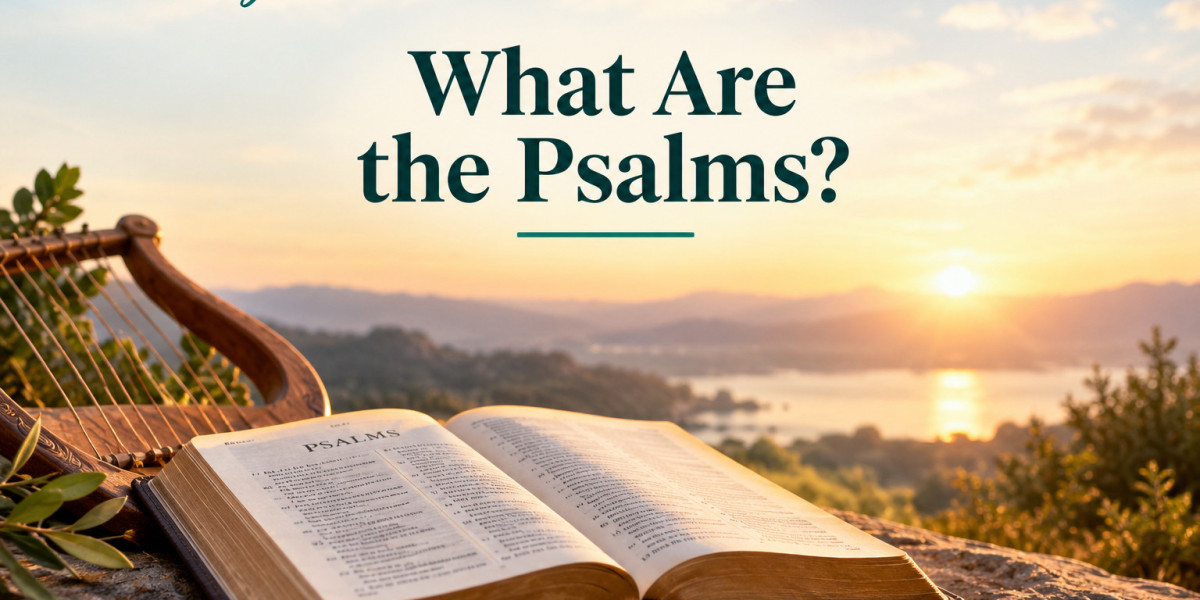
There are parts of the Bible that comfort. Others that challenge. The Psalms do both — often within the same poem. What are the Psalms, exactly? At the most basic level, they are 150 ancient songs and prayers collected into a single book at the heart of the Old Testament. But that description barely scratches the surface. The Psalms contain raw grief, explosive joy, bitter complaint, deep trust, and everything in between. They were written over several centuries, used in ancient Israelite worship, and have continued to shape Jewish and Christian spiritual practice for thousands of years. No other book in the Bible covers the full range of human emotional experience quite the way the Psalms do — which is part of why they remain one of the most read sections of scripture across every tradition.
The Origins and Authorship of the Psalms
The book of Psalms was not written by a single person in a single era. It developed over centuries, drawing contributions from multiple authors before being compiled into its final form — likely sometime after the Babylonian exile in the sixth century BC.
King David is the most frequently named contributor, with 73 psalms attributed to him in the Hebrew superscriptions. Other named contributors include Asaph, the sons of Korah, Solomon, Moses, Heman, and Ethan. Roughly 50 psalms carry no named author at all and are simply labeled anonymous.
The Hebrew title for the book is Tehillim, meaning "praises" — though many of the psalms are not praise songs at all. The Greek translation of the Old Testament, the Septuagint, gave us the word Psalmos, from which the English "Psalms" derives, referring to songs sung to a stringed instrument.
What Are the Psalms Organized Into?
The book of Psalms is not a random collection. It is divided into five distinct books, a structure that many scholars believe mirrors the five books of Moses — the Torah.
- Book I — Psalms 1–41
- Book II — Psalms 42–72
- Book III — Psalms 73–89
- Book IV — Psalms 90–106
- Book V — Psalms 107–150
Each of the first four books ends with a doxology — a short burst of praise — and the entire collection closes with five consecutive psalms of pure praise (146–150), known as the Hallel psalms. That progression from lament to praise is not accidental. It reflects a theological arc woven into the arrangement itself.
The Different Categories of Psalms and What They Reveal
One of the most helpful ways to engage with the Psalms is to understand what type of psalm you are reading. The different categories of psalms carry different purposes, tones, and structures — and recognizing them changes how the text lands.
Lament Psalms
These are the most common type, making up roughly a third of the entire collection. Lament psalms give voice to suffering, confusion, and complaint — often addressed directly to God. Psalm 22 opens with the anguished cry, "My God, my God, why have you forsaken me?" Yet most lament psalms shift toward trust or praise by their close, suggesting that honest grief and sustained faith are not opposites.
Praise and Hymn Psalms
These psalms celebrate God's character — his power, faithfulness, and care for creation. Psalm 8 and Psalm 104 are classic examples. They tend to move outward, from personal experience to cosmic reflection.
Thanksgiving Psalms
Distinct from general praise, thanksgiving psalms respond to a specific act of deliverance. Psalm 30 is a clear example, written to celebrate rescue from illness. The structure typically involves recalling the distress, acknowledging what God did, and committing to ongoing gratitude.
Royal and Messianic Psalms
These psalms focus on kingship — either the reigning Israelite king or a future ideal ruler. Psalms 2, 22, and 110 fall into this category and are quoted more frequently in the New Testament than almost any other Old Testament passages, reflecting their role in messianic expectation.
Wisdom Psalms
Shaped by the same tradition as Proverbs and Ecclesiastes, wisdom psalms reflect on human conduct, divine justice, and the contrast between the righteous and the wicked. Psalm 1 opens the entire book in this mode—setting the whole collection under a wisdom framework from the very first line.
Why the Psalms Were Written to Be Sung
It is easy to forget, reading them on a page, that the Psalms were composed as music. The Hebrew text includes musical notations — words like Selah, which appears 71 times and likely indicated a pause or musical interlude, and references to specific instruments and tunes in the superscriptions.
The Psalms were used in the liturgical life of ancient Israel, performed by trained Levitical musicians in the temple. That communal dimension matters. These were not private journal entries, even when they feel intensely personal. They were written to be prayed aloud, sung in community, and shared across generations.
How the Psalms Have Shaped Spiritual Practice Across History
Few collections of texts have had a longer or broader influence than the Psalms. Early Jewish synagogue worship incorporated them extensively. The Dead Sea Scrolls, discovered in 1947, contained more copies of Psalms than any other biblical book — 36 manuscripts in total. The early Christian church sang psalms as part of worship, and Paul explicitly encourages this in both Ephesians and Colossians.
Across the medieval period, monks committed the entire Psalter to memory and recited it in weekly cycles. Protestant reformers like Martin Luther and John Calvin placed the Psalms at the center of congregational worship, producing metrical psalters that gave every believer a way to participate.
Bible Insights Foundation explores this historical depth through carefully researched resources that situate the Psalms within their original context while making them genuinely accessible to modern readers. Understanding that context transforms what might otherwise feel like distant poetry into something immediate and surprisingly personal.
Still Speaking After Three Thousand Years
Knowing what are the Psalms is only the beginning. The deeper reward comes from actually sitting with them — reading a lament when you are in one, a praise psalm when something good has happened, a wisdom psalm when you need clarity about a choice.
The collection survives not because it is beautiful, though much of it is, but because it is honest. It does not require the reader to have everything figured out before approaching God. It welcomes confusion, frustration, and doubt alongside joy and gratitude.
Bible Insights Foundation offers structured guidance on both the different categories of psalms and the individual texts within each category — giving readers the tools to move through the collection with purpose rather than feeling overwhelmed by its breadth. Three thousand years after these poems were first sung, they still do what they were always designed to do: give language to what most of us struggle to put into words on our own.