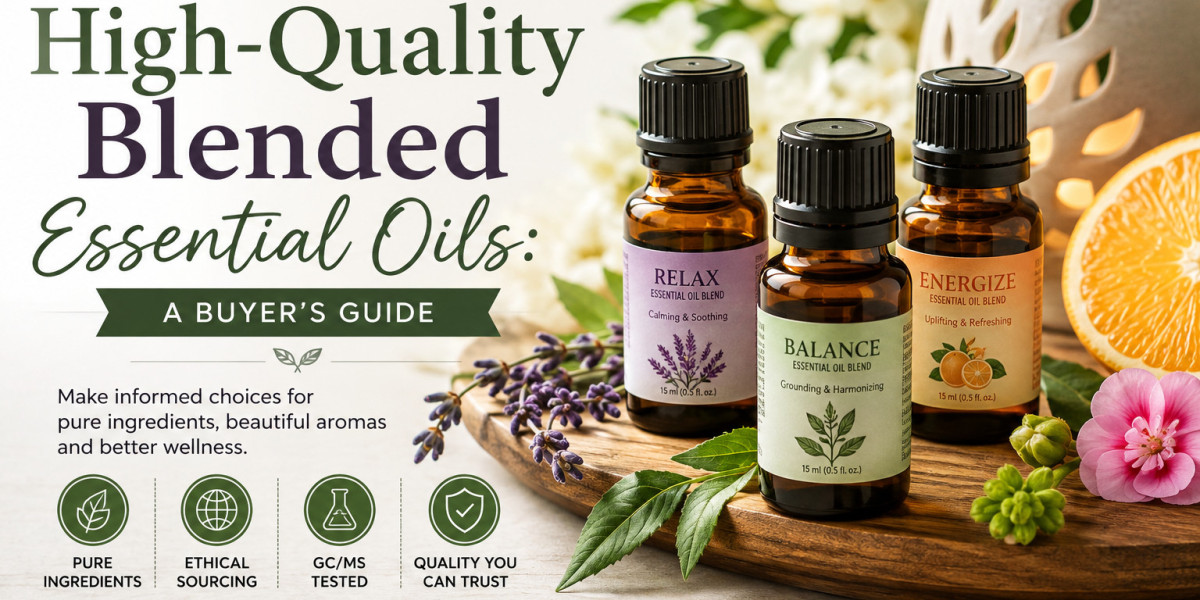
Choosing the right essential oil blend can make a significant difference in your aromatherapy, personal care, and natural-living routines. With so many products available, it can be difficult to determine which options offer quality ingredients, transparent sourcing, and a pleasant aromatic experience. Understanding what to look for before purchasing can help you make a more informed decision.
A blended essential oil combines two or more essential oils to create a distinctive aromatic profile. Different botanical ingredients can complement one another, resulting in fragrances ranging from fresh and citrusy to floral, woody, earthy, or spicy. However, not every blend is formulated with the same level of care. This buyer's guide explains the important factors to consider when evaluating quality.
1. Check the Ingredient List
One of the first steps when choosing an essential oil blend is reviewing its ingredient list. A reputable product should clearly identify the botanical oils included in the formulation.
Look for specific plant names rather than vague descriptions such as "natural fragrance" or "aromatic oils." Botanical names can provide additional information about the exact plant species used.
For example, a label may identify ingredients using their common names along with botanical names. This level of transparency allows buyers to understand what they are purchasing.
It is also worth checking whether the product contains unnecessary additives. Some formulations may include carrier oils, synthetic fragrances, or other ingredients depending on their intended application. Understanding the complete formula helps you select a product that matches your preferences and intended use.
2. Look for Botanical Transparency
High-quality essential oil blends should provide useful information about their botanical ingredients and sourcing whenever possible.
Transparency can include details about the plant species, country or region of origin, extraction method, and processing practices. While sourcing information does not automatically guarantee quality, it demonstrates that the manufacturer is willing to provide buyers with meaningful product information.
Different extraction methods can also influence the aromatic characteristics of an oil. Steam distillation and cold pressing are commonly used for different types of botanicals, while some delicate plant materials may require specialized extraction techniques.
A knowledgeable seller should be able to explain how its ingredients are obtained and processed.
3. Consider Purity and Additives
Purity is an important consideration when shopping for a natural essential oil blend. Buyers should pay attention to whether a product contains synthetic fragrance ingredients, unnecessary fillers, or undisclosed additives.
The term "pure" can be used differently across the marketplace, so it is better to examine the actual ingredient information rather than relying solely on marketing terminology.
If you are looking for oils for aromatherapy or personal formulation projects, choose products with clearly disclosed ingredients and appropriate usage information.
Remember that "natural" does not automatically mean an ingredient is suitable for every person or every application. Essential oils are highly concentrated botanical materials and should be used according to appropriate safety guidelines.
4. Research Testing and Quality Control
Another useful factor is whether the manufacturer performs quality testing. Reputable companies may use analytical methods such as gas chromatography and mass spectrometry (GC/MS) to evaluate the chemical composition of essential oils.
GC/MS analysis can help identify the constituents present in an oil and may provide useful information about its composition and consistency. Some companies make testing information available to customers, while others provide general details about their quality-control procedures.
When comparing aromatherapy oil blends, look for manufacturers that explain their testing standards rather than making broad claims without supporting information.
Quality control can involve multiple stages, including ingredient sourcing, storage, blending, packaging, and finished-product evaluation.
5. Pay Attention to Aroma Quality
The aroma itself is another important consideration. A well-formulated blended essential oil should have a balanced scent in which the individual botanical notes work together rather than competing with one another.
Essential oils are often described according to fragrance families or scent notes. Citrus oils may provide bright top notes, floral materials can contribute softer middle notes, and woody or resinous oils may provide deeper base notes.
Understanding these fragrance characteristics can help you select blends that match your personal preferences.
If possible, read detailed product descriptions or scent profiles before purchasing. Descriptions such as fresh, grounding, sweet, herbaceous, warm, spicy, or floral can help you anticipate the overall aromatic experience.
6. Evaluate the Packaging
Packaging plays an important role in protecting essential oils from environmental factors. Light, heat, and air can affect many botanical oils over time.
Dark glass bottles are commonly used because they help reduce exposure to light. A secure cap or reducer can also make dispensing easier and help minimize unnecessary exposure to air.
When buying botanical oil blends, examine whether the packaging appears appropriate for concentrated aromatic products. Check for clear labeling, batch information where available, ingredient details, and storage recommendations.
After purchasing, store essential oils in a cool, dry location away from direct sunlight and excessive heat.
7. Choose a Transparent Supplier
The reputation and transparency of the supplier should also influence your buying decision. Look for companies that provide detailed product descriptions, ingredient information, sourcing details, safety guidance, and customer support.
A supplier that openly discusses its products makes it easier for buyers to understand what they are purchasing.
For shoppers interested in botanical ingredients and aromatherapy products, Miracle Botanicals Essential Oils is one example of a supplier offering a variety of essential oil and botanical products with product-focused information for customers.
Rather than choosing solely based on price, compare ingredient transparency, sourcing information, testing practices, packaging, and customer service.
8. Match the Blend to Your Intended Use
Before buying, determine how you plan to use the product. A blend intended for diffusion may have different formulation considerations from one designed for a properly diluted topical application.
If you are purchasing oils for skincare, always check whether the product is intended for topical use and follow appropriate dilution guidance. Essential oils should generally not be applied directly to the skin without suitable guidance, because concentrated botanical ingredients may cause irritation or sensitization.
For diffuser use, follow the manufacturer's instructions and recommendations for your particular device.
Having a clear purpose can prevent unnecessary purchases and help you choose a product that fits your routine.
9. Compare Price With Quality
Price can be useful when comparing products, but the cheapest option is not necessarily the best value. Extremely low prices may warrant additional research into sourcing, ingredients, concentration, and quality-control practices.
At the same time, a high price alone does not guarantee superior quality.
Instead, compare products based on measurable information: ingredient transparency, botanical identification, sourcing, testing, packaging, and manufacturer reputation.
This approach helps you focus on overall value rather than simply choosing the lowest or highest-priced product.
10. Read the Label Carefully
Finally, always read the label before purchasing and using a blended essential oil. Check the ingredient list, recommended application, bottle size, storage instructions, warnings, and any dilution recommendations.
A clear and informative label can tell you much more about a product than promotional language alone.
If you're exploring natural skincare ingredients, you can also learn more about fruit-based botanical ingredients through this additional resource: Fruit Essential Oils for Skincare. The guide provides another perspective on incorporating fruit-derived aromatic ingredients into natural beauty routines:
Final Thoughts
Finding a high-quality blended essential oil requires more than choosing an attractive bottle or appealing fragrance. Ingredient transparency, botanical identification, sourcing, testing, packaging, aroma profile, and intended use should all be considered before making a purchase.
Take time to compare products and research the supplier behind them. A transparent manufacturer should make it reasonably easy to understand what is inside the bottle and how the product is intended to be used.
By applying these buying principles, you can make more informed choices and select essential oil blends that align with your aromatherapy, personal care, or natural-living preferences.
Frequently Asked Questions
1. What should I look for in a high-quality essential oil blend?
Look for clearly listed botanical ingredients, transparent sourcing information, appropriate packaging, quality-control practices, and detailed usage instructions. Avoid products with vague ingredient descriptions or undisclosed additives.
2. Are all essential oil blends suitable for topical use?
No. Formulations and intended uses can vary. Always check the manufacturer's instructions and follow appropriate dilution and skin-safety guidance before using an oil topically.
3. Why is GC/MS testing important?
GC/MS testing can provide information about the chemical constituents present in an essential oil. It is one analytical tool that manufacturers may use as part of their quality-control process.
4. How should essential oil blends be stored?
Keep them tightly closed and store them in a cool, dry place away from direct sunlight and excessive heat. Proper storage can help protect the aromatic quality of botanical oils.
5. Is a more expensive essential oil blend always better?
Not necessarily. Price alone does not establish quality. Consider ingredients, sourcing, testing, packaging, transparency, and supplier reputation when comparing products.