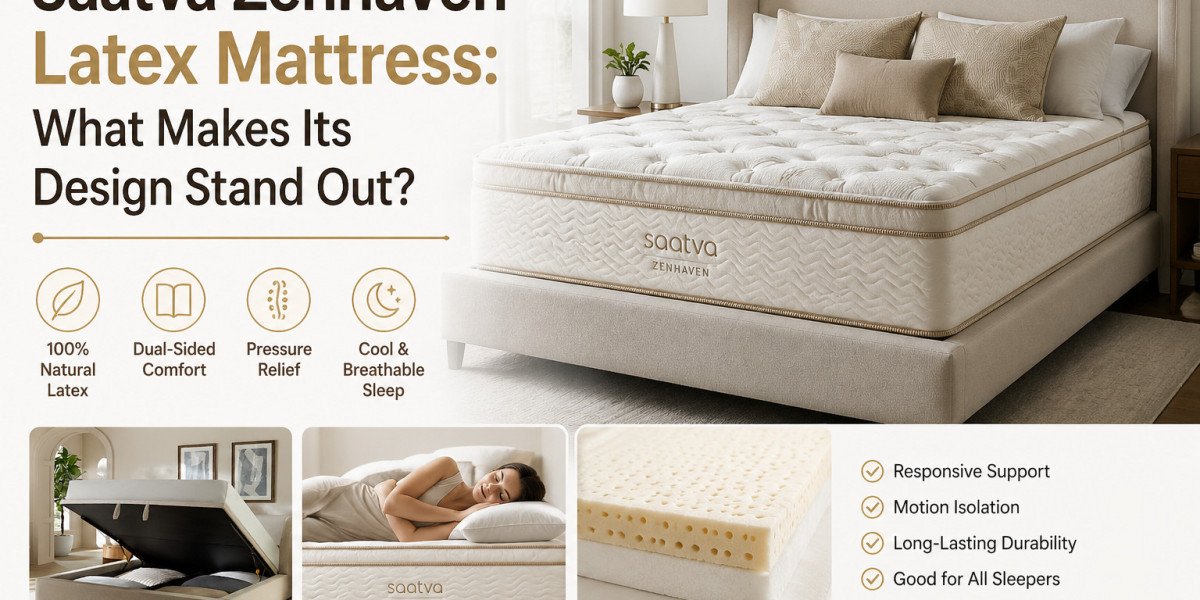
Choosing a new mattress is a major purchase, and memory foam remains one of the most popular options for shoppers who want a contouring, cushioned feel. But not every memory foam mattress feels or performs the same. Differences in foam density, construction, firmness, thickness, cooling features, and support layers can significantly affect the overall sleeping experience.
What Is a Memory Foam Mattress?
Memory foam is a type of viscoelastic polyurethane foam that responds to pressure and body heat. When you lie on it, the material gradually conforms to your body and then slowly returns to its original shape after pressure is removed.
This creates the familiar "hugging" sensation associated with memory foam. The material is also known for absorbing movement, which can be useful for couples who do not want one person's movements to disturb the other.
Modern mattresses can use memory foam in different layers, combined with other foams or materials to alter firmness, responsiveness, airflow, and durability.
1. Start With Your Sleeping Position
Your preferred sleeping position is one of the most important factors when choosing a memory foam mattress.
Side Sleepers
Side sleepers often benefit from cushioning around the shoulders and hips. A softer or medium-soft memory foam surface can provide additional contouring, although body weight should also be considered.
Back Sleepers
Back sleepers generally need enough support to keep the body from sinking excessively around the midsection. Medium to medium-firm options can be a useful starting point for many people.
Stomach Sleepers
Stomach sleepers generally need stronger support because excessive sinking around the abdomen can make the mattress feel uncomfortable. A firmer memory foam model—or a different mattress construction—may be preferable.
Sleep Foundation's 2026 testing guidance shows that ideal firmness can vary significantly based on both sleeping position and body weight.
2. Understand Mattress Firmness
Firmness is not simply about whether a mattress feels "soft" or "hard." It affects contouring, support, pressure relief, movement, and the overall feel of the bed.
Mattress manufacturers commonly describe firmness on a scale from 1 to 10, with lower numbers representing softer mattresses and higher numbers representing firmer mattresses. However, firmness ratings are not perfectly standardized between brands.
A useful general guide is:
- Soft: More body-hugging and cushioning
- Medium-soft: Balanced cushioning with noticeable contouring
- Medium: Moderate cushioning and support
- Medium-firm: More support with less sinking
- Firm: Minimal sink and a more stable surface
Your body weight and sleeping position should both be considered rather than selecting firmness based only on personal preference.
3. Pay Attention to Foam Density
Foam density can provide useful information about the construction of a memory foam mattress.
Higher-density memory foam generally has a more substantial feel and can be more durable, although it may also retain more heat. Lower-density foam can feel more responsive and may allow easier movement.
When comparing two mattresses, don't simply look at the total mattress thickness. Check the specifications for individual foam layers when those details are available.
A thicker mattress is not automatically a better mattress. The quality and arrangement of its layers matter too.
4. Consider Temperature Regulation
Traditional memory foam has historically been associated with heat retention because of its dense structure and close body contouring.
If you tend to sleep hot, look for construction features intended to improve airflow or heat management. These can include:
- Open-cell foam
- Gel-infused foam
- Breathable covers
- Ventilated foam
- Phase-change materials
- Airflow-focused layer designs
However, don't assume that a product labeled "cooling" will necessarily sleep cold. Temperature performance depends on the mattress as a whole, including its cover, foam layers, room temperature, bedding, and individual sleeping preferences.
5. Check Motion Isolation
One of the strongest advantages of memory foam is motion isolation.
Because memory foam absorbs movement rather than transferring it across the mattress, it can be a good option for couples. If one person turns over or gets out of bed, the other person may feel significantly less movement than they would on some spring-based mattresses.
If you share a bed, pay particular attention to independent reviews or testing for motion isolation instead of assuming every memory foam mattress performs identically.
6. Don't Ignore Edge Support
Edge support can be a weaker area for some all-foam mattresses.
If you frequently sit on the edge, sleep close to the perimeter, or share a mattress with a partner, strong edges can make the mattress feel more stable and increase the usable sleeping surface.
Some memory foam mattresses use reinforced edges or denser transition materials to improve perimeter stability.
If edge support is particularly important to you, compare the construction and independent test results rather than focusing only on the comfort layer.
7. Look at the Mattress Construction
A memory foam mattress is rarely just one piece of foam.
Many models contain several layers, such as:
- Comfort layer — Provides the initial cushioning and contouring.
- Transition layer — Helps distribute weight and limits excessive sinking.
- Support core — Provides the structural foundation.
- Cover — Influences surface feel and may provide additional cooling or moisture-management features.
The combination of these layers determines how the mattress actually performs.
Two mattresses can both be advertised as "memory foam" but feel dramatically different because their foam densities, layer thicknesses, firmness levels, and support systems differ.
8. Think About Pressure Relief
Memory foam is well known for contouring closely to the body, which can help distribute weight across the sleep surface.
This can be particularly appealing to side sleepers because the shoulders and hips can sink into the comfort layer.
However, too much contouring isn't necessarily better. If the mattress allows excessive sinking, some sleepers may find it difficult to change positions or maintain a comfortable posture.
The goal is to find the right balance between cushioning and support.
9. Consider Ease of Movement
The same contouring that makes memory foam comfortable can make it harder to move around.
Traditional memory foam tends to have relatively little bounce. Some sleepers enjoy the stable, enveloping feel, while others prefer a mattress that responds quickly when they change positions.
If you frequently switch between sleeping positions, consider a more responsive memory foam design, a mattress with responsive polyfoam, or a hybrid construction.
10. Evaluate Durability
Mattress longevity depends on several factors, including material quality, foam density, construction, usage, and overall manufacturing quality.
Higher-density foams generally have better durability characteristics, but density alone should not be treated as a guarantee of mattress lifespan.
Before buying, check:
- Foam specifications
- Mattress thickness
- Warranty length
- Warranty exclusions
- Foundation requirements
- Customer reviews
- Brand reputation
A long warranty can be useful, but read the actual terms to understand what is covered.
Memory Foam vs. Other Mattress Types
Memory foam isn't automatically the best option for every sleeper.
| Mattress Type | Typical Strength |
|---|---|
| Memory Foam | Contouring and motion isolation |
| Polyfoam | Responsiveness and value |
| Latex | Bounce and temperature regulation |
| Innerspring | Airflow and responsiveness |
| Hybrid | Combination of foam comfort and coil support |
Sleep Foundation's current mattress comparison data rates memory foam particularly highly for contouring and motion isolation, while latex generally offers greater bounce and temperature regulation.
Your priorities should determine which construction makes the most sense.
Who May Prefer Memory Foam?
A memory foam mattress may be worth considering if you:
- Prefer a body-contouring feel
- Sleep on your side
- Want strong motion isolation
- Share a bed with a partner
- Prefer a quieter mattress
- Like cushioning around pressure-prone areas
- Don't need a highly responsive, bouncy surface
Memory foam may be less appealing if you strongly prefer a springy feel, sleep very hot, or want particularly strong edge support.
What Should You Check Before Buying?
Before placing an order, review more than the headline price.
Sleep Trial
A home trial gives you more time to determine whether the mattress actually works for you. This can be more useful than a short showroom test.
Return Policy
Check whether returns are free, whether a minimum trial period applies, and whether pickup is included.
Warranty
Read what the warranty covers and what circumstances can void it.
Foundation Requirements
Some mattress warranties require the mattress to be placed on an appropriate foundation or frame.
Shipping and Setup
Check delivery details, especially if the mattress is compressed and shipped in a box.
Sleep Foundation recommends paying attention to warranties, sleep trials, returns, shipping, and other fine print when shopping for a mattress.
Common Memory Foam Buying Mistakes
Choosing Only by Price
A cheaper mattress isn't necessarily poor quality, and an expensive mattress isn't automatically superior. Focus on construction and suitability.
Assuming All Memory Foam Feels the Same
Foam density, thickness, firmness, and layer design can dramatically change the experience.
Ignoring Your Sleeping Position
A mattress that works well for a side sleeper may not provide the right support for a stomach sleeper.
Overlooking Heat Retention
If you tend to sleep hot, investigate the mattress's cooling construction before purchasing.
Skipping the Trial Terms
Always understand how returns and exchanges work before committing.
Final Thoughts
A memory foam mattress can be an excellent choice for shoppers who appreciate contouring, pressure relief, quiet performance, and strong motion isolation. But the best model depends on individual preferences and sleeping needs.
When shopping in 2026, focus on firmness, sleeping position, body weight, foam density, construction, cooling, motion isolation, edge support, durability, and the company's trial and warranty policies.
The most important lesson is simple: don't buy a mattress just because it says "memory foam." Look at what is actually inside it and how those materials work together.
A well-designed memory foam mattress should provide the right balance of comfort, support, temperature control, and durability for the person—or people—using it every night.