
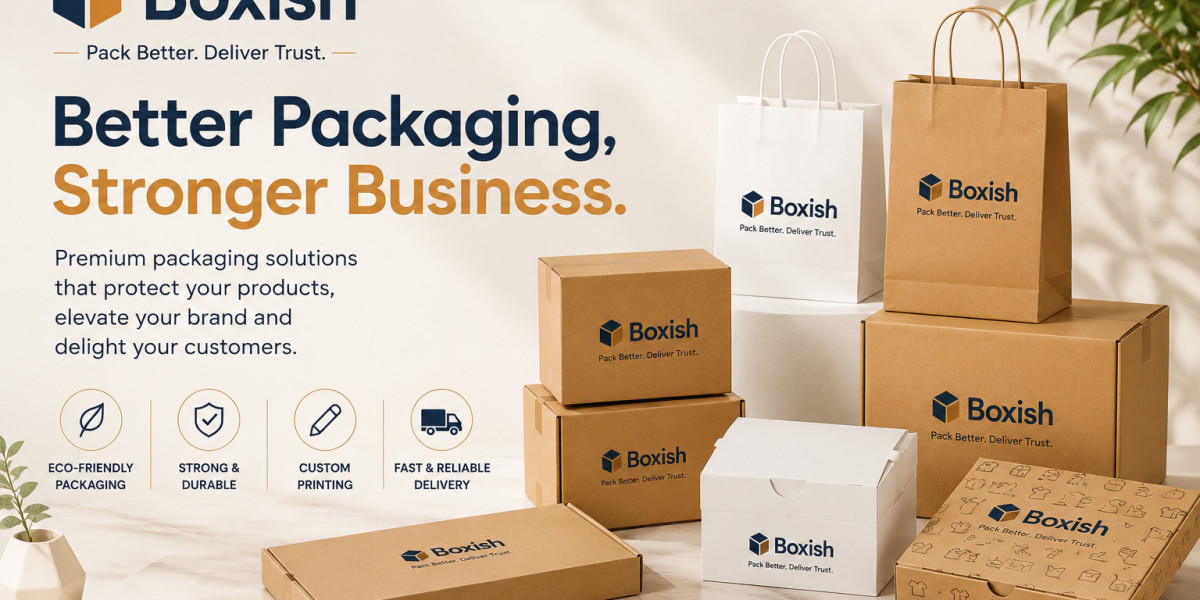
Packaging has become an important part of the customer experience, especially for ecommerce and growing retail brands. Customers often see the package before they see the product, making packaging presentation, protection, and convenience important factors in how they perceive a business.
Custom cardboard boxes can help businesses create packaging that fits their products more accurately while providing opportunities for branding and better presentation. When designed thoughtfully, customized packaging can reduce product movement, improve unboxing experiences, and encourage customers to remember the brand.
1. Design Packaging Around the Product
The first step is creating packaging that matches the actual product. A box that is too large can create unnecessary empty space, while one that is too small may put pressure on the contents.
Businesses should consider:
Product dimensions
Product weight
Fragility
Internal cushioning
Shipping conditions
Storage requirements
A well-fitted package can improve product stability and reduce the amount of protective material required.
2. Improve Product Protection
Packaging should primarily protect the product during storage and transportation. Ecommerce shipments can experience vibration, stacking, impacts, and repeated handling.
A customized design can help businesses position the product securely inside the package. Internal partitions, inserts, or suitable cushioning can be added when necessary.
For fragile products such as glassware, electronics, or cosmetics, customized internal protection can reduce movement and help minimize damage.
3. Create a Better Unboxing Experience
Unboxing is an important customer touchpoint for ecommerce brands. A package that is easy to open, organized, and visually appealing can make the purchase feel more professional.
Businesses can improve the experience with:
Neat product placement
Easy-opening features
Simple brand messaging
Product information
Thank-you cards
Reusable packaging elements
The objective should be to make the packaging useful and attractive without adding unnecessary complexity.
4. Use Packaging to Strengthen Brand Recognition
Packaging provides a physical opportunity to reinforce brand identity. Businesses can use their logo, brand colours, typography, and other visual elements to create consistent packaging across different products.
A recognizable package can help customers associate the delivery experience with the brand.
However, branding should remain clear and professional. Too much information can make the package look crowded and reduce visual impact.
5. Select the Right Material and Strength
Customization should not focus only on appearance. The material needs to match the product and transportation requirements.
Consider:
Board construction
Paper quality
Box thickness
Compression strength
Product weight
Shipping conditions
A lightweight product may not require the same structural strength as a heavy or fragile item.
6. Reduce Unnecessary Packaging Space
One advantage of customized dimensions is the ability to reduce empty space around the product.
A better product-to-box fit can help businesses:
Reduce filler consumption
Improve package stability
Save storage space
Optimize shipping volume
Reduce material waste
For brands shipping products at high volumes, these improvements can have a measurable impact on operational costs.
7. Combine Custom Boxes With Other Packaging
Businesses often need multiple packaging formats. Customized boxes can handle shipping and product protection, while other packaging can support retail or special occasions.
For example, a retailer might use paper bags for customers purchasing products in-store and customized boxes for ecommerce orders.
This approach allows businesses to select packaging according to the sales channel rather than forcing one format to serve every purpose.
8. Add Practical Branding Elements
Branding does not always require expensive printing or complicated finishing. Simple elements can create a professional appearance.
Businesses can consider:
Logo printing
Brand colours
QR codes
Website details
Handling instructions
Social media information
Short brand messages
A QR code can be particularly useful for directing customers toward product instructions, support information, or the brand's online store.
9. Design for Customer Convenience
Packaging that is difficult to open or unnecessarily complicated can negatively affect the customer experience.
When developing customized packaging, consider:
Easy opening
Secure closing
Product accessibility
Safe handling
Disposal or reuse
Convenience is particularly important for products customers may purchase repeatedly.
10. Use Customer Feedback to Improve Packaging
Packaging should evolve based on real customer experiences. Businesses can review product returns, complaints, reviews, and support requests to identify packaging problems.
For example, repeated complaints about damaged corners may indicate a need for stronger protection. If customers struggle to open a package, the closure design may need improvement.
Regular feedback can help businesses create packaging that performs better over time.
11. Consider Sustainability
Customized packaging can support sustainability when the design focuses on efficient material usage.
Businesses can reduce unnecessary waste by:
Choosing appropriate dimensions
Avoiding excessive layers
Reducing unnecessary fillers
Using recyclable paper-based materials where suitable
Designing packaging for potential reuse
The most sustainable package is not necessarily the smallest one. It should provide enough protection to prevent product damage while avoiding unnecessary material.
12. Work With a Reliable Packaging Partner
Consistent quality is essential when customized packaging becomes part of a brand's regular operations.
Before selecting a supplier, businesses should evaluate:
Material quality
Printing consistency
Manufacturing capacity
Custom dimensions
Bulk order capability
Delivery timelines
Customer support
Boxish Packaging provides packaging solutions for businesses across ecommerce, retail, food service, and other commercial sectors. A dependable packaging partner can help businesses maintain consistent packaging quality as order volumes increase.
Pro Tips for Better Custom Packaging
Before finalizing a customized design:
Measure the product accurately.
Request physical samples.
Test the package during handling and shipping.
Keep branding simple and recognizable.
Avoid excessive empty space.
Select board strength according to product requirements.
Review customer feedback regularly.
Consider storage and transportation costs.
Plan packaging around expected order volumes.
Review the design as products and customer expectations change.
Conclusion
Custom cardboard boxes can do more than protect products. When designed correctly, they can improve product presentation, simplify shipping, strengthen brand recognition, and create a better customer experience.
The most effective approach is to balance appearance with functionality. Businesses should consider product dimensions, protection requirements, shipping conditions, customer convenience, branding, and material efficiency before finalizing a design.
By combining thoughtful design with reliable manufacturing from Boxish Packaging, businesses can develop packaging that protects products while creating a consistent experience that encourages customers to remember and return to the brand.






