
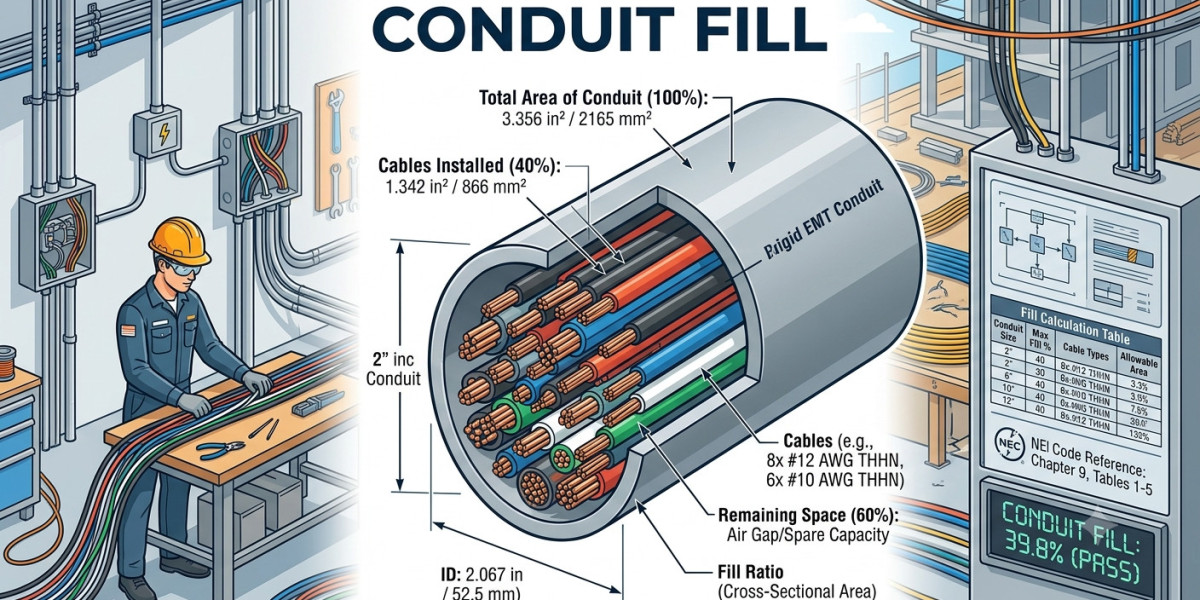
just about fitting cables into a tube it's about following safety codes that prevent overheating, wire damage, and installation headaches down the road. Whether you're an electrician, contractor, or DIY homeowner working on a wiring project, understanding conduit fill percentage is essential before you start pulling cable. A conduit fill calculator takes the guesswork out of this process, instantly showing you how much space your wires will occupy inside a given conduit size so you can stay compliant with National Electrical Code (NEC) requirements.
Understanding What Conduit Fill Actually Means
What is conduit fill percentage?
Conduit fill percentage refers to the proportion of a conduit's internal cross-sectional area that is occupied by wires or cables. The NEC sets maximum fill limits typically 40% for three or more conductors, 31% for two conductors, and 53% for a single conductor to ensure there's enough room for heat dissipation and to make future wire pulling possible without damaging insulation.
Why does conduit fill matter for electrical safety?
Overfilling a conduit causes wires to rub against each other during installation, which can nick or tear insulation and create fire hazards. It also traps heat, since wires generate warmth as current flows through them, and without adequate air space, that heat has nowhere to go. Proper fill calculations protect both the wiring and anyone relying on the circuit.
How is conduit fill different from conduit sizing?
Conduit sizing determines the physical diameter of the pipe you'll install, while conduit fill calculates whether your chosen wires will actually fit within that pipe according to code. You typically size the conduit first based on the number and gauge of conductors, then verify the fill percentage falls within legal limits.
The Calculation Process Behind Conduit Fill
What factors go into a conduit fill calculation?
The calculation requires knowing the conduit type (EMT, rigid, PVC, etc.), the trade size of the conduit, the number of conductors being run, and the outer diameter of each wire type including its insulation. These values are cross-referenced against NEC tables to determine allowable fill area.
How do different wire types affect the result?
Wire insulation types like THHN, XHHW, or USE have different outer diameters even at the same gauge, meaning the same 12 AWG wire can take up more or less room depending on its insulation jacket. This is why calculators require you to specify wire type rather than gauge alone.
Can mixing conductor sizes complicate the calculation?
Yes, when a conduit carries multiple wire gauges simultaneously, each conductor's individual area must be added together and compared against the conduit's total allowable fill area for that conductor count. This is far more error-prone by hand, which is where an automated tool saves significant time.
Practical Applications for Contractors and Homeowners
When should I run a conduit fill check before a project?
Any time you're adding new circuits to an existing conduit, planning a new electrical run, or upgrading service capacity, a fill check should happen before you purchase materials or pull wire. Catching a fill violation early avoids costly rework and failed inspections.
How does this help pass electrical inspections?
Inspectors routinely check conduit fill compliance as part of code enforcement, and having your calculations documented ahead of time demonstrates due diligence and reduces the chance of a failed inspection requiring you to redo the work.
What happens if a conduit is found to be overfilled after installation?
If an inspector flags an overfilled conduit, you'll typically need to either upsize the conduit, remove some conductors and reroute them separately, or replace bundled wires with smaller diameter alternatives all of which cost more time and money than getting it right the first time.
Getting Accurate Results Every Time
Why use an online calculator instead of manual NEC tables?
Manual calculations require flipping between multiple NEC chapter tables, converting units, and doing area math for every conductor a process prone to transcription errors. An online tool automates these lookups and computations, delivering instant, accurate results.
Read More : Thecalculators
Does a conduit fill calculator account for different conduit materials?
Quality calculators let you select from EMT, IMC, rigid metal conduit, and PVC schedules, since each has slightly different internal diameters at the same trade size, which affects the available fill area.
Is this tool useful for both new construction and renovation work?
Absolutely new construction benefits from fill checks during initial design, while renovation and retrofit projects often need fill verification when adding circuits to conduits that were installed years earlier under different load requirements.
Getting conduit fill right protects your installation, keeps you compliant with code, and saves you from costly do-overs. Instead of manually cross-referencing NEC tables every time, try the free conduit fill calculator to get instant, accurate results for your next wiring project.








fatimaparveenn 8 w
Running wires through electrical conduit isn't just about fitting cables into a tube it's about following safety codes that prevent overheating, wire damage, and installation headaches down the road. Whether you're an electrician, contractor, or DIY homeowner working on a wiring project, understanding conduit fill percentage is essential before you start pulling cable. A conduit fill calculator takes the guesswork out of this process, instantly showing you how much space your wires will occupy inside a given conduit size so you can stay compliant with National Electrical Code (NEC) requirements.