
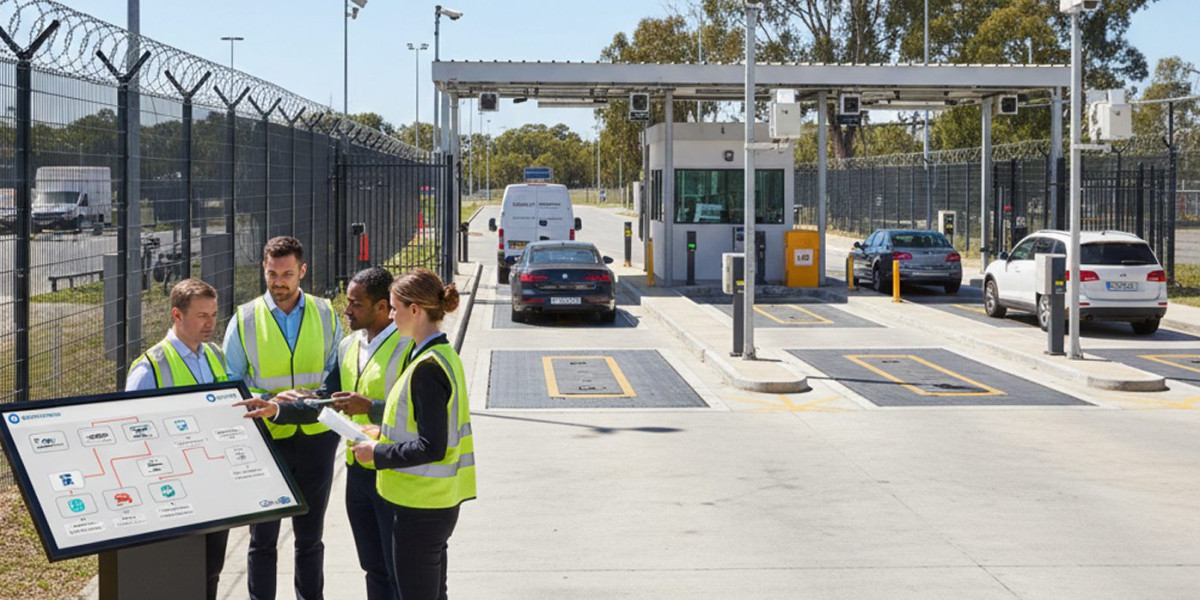
Vehicle security has become a critical concern for organizations managing sensitive locations, high-value assets, and restricted access areas. As security threats become more advanced, traditional inspection methods are no longer enough to provide complete protection. Organizations now require intelligent solutions that can monitor, analyze, and record vehicle activity with greater accuracy.
An Under Vehicle Surveillance System (UVSS) is one of the most effective technologies designed to improve vehicle security. By capturing detailed images of vehicle undercarriages and providing real-time monitoring capabilities, UVSS helps security teams identify hidden threats, maintain inspection records, and strengthen overall access control.
From airports and military facilities to government buildings, ports, and industrial sites, UVSS technology is becoming an essential component of modern security infrastructure.
What Is an Under Vehicle Surveillance System (UVSS)?
An Under Vehicle Surveillance System (UVSS) is an advanced security solution that automatically captures and monitors the underside of vehicles entering or leaving a protected area.
Unlike traditional manual inspections, UVSS uses high-resolution cameras, sensors, and intelligent software to create detailed images of a vehicle's undercarriage. These images allow security personnel to detect suspicious objects, unauthorized modifications, or unusual changes beneath the vehicle.
The system provides continuous surveillance and creates digital records, making it easier to analyze vehicle movements and identify potential security risks.
Why UVSS Is Important for Modern Security
The underside of a vehicle contains several areas where unauthorized objects can be concealed. Manual inspections often struggle to provide complete visibility due to limited access, lighting conditions, weather challenges, and time constraints.
A Under Vehicle Surveillance System solves these challenges by providing:
- Automated undercarriage scanning
- High-resolution vehicle images
- Real-time monitoring
- Digital inspection records
- Faster security decision-making
By adding an extra layer of protection, UVSS helps organizations detect risks before they enter secure environments.
How Does a UVSS Work?
A modern UVSS operates through a combination of imaging hardware and intelligent software.
The process generally includes:
1. Vehicle Detection
Sensors identify when a vehicle approaches the inspection zone and activate the scanning process.
2. Image Capture
High-definition cameras capture detailed images of the entire vehicle undercarriage.
3. Image Processing
The system processes captured images and displays them for security personnel to review.
4. Data Storage
Inspection images and vehicle information are stored in a secure database for future reference.
5. Security Analysis
Operators can compare current images with previous records to identify suspicious changes.
This automated process ensures that every vehicle receives consistent monitoring.
Key Benefits of an Under Vehicle Surveillance System
Enhanced Threat Detection
The main advantage of UVSS technology is its ability to identify hidden threats beneath vehicles. Security teams gain visibility into areas that are difficult to inspect manually.
The system can help detect:
- Suspicious objects
- Unauthorized attachments
- Vehicle modifications
- Concealed items
- Security anomalies
This improves the ability to prevent unauthorized access.
Continuous Vehicle Monitoring
Unlike manual inspections that happen only occasionally, a Under Vehicle Surveillance System provides continuous monitoring at security checkpoints.
Every vehicle passing through the inspection area can be recorded and analyzed, creating a reliable security history.
This continuous surveillance is especially valuable for:
- Military bases
- Airports
- Border checkpoints
- Government facilities
- Critical infrastructure
Digital Records and Historical Comparison
One of the strongest features of UVSS is its ability to maintain detailed inspection records.
A typical system can store:
- Vehicle undercarriage images
- Date and time of inspection
- License plate information
- Vehicle identification details
- Previous inspection history
Security teams can compare current and previous scans to detect changes that may indicate potential risks.
For example, if a vehicle regularly enters a facility, UVSS technology can identify unexpected changes beneath the vehicle compared to earlier visits.
Improving Security Operations with AI
Artificial intelligence is making UVSS solutions more powerful and efficient.
AI-powered systems can automatically analyze images, identify unusual patterns, and alert operators when potential concerns are detected.
AI improves UVSS by providing:
- Faster image analysis
- Automated anomaly detection
- Reduced manual workload
- Better inspection accuracy
- Improved response times
This allows security teams to focus on important situations instead of manually reviewing every vehicle image.
UVSS Integration with Other Security Technologies
Modern security environments require multiple systems working together. A powerful Under Vehicle Surveillance System can integrate with existing security solutions such as:
- Automatic License Plate Recognition (ALPR)
- CCTV surveillance
- Access control systems
- Security management platforms
- Vehicle databases
- Alarm systems
Integration provides a complete picture of vehicle activity and improves overall security coordination.
Applications of UVSS Technology
UVSS is widely used across industries where vehicle security is essential.
Airports
Airports use UVSS to monitor service vehicles, employee vehicles, and restricted-area access.
Military Facilities
Military organizations use UVSS to strengthen perimeter security and protect sensitive locations.
Government Buildings
Government facilities use automated undercarriage monitoring to improve vehicle screening.
Ports and Border Security
Border agencies and ports use UVSS to inspect commercial and passenger vehicles efficiently.
Industrial Facilities
Manufacturing plants and energy facilities use UVSS to protect assets and maintain secure operations.
UVSS vs Manual Vehicle Inspection
Manual inspection methods have several limitations:
| Manual Inspection | UVSS Technology |
|---|---|
| Requires physical effort | Automated monitoring |
| Time-consuming | Fast scanning process |
| Depends on operator experience | Consistent inspection quality |
| Difficult in poor conditions | Works in various environments |
| Limited record keeping | Digital image storage |
This comparison shows why many organizations are moving toward automated surveillance solutions.
The Future of Under Vehicle Surveillance Systems
The future of UVSS technology is focused on greater automation, artificial intelligence, and smarter security management.
Future systems are expected to include:
- Advanced AI threat recognition
- Cloud-based monitoring
- Predictive security analytics
- Improved image processing
- Integration with smart city infrastructure
As security requirements continue to increase, UVSS will play an important role in creating safer and more intelligent vehicle checkpoints.
Conclusion
An Under Vehicle Surveillance System (UVSS) provides organizations with a powerful method for improving vehicle security through automated monitoring, detailed imaging, and intelligent analysis.
By detecting hidden threats, maintaining digital inspection records, and integrating with modern security infrastructure, UVSS helps organizations protect critical locations while improving operational efficiency.






