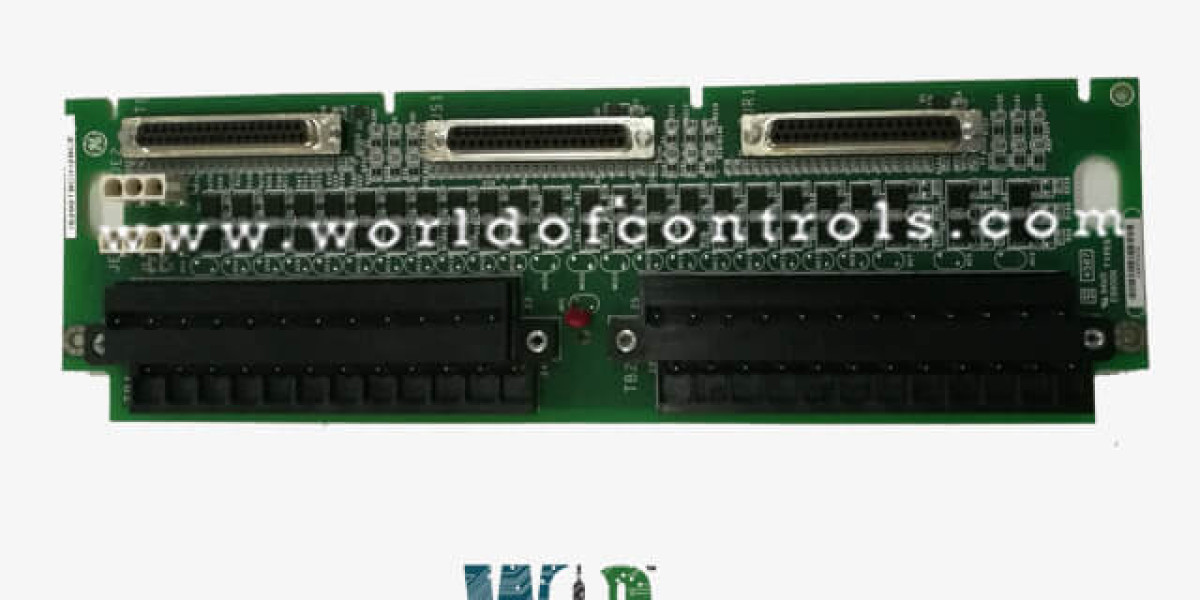
Introduction: The Foundation of Reliable Turbine Operation
Modern turbine systems operate in highly demanding environments where precision, safety, and responsiveness are critical. In power plants and industrial facilities, gas and steam turbines must respond instantly to changing conditions while maintaining stable performance. Behind this reliability lies a sophisticated control architecture developed by companies like General Electric (GE).
A key component of this architecture is contact input technology. Though often overlooked, contact input terminal boards play a vital role in transmitting real-time field signals to the turbine control system. Without accurate discrete input processing, even the most advanced control algorithms cannot function effectively.
Understanding Contact Input Technology
Contact inputs—also known as discrete or dry contact signals—represent binary states: open or closed. These signals originate from field devices installed throughout the turbine system, such as:
- Pressure switches
- Temperature limit switches
- Relay outputs
- Emergency stop circuits
- Equipment status indicators
Each of these devices communicates essential operational information. For example, a pressure switch may indicate whether lubrication oil pressure is within safe limits, while a limit switch may confirm valve position.
Contact input terminal boards serve as the interface between these field devices and the turbine controller. They collect, condition, and organize incoming signals before transmitting them to the main processor for logic execution.
Integration with GE Turbine Control Systems
In systems such as the GE Mark VI platform, contact input technology is integrated into a structured control framework. Terminal boards are mounted within control cabinets and connected to input/output modules that communicate directly with the turbine control processor.
This structured integration provides several operational advantages:
- Clear separation between field wiring and control electronics
- Reduced signal interference in electrically noisy environments
- Simplified troubleshooting and maintenance
- Improved reliability of discrete signal interpretation
By organizing multiple contact inputs into a centralized interface, GE’s control systems maintain orderly communication between plant equipment and control logic.
Enhancing Turbine Performance Through Accurate Signal Processing
Optimizing turbine control depends on real-time awareness of equipment status. Discrete input signals influence many critical functions, including:
- Startup and shutdown sequencing
- Protective interlocks
- Alarm generation
- Safety shutdown systems
- Auxiliary system monitoring
When contact input technology functions correctly, the control system can quickly evaluate conditions and respond appropriately. For instance, if a vibration limit is exceeded or lubrication pressure drops, the controller can initiate protective logic without delay.
Accurate signal processing also reduces the likelihood of nuisance trips—unnecessary shutdowns caused by faulty or misinterpreted inputs. Minimizing these events improves plant availability and operational efficiency.
Reliability and Safety in Demanding Environments
Turbine installations operate under extreme mechanical and thermal stress. Electrical systems within control cabinets must withstand vibration, heat, and electromagnetic interference. High-quality contact input terminal boards are designed to ensure signal integrity even under such challenging conditions.
Key reliability features typically include:
- Signal isolation to prevent electrical cross-talk
- Clearly labeled terminal points for safe wiring
- Organized input grouping for efficient diagnostics
- Durable construction suited for industrial environments
By ensuring clean, stable signal transmission, contact input technology supports fast and accurate decision-making within the turbine control processor. This strengthens both operational safety and equipment protection.
Supporting Long-Term Asset Management
Power generation assets often operate for decades. As turbines age, maintaining dependable control system components becomes increasingly important. Modular contact input boards allow for easier replacement and maintenance without extensive system redesign.
This modular approach supports:
- Reduced downtime during component replacement
- Simplified spare parts management
- Continued compatibility with established control architectures
For operators focused on lifecycle extension and reliability-centered maintenance, dependable contact input technology is a foundational element of long-term performance.
Conclusion: Small Components, Major Impact
While advanced processors and control algorithms receive much of the attention in turbine automation, the reliability of discrete signal interfaces is equally critical. GE contact input technology provides the essential link between field devices and the control system, ensuring that real-world conditions are accurately reflected in turbine logic.
By improving signal integrity, supporting safety interlocks, and enhancing maintainability, contact input terminal boards contribute directly to optimized turbine performance. In the complex ecosystem of modern power generation, even these foundational components play a decisive role in ensuring safe, stable, and efficient operation.