
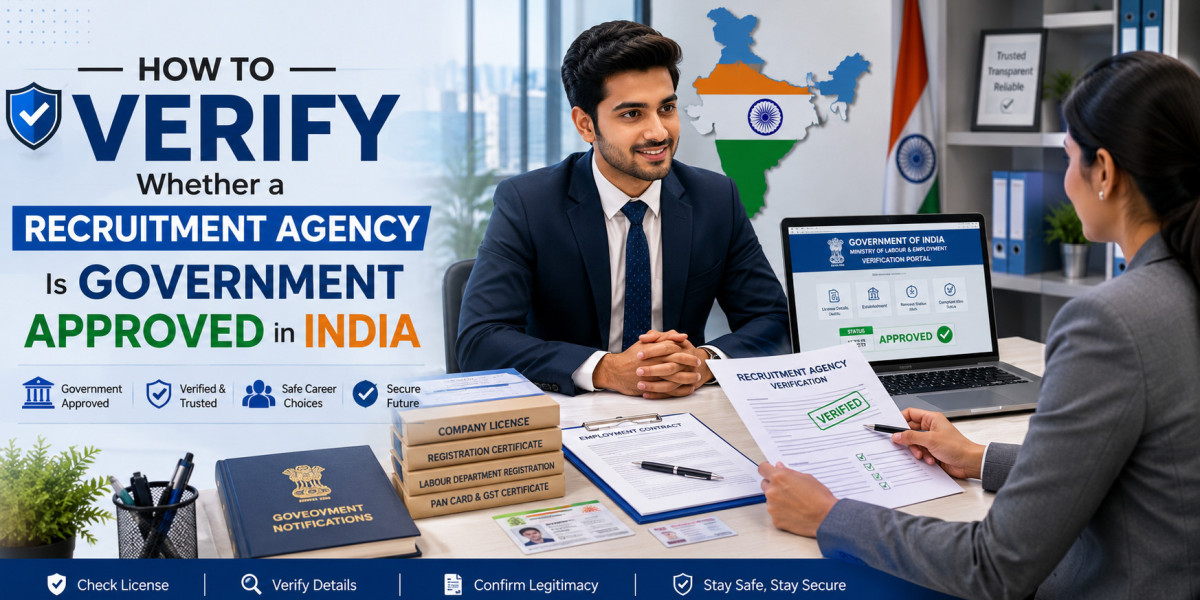
Finding a job through a recruitment agency can save you time, especially when you are applying for overseas roles or working with specialized hiring firms. The problem starts when an agency claims to be government approved, but gives you no clear proof. That is where many job seekers get trapped. If you are researching government approved recruitment agencies in Delhi or anywhere else in India, you need a simple way to verify the claim before you share documents or pay fees.
What “Government Approved” Means in India
The phrase “government approved” sounds official, but it does not mean the same thing in every hiring situation. In India, there is no single government badge that covers all private placement agencies. The actual meaning depends on whether the agency handles overseas recruitment or domestic hiring.
Overseas recruitment agencies
If an agency sends Indian workers abroad, especially to regulated foreign job markets, it may need a valid Registration Certificate issued by the Ministry of External Affairs through the Protector General of Emigrants. Many licensed overseas recruitment agents are listed on the eMigrate system. In practical terms, this is the closest thing to a formal government approval in the recruitment business.
Domestic placement agencies
For local hiring inside India, a recruitment firm usually operates as a private business. It may be a company, partnership, LLP, or sole proprietorship with standard business registrations such as GST, PAN, and local establishment records. A domestic agency can be legitimate without carrying a central government approval label, so you need to verify the business itself and its hiring practices.
Ask for the Agency’s License or Registration First
A genuine agency should never hesitate when you ask for proof. Start by requesting its registration or license details, along with the full legal name of the business. If the recruiter avoids the question, sends a blurry document, or asks you to trust them without records, treat that as a warning.
Ask for these details in writing:
- Full legal business name
- Registration or Recruitment Agent number
- Validity date of the certificate
- Registered office address
- Name of the authorized contact person
- Official website and company email ID
Compare the certificate with the name used on the agency’s website, social profiles, invoices, and job posts. Scammers often operate under one brand name while using documents from another company.
Verify the Details on Official Records
Once you have the registration details, check them against official records. For overseas recruitment, the eMigrate system and Ministry of External Affairs records are the key place to verify whether the agency is actually authorized. You are looking for exact matches, not close matches.
| What to verify | Where to check | What should match |
|---|---|---|
| Agency name | eMigrate or MEA records | Same legal name as the certificate |
| Registration or RA number | Official listing | Exact number, no missing digits |
| Validity status | Official listing | Active and not expired |
| Office address | Official listing and business documents | Same registered address |
| Contact details | Website, email, invoices | Consistent business identity |
If the agency claims it is approved but you cannot find it in the official system, stop there until you get a clear explanation. A missing record is more serious than a missing social media page. Official approval should be easy to prove.
Check the Business Behind the Brand
A valid license is one part of the check. You should also confirm that the business itself exists, operates from a real office, and issues proper documents. This matters because some fraudulent operators borrow old certificates, closed company names, or fake office addresses.
Check these business basics:
- Company or LLP registration through MCA records if applicable
- GST number on invoices or receipts
- Permanent office address with signage
- Landline number or official support contact
- Business email linked to the company domain
- Service agreement, invoice, or payment receipt
If you visit the office, notice how the team works. A real agency usually has staff, records, and a proper workspace. A rented desk, a shared cabin, or a meeting in a cafe is not enough when money and passports are involved.
Match the Job Offer With the Agency’s Approval
Approval status alone does not make a job offer genuine. You also need to check whether the specific job being advertised fits the agency’s actual area of work. An agency licensed for overseas placements should be able to show supporting documents for the employer and the role.
Ask to see:
- Employer name and company profile
- Demand letter or job order
- Employment contract
- Salary details and benefits
- Visa category
- Country, city, and job site information
If an agency promises a high-paying foreign job within days but cannot show a written contract, walk away. A proper recruitment process includes documents, screening, and clear payment terms. Verbal promises are not enough.
A 15-Minute Verification Checklist
You do not need a legal team to do a basic safety check. A short review can help you avoid a costly mistake.
- Ask for the registration or RA number
- Check the name and validity on official records
- Match the office address with the certificate and website
- Search the company name on MCA and GST records where applicable
- Review the offer letter and employer details
- Pay only to the company account, not to a personal account
- Keep copies of every receipt, email, and message
This process is simple, but it works because most fake agencies fail on one or more of these points.
Red Flags That Signal Trouble
Fraudulent agencies tend to follow the same patterns. They create urgency, avoid paperwork, and push you toward fast payment. When you know the signs, you can reject bad offers early.
Watch for these red flags:
- Refusal to share the registration number
- Expired or edited certificates
- Payment requests through UPI or personal bank accounts
- Unreal salary promises with no interview
- No written agreement or no detailed receipt
- Office address that does not exist or does not match records
- Pressure to hand over passport originals too early
- Only WhatsApp communication, no official email
- Claims of guaranteed visa approval
One red flag may need further checking. Several red flags together usually mean you should leave the process immediately.
How to Verify Agencies in Delhi
Delhi has a large concentration of placement and manpower agencies, which gives job seekers more options but also more noise. Some firms are well established, while others use rented addresses, copied websites, and borrowed credentials. You need to separate marketing from proof.
When you evaluate agencies in Delhi, start with the office address and the legal entity behind the business. Check whether the address appears in official records, receipts, and online listings. If possible, visit during working hours and ask to meet the recruiter handling your profile.
You can use business directories and job platforms, including placementindia.com, to shortlist agencies and compare their profiles. That helps with discovery, but it should never replace document verification. A good online profile is useful only when the official records and paperwork match it.
Questions to Ask Before You Pay Anything
The way an agency answers basic questions tells you a lot about its credibility. A genuine recruiter usually responds clearly and shares documents without drama. A risky one gets defensive, vague, or impatient.
Ask these questions before you pay:
- What is your registration or Recruitment Agent number?
- Which authority issued it, and when does it expire?
- Can I see the employer demand letter or job order?
- What services are included in the fee?
- Will I get a signed receipt and invoice?
- What is the refund policy if the job does not proceed?
- Can I verify your registered office address before payment?
- Who will handle my visa and contract process?
Keep the conversation on email whenever possible. Written communication gives you a record and reduces the chance of later denial.
Final Check Before You Sign
A reliable recruitment agency will not ask you to skip verification. It will expect you to check documents, compare records, and ask practical questions. That is how professional hiring works.
If the license, business identity, office address, payment trail, and job documents all line up, you can move forward with more confidence. If even one key detail does not match, pause the process until you get proof. Your documents, money, and career plans are worth protecting.






