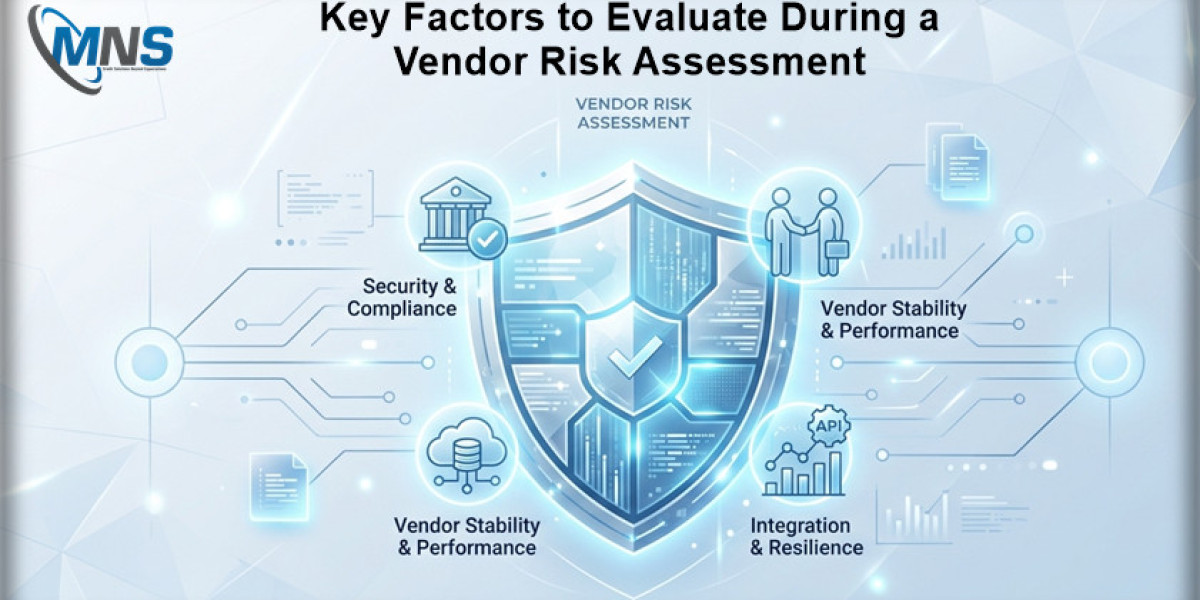
In today's interconnected business environment, organizations rely on a vast network of third-party vendors for critical services, technology, and supply chain functions. While these partnerships drive efficiency and growth, they also introduce significant risk. A single vulnerable vendor can become the entry point for data breaches, regulatory violations, or operational failures that ripple across your entire organization. That's why a thorough vendor risk assessment is no longer optional — it's a business imperative.
But what should you actually be evaluating? Here are the key factors every organization must examine when assessing vendor risk.
1. Cybersecurity and Data Protection
Cybersecurity is often the first and most critical dimension of any vendor risk assessment. You need to understand how a vendor protects its own systems and, by extension, your data. Key questions to ask include: Does the vendor have a documented information security policy? Have they undergone third-party security audits such as SOC 2, ISO 27001, or penetration testing? How do they handle data encryption, access controls, and incident response?
Vendors with weak cybersecurity postures are a liability, particularly those handling sensitive customer data or integrated into core business systems. Reviewing security certifications and recent audit reports is a non-negotiable step.
2. Financial Stability
A vendor's financial health directly impacts their ability to deliver services reliably over time. If a key supplier suddenly goes bankrupt or downsizes due to financial distress, your operations could grind to a halt. During your assessment, review the vendor's financial statements, credit ratings, and any history of litigation or restructuring. A financially unstable vendor poses a continuity risk that is often underestimated until it's too late.
3. Regulatory Compliance
Depending on your industry, vendors may need to comply with specific regulations such as GDPR, HIPAA, PCI-DSS, or local data sovereignty laws. Failing to verify vendor compliance can expose your organization to regulatory fines and reputational damage. Assess whether the vendor understands the legal landscape relevant to your partnership and whether they have documented compliance programs and up-to-date certifications.
4. Operational Resilience and Business Continuity
What happens when things go wrong? Evaluating a vendor's business continuity plan (BCP) and disaster recovery capabilities gives you insight into how prepared they are for disruptions — whether caused by cyberattacks, natural disasters, or supply chain failures. Vendors should be able to demonstrate defined recovery time objectives (RTOs) and recovery point objectives (RPOs), along with evidence that these plans have been tested.
5. Reputation and Track Record
Past performance is a strong predictor of future behavior. Research the vendor's reputation by reviewing client testimonials, case studies, and independent analyst reports. Look for red flags such as frequent service outages, unresolved customer complaints, regulatory sanctions, or a history of data breaches. Reference checks with existing clients can offer unfiltered insight into the vendor's reliability and responsiveness.
6. Fourth-Party Risk (Sub-Vendor Exposure)
Your risk doesn't stop at your vendor — it extends to their vendors as well. Fourth-party risk refers to the exposure that arises from the suppliers your vendors rely on. Ask vendors to disclose their critical sub-contractors and assess whether these entities have adequate security and compliance measures in place. Ignoring fourth-party risk has led to several high-profile supply chain attacks in recent years.
7. Contractual Safeguards and SLAs
The vendor contract itself is a risk management tool. Ensure agreements include clear service level agreements (SLAs), data handling responsibilities, breach notification timelines, liability clauses, and the right to audit. Contracts without these provisions leave your organization exposed in the event of a dispute or service failure.
Conclusion
A comprehensive vendor risk assessment is not a one-time checkbox — it's an ongoing process that should be revisited as vendor relationships evolve. By systematically evaluating cybersecurity, financial health, compliance, operational resilience, reputation, fourth-party exposure, and contractual protections, organizations can make informed decisions and build a vendor ecosystem that supports long-term resilience. The cost of a rigorous assessment is far less than the cost of a preventable vendor-related failure.