
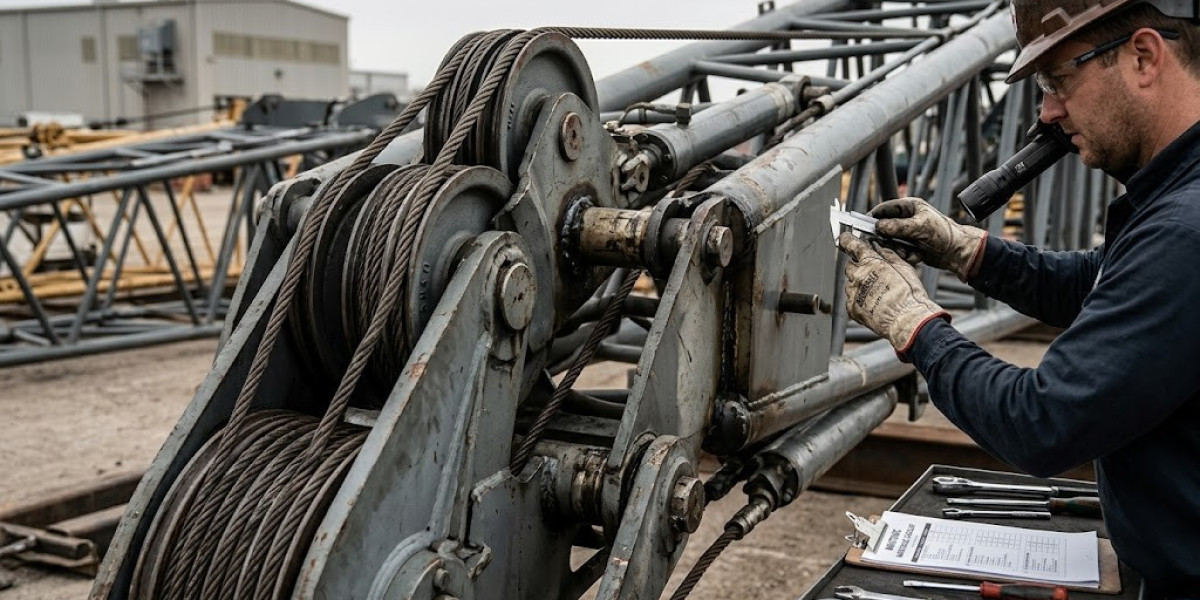
The boom is the heart of every Manitowoc crane. It converts hydraulic and mechanical power into the reach and lift capacity that defines the machine. Yet Manitowoc engineers fundamentally different boom systems for different crane categories. Crawler models carry open truss frameworks. Rough-terrain and all-terrain units employ nested hydraulic boxes. Understanding these structural distinctions ensures proper upkeep and guides procurement of the correct Manitowoc crane parts when wear appears.
This manual examines Manitowoc's principal boom families. We explore how each design manages operational stress, which elements wear predictably, and what maintenance discipline preserves reliability. The focus stays on practical guidance for technicians making daily repair decisions.
Lattice Booms: Truss Construction Principles
Lattice booms built Manitowoc's reputation in heavy-lift applications. Welded steel tubes arranged in triangular or rectangular patterns create open frameworks with remarkable strength-to-weight characteristics. The 2250 and 4100 crawler series exemplify this time-tested approach.
Construction follows a modular philosophy. A base section anchors to the crane's revolving frame. Intermediate inserts extend reach as needed. A tip section carries load block attachment points and sheave hardware. Pins connect each segment and shoulder enormous dynamic loads during lifting cycles. These pins require systematic inspection for wear, scoring, and dimensional changes. Lacing bars and chord tubes form the truss skeleton; any crack, corrosion pocket, or section loss threatens structural integrity. Tip sheaves guide wire rope through precise angles and gradually dish from contact pressure. Mechanical boom stops provide physical limits against over-rotation.
Precision assembly governs service life. Every pinned interface demands appropriate lubrication. Every bolted connection requires correct torque. Specifying authentic Manitowoc crane parts for these structural elements preserves engineered load distribution. A worn bushing seems minor, but it alters how forces travel through the truss. That alteration compounds silently across thousands of operational cycles.
Telescopic Booms: Hydraulic Extension Engineering
Telescopic booms prioritize setup speed over ultimate capacity. Nested rectangular sections extend and retract via hydraulic cylinders. Manitowoc integrates these designs into rough-terrain and all-terrain cranes where rapid deployment wins contracts.
The outermost section houses the primary cylinder. Hydraulic pressure extends the rod, pushing inner stages outward. Some Manitowoc telescopic models employ internal cable-and-sheave arrangements to synchronize multi-stage extension from a single actuator. Polymer wear pads between sliding surfaces prevent destructive metal-to-metal contact. These pads erode predictably and must be replaced before underlying steel contacts steel.
Cylinder seals represent the most frequent telescopic boom maintenance event. Thermal cycling, pressure spikes, and fluid contamination all attack elastomeric seals. Cable systems, where fitted, need regular assessment for broken strands and tension loss. Boom angle transducers feed positional data to load moment indicators; calibration drift produces erroneous capacity calculations.
Hydraulic cleanliness is non-negotiable for telescopic boom health. Particulate contamination scores precision cylinder bores and jams control valves. Adhere to fluid analysis schedules and filter replacement intervals. When cylinder resealing becomes necessary, premium seal specifications outperform economy alternatives. The operational cost of unplanned downtime from seal failure exceeds any initial parts savings. Maintain a strategic inventory of critical crane spare parts for your hydraulic system.
Jib Configurations: Fixed and Articulating Options
Jibs multiply a crane's working envelope beyond main boom capability. Fixed jibs install at predetermined angles through bolted connections. Structurally simple and robust, but geometric adjustment requires physical removal and reinstallation. Articulating or luffing jibs incorporate independent hydraulic circuits enabling dynamic angle changes during operation. The added complexity purchases operational flexibility.
Jib hardware creates distinct inspection obligations. Connection pins at the boom tip concentrate offset loading and require frequent dimensional verification. Luffing jib cylinders demand equivalent maintenance rigor to main boom hydraulics. Jib sheaves and rope guards manage wire rope entry angles; groove profile degradation accelerates rope fatigue. Structural members adjacent to welded joints should be screened for crack initiation. Because jibs modify the crane's structural loading envelope and load chart parameters, they also modify the required inspection scope. When procuring crane spare parts for jib components, exact model and configuration knowledge prevents ordering mismatches.
Wire Rope and Reeving System Dynamics
The boom serves merely as a structural pathway for wire rope to perform actual lifting. Reeving configurations thread rope through sheave trains to create mechanical advantage. Additional sheave passes increase capacity while simultaneously increasing friction and abrasive wear.
Rope condition assessment is perpetual work. Broken wire clusters, permanent deformation, corrosion attack, and diameter reduction all signal replacement necessity. Retirement criteria should be applied conservatively—rope failure during active lifting creates uncontrolled load descent and severe hazard exposure. Sheave condition directly governs rope service life. Seized bearings generate destructive heat. Worn sheave profiles pinch and deform rope strands. Groove radius must match rope diameter within close tolerance. Utilizing specification-grade Manitowoc crane parts for sheave replacement preserves this critical dimensional relationship.
Structural Components and Connection Integrity
Load paths continue through elements rarely visible during normal operation. Boom foot pins transfer the entire lifted moment into the crane's turntable structure. These massive pins require periodic extraction and inspection for fretting damage, surface scoring, and crack indications. Boom elevation systems position the boom in space. Lattice configurations typically employ wire rope pendant systems; telescopic variants generally utilize hydraulic cylinders. Both approaches wear progressively and both compromise safety when wear exceeds limits.
Connection integrity spans the complete boom assembly. Weld toe cracking initiates at stress concentration points; paint disruption near welded joints frequently reveals incipient structural problems. Threaded fasteners loosen under cyclic vibration; torque verification prevents the self-accelerating wear that follows fastener loosening. These inspections lack visual drama but prevent the catastrophic failures that destroy equipment and endanger personnel.
Universal Wear Mechanisms Across All Boom Categories
Certain degradation modes transcend specific boom architecture. Pin and bushing interfaces deteriorate through unavoidable frictional contact—lubrication extends service life but cannot eliminate material loss entirely. Elastomeric seals degrade chronologically, with thermal oxidation and ultraviolet exposure accelerating aging. Wire rope suffers fatigue from repeated bending around sheaves and from surface abrasion. Sheave bearings lose precision; grooves deform plastically. Electronic sensors drift from calibrated baselines.
These conditions remain manageable maintenance items when identified promptly. Deferred attention escalates consequences disproportionately. A scheduled bushing replacement constitutes routine planned work. A boom section destroyed by unchecked wear progression demands emergency repair and extended operational interruption.
Strategic Parts Procurement Methodology
Replacement component sourcing requires informed discipline. Manitowoc boom configurations vary by specific model designation, manufacturing year, and factory-installed options. Serial number verification enables qualified suppliers to confirm application compatibility against factory records. This step additionally identifies design revisions—Manitowoc periodically updates components reflecting operational feedback.
Genuine Manitowoc crane parts represent the conservative specification for structural and safety-critical applications. These components carry the material certifications and dimensional tolerances the original engineering assumes. Aftermarket alternatives may prove adequate for non-structural hardware applications. However, boom connection pins, structural castings, and critical weldments present risk profiles incompatible with cost-driven substitution. A dimensionally approximate part with inferior metallurgy can initiate system-wide failure cascades. Cultivate supplier relationships with demonstrated crane spare parts inventory depth to minimize procurement delays when maintenance needs arise.
Operational Discipline for Extended Boom Service Life
Specific operational habits measurably extend boom service life. Lubricate all pinned joints on the published maintenance calendar without exception. Remove accumulated dirt and debris that accelerates surface wear and abrasive damage. Conduct enhanced inspections following any overload event or shock load impact. Store wire rope on proper reels or in figure-eight coils to prevent permanent deformation and environmental degradation. Maintain comprehensive service records documenting all inspections, component replacements, and torque verifications. These practices require modest organizational discipline but yield substantial returns through avoided major repairs and preserved equipment residual value.
Concluding Perspective
Boom-type comprehension directly informs maintenance program quality. Lattice booms reward attention to pin integrity and structural detail. Telescopic booms reward hydraulic system discipline and wear pad vigilance. Jib systems reward recognition of their added complexity and expanded inspection requirements.
Every boom configuration shares wear points that demand scheduled, systematic attention. Specify quality crane spare parts for all replacement events. Maintain detailed, accessible documentation. Your boom represents significant deployed capital. Steward it through informed care and correct Manitowoc crane parts to ensure years of safe, productive lifting performance.






