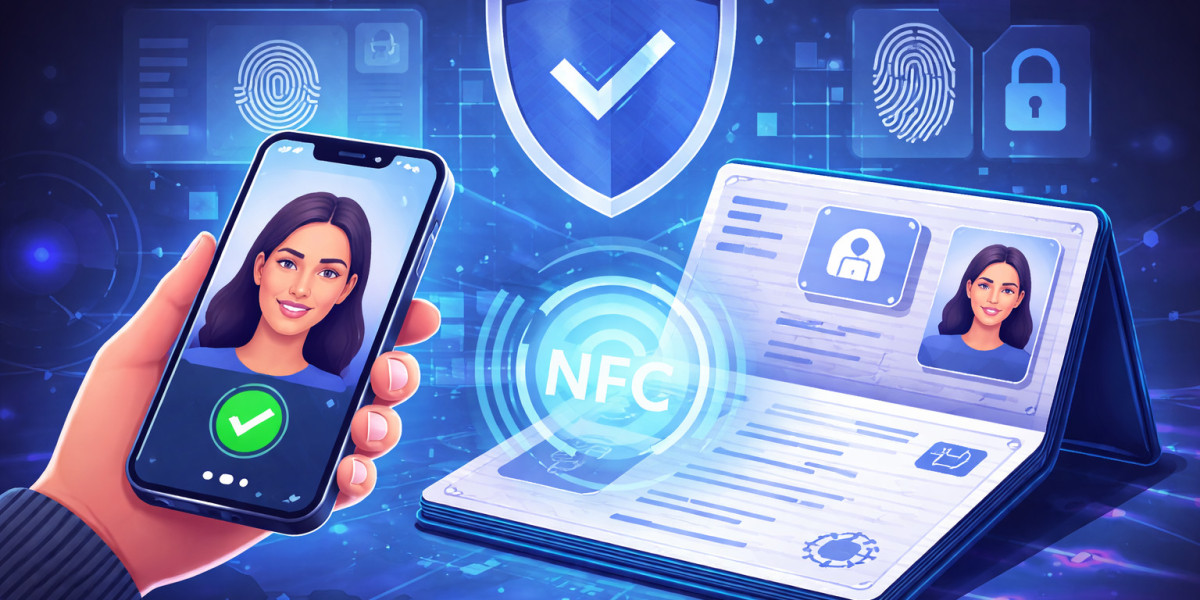
In today’s digital-first world, businesses are rapidly adopting advanced technologies to enhance security, improve user experience, and meet regulatory compliance. Among the most powerful solutions are NFC identity verification and biometric authentication services, which together create a seamless and highly secure identity verification ecosystem.
What is NFC Identity Verification?
Near Field Communication (NFC) identity verification is a contactless technology that enables secure data exchange between devices over short distances. It is widely used to scan and verify e-passports, national ID cards, and smart cards embedded with NFC chips. These chips store encrypted personal information such as name, date of birth, and biometric data.
With NFC verification, users simply tap their document on a smartphone, allowing the system to extract and validate data instantly. This eliminates manual entry errors and reduces fraud risks. Industries like banking, fintech, travel, and telecom rely heavily on NFC-based solutions to streamline KYC (Know Your Customer) processes.
Role of Biometric Authentication Services
Biometric authentication services use unique biological traits such as facial recognition, fingerprint scanning, voice recognition, and iris detection to verify a user’s identity. Unlike passwords or OTPs, biometric data is extremely difficult to replicate, making it a highly secure authentication method.
Modern biometric systems are powered by AI and machine learning, enabling real-time verification with high accuracy. Features like liveness detection ensure that the system can differentiate between a real person and a spoof attempt (such as photos or videos).
Benefits of Combining NFC and Biometrics
When NFC identity verification is integrated with biometric authentication, it creates a multi-layered security framework. Here are the key benefits:
- Enhanced Security: NFC ensures document authenticity, while biometrics verifies the user’s identity.
- Fraud Prevention: Reduces risks of identity theft, fake documents, and impersonation.
- Faster Onboarding: Instant verification speeds up customer onboarding processes.
- Regulatory Compliance: Helps businesses meet global KYC and AML requirements.
- User Convenience: Contactless and seamless experience improves customer satisfaction.
Use Cases Across Industries
- Banking & Fintech: Digital account opening, loan approvals, and secure transactions
- Travel & Hospitality: e-passport verification and contactless check-ins
- Healthcare: Secure patient identification and data access
- Telecom: SIM card registration and identity validation
The Future of Identity Verification
As cyber threats continue to evolve, businesses must adopt more robust identity verification methods. NFC and biometric authentication are no longer optional—they are becoming essential for building trust in digital platforms.
With advancements in AI, cloud computing, and mobile technology, these solutions are becoming more accessible and scalable. Companies investing in these technologies today will gain a competitive edge by offering secure, fast, and user-friendly verification experiences.
Conclusion
NFC identity verification and biometric authentication services are transforming how businesses verify identities in the digital age. By combining secure document validation with advanced biometric checks, organizations can ensure a higher level of protection while delivering a smooth user journey. For businesses looking to strengthen their security infrastructure and improve customer trust, adopting these technologies is a smart and future-ready decision.