The telehealth market has moved well past its pandemic-era surge and settled into something more durable: a fundamental shift in how healthcare is delivered. Patients now expect the option to consult a doctor from their phone. Clinics and health systems that lack a robust telehealth presence are losing patients to competitors who have one. For healthcare startups, clinics, and digital health entrepreneurs, the question is no longer whether to build a telehealth app, it is how to build one that is secure, compliant, and genuinely useful.
This guide covers everything you need to know before starting your telehealth app development project in 2026: the features that matter, the compliance requirements you cannot cut corners on, and what realistic development costs look like.
The Telehealth Landscape in 2026
Remote healthcare delivery has matured significantly. Early telehealth apps were essentially video calling with a healthcare badge. Today's leading telehealth platforms integrate AI-assisted diagnostics, remote patient monitoring via wearables, e-prescriptions, electronic health record synchronization, and sophisticated scheduling and billing systems, all within a single, cohesive patient experience.
The bar has risen, and so have patient expectations. Building a telehealth app that simply works is no longer sufficient. It needs to be fast, intuitive, and seamlessly integrated with the broader healthcare ecosystem. This makes telehealth app development one of the most technically demanding categories in mobile app development today.
Must-Have Features for a Telehealth App in 2026
High-quality video and audio consultation remains the core feature, but the implementation requirements are more demanding than most people assume. Healthcare video calls need end-to-end encryption as a baseline requirement. They need to function reliably on lower-bandwidth connections because not all patients have fiber internet. And they need to support clinical-grade audio quality that allows physicians to detect subtle cues in a patient's voice.
AI-assisted pre-consultation triage has become a competitive differentiator. Before the consultation begins, intelligent intake flows can collect patient symptoms, review history, and provide the physician with a structured summary. Some platforms are implementing AI symptom checkers that guide patients to the appropriate level of care, virtual visit, urgent care, or emergency, before any human physician is involved.
E-prescription integration is now a regulatory expectation in most markets, not a nice-to-have feature. Your app needs to integrate with pharmacy networks and comply with electronic prescribing regulations, including controlled substance prescribing rules where applicable.
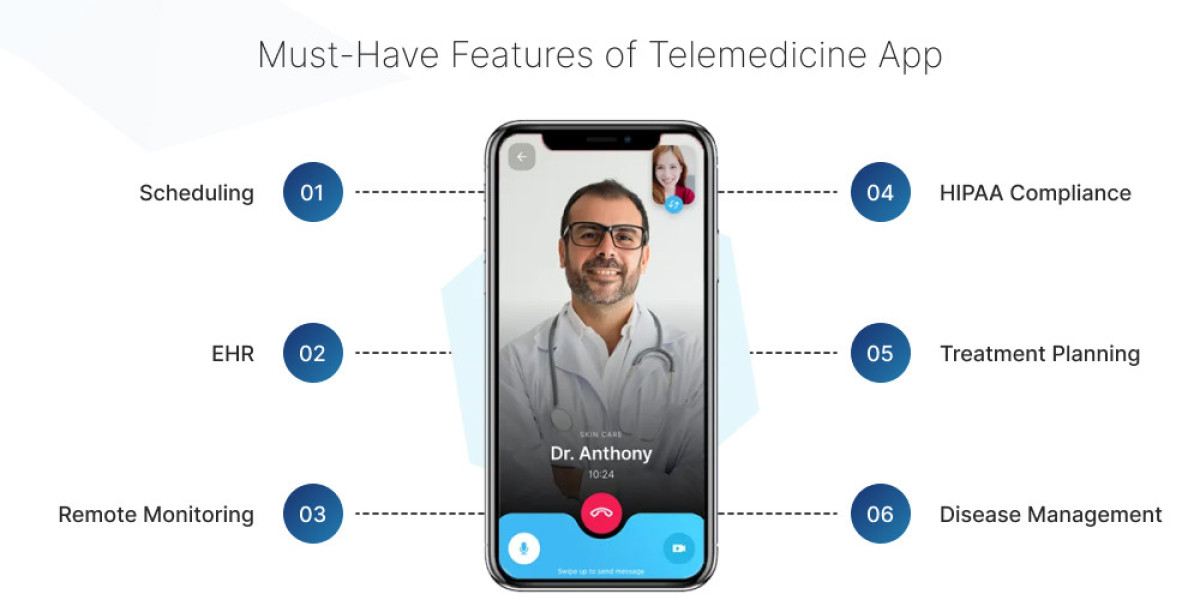
EHR and EMR integration is non-negotiable for clinical settings. Whether your app connects to Epic, Cerner, or a regional health information system, seamless record exchange ensures that consultation notes, diagnoses, and prescriptions flow automatically into the patient's permanent record.
Remote patient monitoring capabilities are increasingly expected. Integration with wearable devices, blood pressure monitors, glucometers, pulse oximeters, continuous glucose monitors, allows physicians to review real-time patient data during or between consultations.
Appointment scheduling and calendar management sounds mundane, but getting it right is genuinely hard. The system needs to handle multiple provider calendars, time zone management for multi-region deployments, automated reminders via SMS and push notification, and no-show management workflows.
Secure in-app messaging for asynchronous communication between patients and care teams has become a standard feature. Patients want to ask follow-up questions or share updated information without scheduling a full consultation.
Billing and insurance claims processing is where many telehealth apps underinvest. A well-implemented billing module handles insurance verification, co-pay collection, superbill generation, and claims submission to payers, all within the app.
Compliance: The Non-Negotiable Foundation
Healthcare software operates in one of the most heavily regulated environments in any industry. Getting compliance wrong is not just a technical failure, it is a business-ending legal risk.
HIPAA compliance in the US context means implementing specific technical safeguards: data encryption at rest and in transit, access controls, audit logging, and a signed Business Associate Agreement with every vendor in your technology stack. Your development partner must understand HIPAA at a technical implementation level, not just in principle.
HITECH Act requirements extend HIPAA obligations around breach notification and strengthen enforcement. If you are handling electronic protected health information, HITECH compliance is not optional.
State-specific telehealth regulations add another layer of complexity. Many US states have specific requirements around prescribing via telehealth, patient consent for virtual visits, and physician licensing for cross-state consultations. Building for a national audience means navigating a patchwork of state laws, and the regulatory landscape changes frequently.
FDA regulations come into play if your app incorporates diagnostic AI or connects to medical devices. Software that meets the FDA's definition of a Software as a Medical Device (SaMD) requires specific regulatory pathways, including potential 510(k) clearance.
For international deployments, GDPR in Europe, PIPEDA in Canada, and equivalent frameworks in other markets create additional compliance obligations around data residency, patient consent, and the right to data erasure.
What Does Telehealth App Development Actually Cost?
Development costs vary significantly based on complexity, platform choices, and the experience level of your development partner. As a practical reference:
A foundational telehealth app with core consultation features, basic scheduling, and HIPAA-compliant infrastructure typically runs between $40,000 and $80,000 for initial development. This is a starting point, not a ceiling.
A mid-complexity platform adding EHR integration, e-prescriptions, in-app messaging, and a patient portal typically ranges from $80,000 to $150,000.
An enterprise-grade telehealth platform with AI triage, remote monitoring, multi-specialty scheduling, insurance billing, and multi-region compliance can exceed $200,000 in initial development.
Timelines are equally important to budget. A well-staffed development team building a foundational telehealth app typically needs four to six months from requirements to launch. More complex platforms require eight to twelve months.
Choosing the Right Development Partner
Telehealth app development requires a partner with demonstrated healthcare software experience, not just general mobile app development capability. Ask specifically about their experience with HIPAA-compliant architectures, their familiarity with EHR integration standards like HL7 FHIR, and their approach to accessibility compliance for patient-facing interfaces.
At API Dots, our healthcare software development team has built telehealth platforms, patient portals, and clinical management systems for providers across multiple markets. If you are planning a telehealth app development project, we offer a detailed scoping consultation to help you define requirements, understand compliance obligations, and build a development roadmap that fits your timeline and budget.