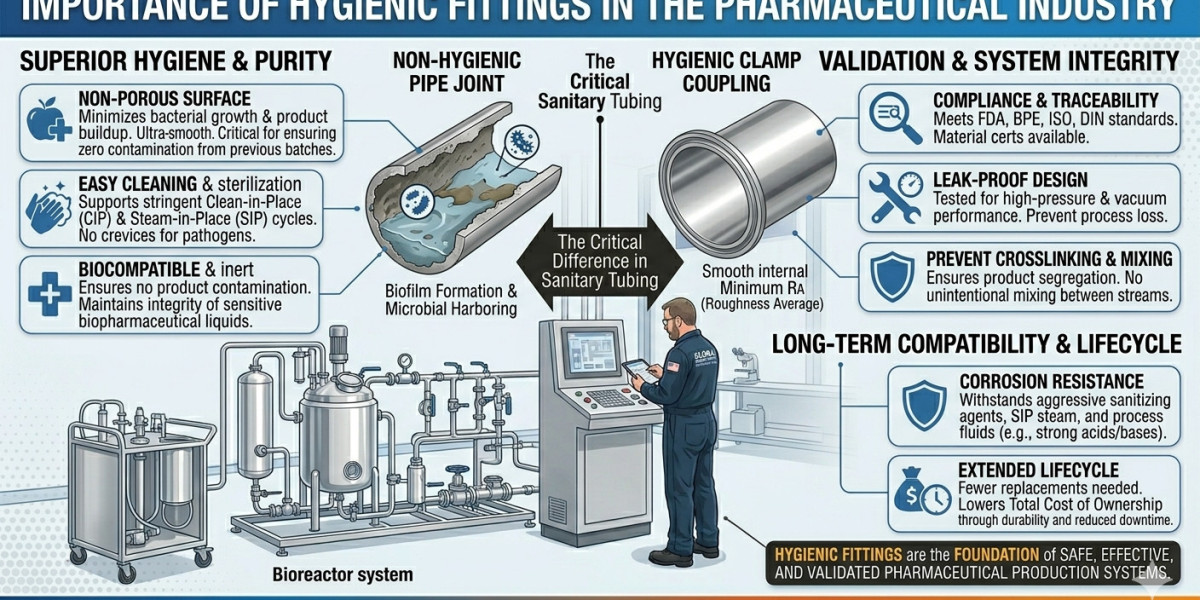
In the pharmaceutical industry, maintaining the highest standards of hygiene is not just important it is essential. Every component used in processing systems must meet strict cleanliness and safety requirements to ensure product quality and patient safety. Hygienic fittings play a critical role in achieving these standards by providing contamination-free connections within piping systems. Industry experts like Cardinal Cooling Systems emphasize the importance of using high-quality hygienic fittings to ensure reliable and compliant operations.
Why Hygiene Is Critical in Pharmaceutical Manufacturing
Pharmaceutical products are highly sensitive and must be manufactured in controlled environments. Even minor contamination can compromise product integrity, leading to serious health risks and regulatory violations.
Hygienic fittings help maintain sterile conditions by:
- Preventing the accumulation of bacteria and contaminants
- Supporting efficient cleaning and sterilization
- Ensuring secure and leak-free connections
These factors make hygienic fittings a vital part of pharmaceutical systems.
What Are Hygienic Fittings?
Hygienic fittings are specially designed components used to connect pipes, valves, and equipment in systems that require strict cleanliness. They are typically made from stainless steel and feature smooth, polished surfaces to minimize contamination risks.
Unlike standard fittings, hygienic fittings are designed to eliminate crevices where bacteria can grow, ensuring safe fluid transfer in sensitive applications.
Key Features of Hygienic Fittings
Smooth and Crevice-Free Design
Hygienic fittings are engineered with smooth internal surfaces that prevent residue buildup and bacterial growth.
High-Quality Materials
Stainless steel, especially grades like 304 and 316, is commonly used due to its corrosion resistance and durability.
Easy Cleaning and Sterilization
These fittings are compatible with Clean-in-Place (CIP) and Sterilize-in-Place (SIP) systems, allowing thorough cleaning without dismantling.
Leak-Proof Connections
Properly designed hygienic fittings ensure tight seals, reducing the risk of contamination and product loss.
Companies like Cardinal Cooling Systems prioritize these features when designing pharmaceutical-grade systems.
Role of Hygienic Fittings in Contamination Prevention
Contamination is one of the biggest risks in pharmaceutical manufacturing. Hygienic fittings play a key role in minimizing this risk.
Eliminating Dead Zones
Dead zones are areas where fluid can stagnate, leading to bacterial growth. Hygienic fittings are designed to reduce or eliminate such areas.
Maintaining Sterile Flow
Their design ensures smooth and uninterrupted flow, preventing the accumulation of harmful substances.
Supporting Clean Environments
By enabling effective cleaning and sterilization, hygienic fittings help maintain sterile production conditions.
Experts at Cardinal Cooling Systems highlight contamination control as a primary reason for using hygienic fittings.
Compliance with Industry Standards
The pharmaceutical industry is governed by strict regulations to ensure product safety and quality.
Regulatory Requirements
Hygienic fittings must comply with standards such as FDA, GMP (Good Manufacturing Practices), and 3-A sanitary standards.
Quality Assurance
Using compliant fittings ensures that systems meet regulatory expectations and pass inspections.
Adhering to these standards is essential for maintaining credibility and avoiding legal issues.
Applications in Pharmaceutical Systems
Hygienic fittings are used in various stages of pharmaceutical production:
- Fluid Transfer Systems: Ensuring safe movement of liquids
- Mixing and Processing Units: Maintaining contamination-free operations
- Filling and Packaging Lines: Preventing product contamination
- Cleaning Systems: Supporting CIP and SIP processes
In all these applications, Cardinal Cooling Systems integrates hygienic fittings to ensure optimal performance.
Benefits of Using Hygienic Fittings
Hygienic fittings offer several advantages that make them indispensable in pharmaceutical systems:
- Enhanced product safety and quality
- Reduced risk of contamination
- Improved system efficiency
- Easier maintenance and cleaning
- Long-term durability and reliability
These benefits contribute to smooth and compliant operations.
Common Mistakes to Avoid
When selecting or using hygienic fittings, avoid these common errors:
- Using non-compliant or low-quality materials
- Ignoring cleaning and maintenance requirements
- Choosing fittings with poor design that creates dead zones
- Overlooking compatibility with existing systems
Avoiding these mistakes helps maintain system integrity and product safety.
Best Practices for Maintenance
Proper maintenance is essential to ensure the effectiveness of hygienic fittings:
- Conduct regular inspections for wear or damage
- Clean thoroughly using approved methods
- Replace worn components promptly
- Follow industry guidelines for sterilization
Routine maintenance ensures long-term performance and compliance.
Final Thoughts:
Hygienic fittings are a fundamental part of pharmaceutical manufacturing systems. Their role in preventing contamination, ensuring compliance, and maintaining product quality cannot be overstated.
By investing in high-quality fittings and following proper maintenance practices, pharmaceutical companies can achieve reliable and safe operations. With the expertise of trusted providers like Cardinal Cooling Systems, businesses can build systems that meet the highest standards of hygiene and performance.