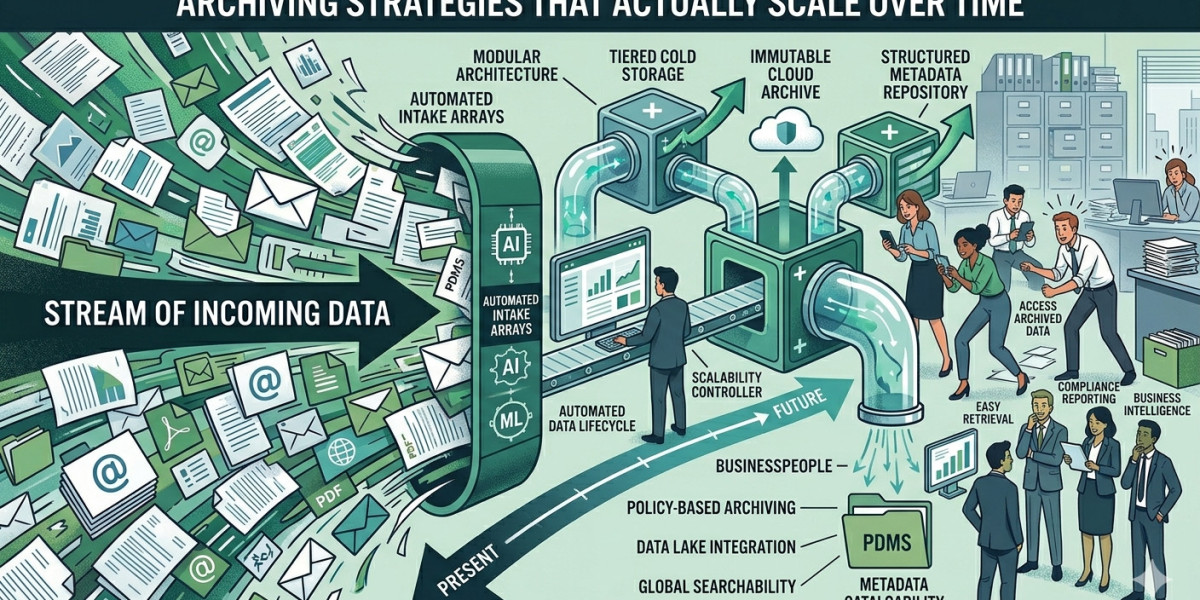
As data volumes grow, many organizations realize they never had an archiving strategy in the first place. They had storage, backups, scattered retention rules, and a few systems held together by habit. That may work for a while, but it does not scale. Digital archiving becomes essential when businesses need records to remain accessible, structured, and reliable over time instead of disappearing into disconnected systems.
Why archiving gets harder as organizations grow
Small archives can survive on informal habits. A few folders, a naming convention, maybe one team that remembers where everything goes. Growth kills that comfort fast. More departments create more records, systems multiply, formats vary, and compliance obligations expand. What once looked manageable starts turning into operational drag.
The first problem is inconsistency. Different teams archive documents in different ways. Some apply metadata, others do not. Some follow retention rules, others keep everything forever. That lack of discipline creates confusion and makes retrieval harder than it should be.
Then there is system sprawl. Files end up spread across cloud drives, legacy applications, email systems, and department-specific tools. Records still exist, technically speaking, but accessing them becomes slow, fragmented, and expensive.
Volume makes all of this worse. When archiving depends too heavily on manual handling, scale becomes the enemy. The more documents a business creates, the more likely errors, duplication, and misclassification become.
What scalable digital archiving actually requires
Digital archiving that scales is not just about storing more files in a bigger environment. It requires structure, consistency, and rules that hold up as complexity increases.
Classification is a major part of this. Records need to be identified properly from the start so they can be stored, managed, and retrieved according to business and regulatory needs. Without clear classification, archives become cluttered and less trustworthy over time.
Metadata matters just as much. A document archive without meaningful metadata is basically a warehouse with the lights off. Businesses need context around what a document is, where it came from, who owns it, and how long it should be retained.
Automation also becomes necessary at scale. Manual tagging, sorting, and routing may work for a limited volume, but once thousands of records enter the system regularly, automation is what keeps the archive usable. Consistent rules reduce human error and support long-term governance.
Interoperability is another requirement that often gets ignored until it becomes painful. Scalable archives need to work across systems, not trap data inside one platform or format.
Where many archiving strategies fail
A lot of businesses mistake passive storage for active archiving. They move files out of production systems and assume the job is done. It is not. If the records are hard to search, impossible to govern, or dependent on old systems, the archive is just a quieter mess.
Another common failure is designing the archive around current conditions only. A setup that works for one department, one region, or one set of regulations may fall apart when the business expands. Scalable archiving has to account for future growth, not just present convenience.
There is also a habit of treating archiving as an IT cleanup task instead of a business process. That usually leads to systems that store records but do not align with legal, operational, or compliance needs. When business users cannot trust or access the archive easily, they work around it. Once that starts, governance slips.
Legacy dependency is another trap. Some organizations keep outdated platforms alive just to preserve access to historical records. That is expensive, inefficient, and not exactly a smart long-term plan.
A better model for long-term scale
The smarter approach is to treat archiving as part of the information lifecycle, not the final resting place for old documents. Records should move into the archive with structure already in place, not arrive as digital leftovers.
That means standardizing capture, classification, retention policies, and access controls. It also means choosing systems that can support changing formats, evolving compliance needs, and integration with broader workflows.
Platforms like Docbyte fit this model by supporting digital archiving as part of a wider strategy for document management, compliance, and long-term accessibility. Instead of just storing records, the goal is to preserve them in a way that keeps them usable and governable as the organization changes.
This is where scalability becomes real. Not just more capacity, but more consistency. Not just more storage, but better control.
Why scalable archiving matters beyond storage
When digital archiving scales properly, the benefits show up far beyond the archive itself. Teams can retrieve records faster, compliance responses become less painful, and historical information remains available without depending on outdated systems.
It also lowers operational risk. Businesses are less likely to lose records, miss retention obligations, or waste time hunting through disconnected tools. That stability matters, especially in regulated or document-heavy environments.
There is a cost benefit too. Poor archiving creates hidden expenses through manual retrieval, duplicated storage, migration delays, and legacy maintenance. A scalable archive reduces those costs by replacing patchwork processes with a more durable system.
Most importantly, it preserves business memory. Records are not valuable just because they exist. They are valuable because they can still be found, trusted, and used when needed.
Conclusion
Digital archiving only works long term when it is designed to scale from the start. That means moving beyond loose storage habits and building systems around structure, metadata, automation, and governance. Businesses that get this right do more than store old records. They create an archive that stays reliable as data grows, systems change, and compliance demands increase. That is the difference between keeping information and actually being able to use it years later.