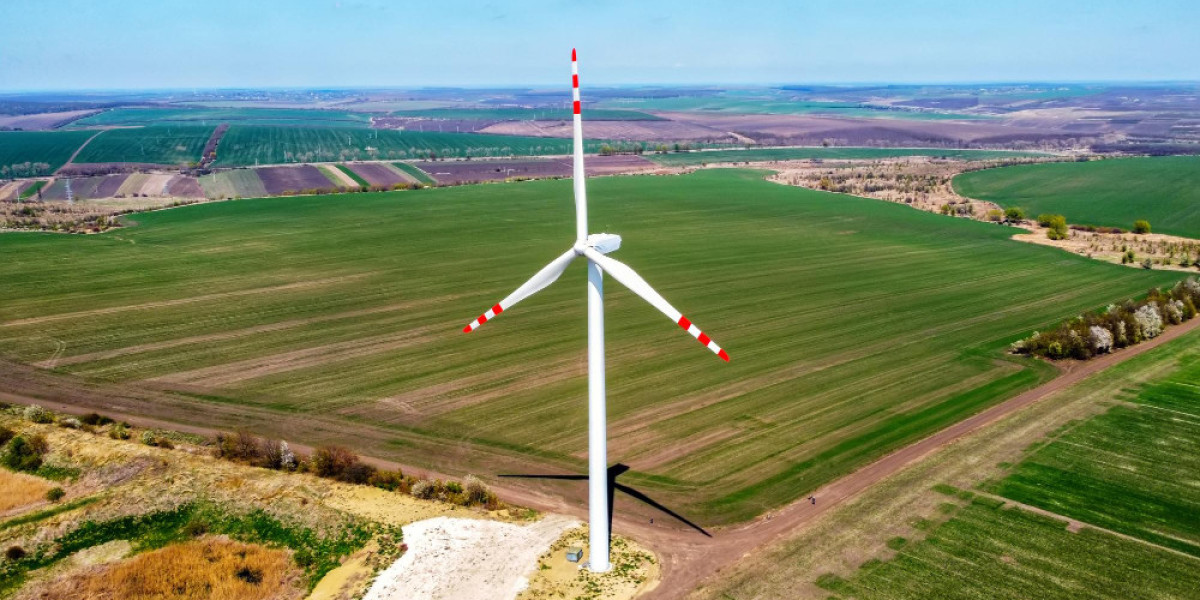
The Brazil Wind Turbine Components Market has emerged as a strategically important segment within the global renewable energy ecosystem. As countries accelerate decarbonization efforts, wind energy infrastructure—and particularly turbine components such as blades, nacelles, and gearboxes—has become a focal point of industrial investment. Brazil, with its vast wind corridors and supportive regulatory environment, is positioning itself as a competitive manufacturing and deployment hub. However, when benchmarked against global leaders like China, Europe, and the United States, Brazil presents a nuanced mix of strengths and structural limitations. This blog examines how Brazil compares globally in terms of market size, technological advancement, supply chain integration, and segmentation dynamics, while also analyzing its growth trajectory and competitive positioning.
Market Value and Growth Outlook
The Brazil Wind Turbine Components Market reached a value of USD 2,926.18 million in 2024 and is projected to grow to USD 4,952.12 million by 2033, expanding at a CAGR of 6.02% during 2025–2033.
In contrast, the global wind turbine components market was valued at USD 143.5 billion in 2025 and is expected to reach USD 242.4 billion by 2034, growing at a CAGR of 5.99%.
This comparison highlights a key insight:
- Brazil represents a small but fast-developing share of the global market.
- Its growth rate is slightly higher than the global average, indicating strong expansion potential.
Globally, Asia-Pacific dominates due to large-scale manufacturing ecosystems and aggressive renewable energy targets. Brazil, however, is the leading wind energy market in Latin America, benefiting from strong wind resources and increasing foreign investment.
Segmentation Analysis
The Brazil Wind Turbine Components Market is segmented in alignment with global industry structures, ensuring compatibility with international supply chains.
By Component
- Rotor Blade
- Gearbox
- Generator
- Nacelle
- Tower
- Others
Globally, rotor blades account for the largest share due to their critical role in energy capture and ongoing innovation in materials like carbon fiber composites.
By Wind Turbine Type
- Grid-connected
- Standalone
Standalone systems are gaining traction globally, especially in remote or off-grid regions, while Brazil still relies heavily on grid-connected installations.
By Wind Farm Type
- Onshore
- Offshore
Brazil’s market is currently dominated by onshore wind farms, whereas globally, offshore wind is expanding rapidly due to higher efficiency and capacity factors.
By Region (Brazil)
- Northeast
- Southeast
- South
- North
- Central-West
The Northeast region leads due to superior wind conditions and infrastructure concentration.
Technological Comparison
Globally, wind turbine component manufacturing is characterized by:
- Advanced materials (carbon fiber, hybrid composites)
- Digital integration (IoT sensors, predictive maintenance)
- Large-scale turbine designs (80m+ blades)
Brazil is gradually adopting these technologies but still trails leading markets in:
- High-end R&D capabilities
- Indigenous innovation
- Large-scale offshore component manufacturing
However, the country is making notable progress through technology transfer partnerships and localized production facilities.
Supply Chain and Manufacturing Position
One of Brazil’s strongest advantages lies in supply chain localization. Government policies encourage domestic production of towers and nacelle assembly, reducing reliance on imports and improving cost efficiency.
Globally, supply chains are highly integrated, with Asia-Pacific dominating component exports. Brazil, in comparison:
- Has a developing but increasingly self-reliant supply chain
- Benefits from regional manufacturing hubs
- Still depends on imported high-tech components
This positions Brazil as a regional manufacturing leader but not yet a global exporter powerhouse.
Investment and Policy Landscape
Brazil’s regulatory advancements—particularly offshore wind legislation—are transforming the investment climate. The establishment of clear permitting frameworks and seabed allocation rules has significantly reduced investor uncertainty.
Globally, similar policy support exists, but Brazil stands out for:
- Strong public-private partnerships
- Integration of traditional energy companies into renewables
- Rapid infrastructure investment growth
These factors are accelerating demand for turbine components domestically.
Challenges Compared to Global Markets
Despite strong growth, Brazil faces several constraints:
- Lower technological maturity compared to Europe and China
- Market volatility and reduced installations in recent years
- Competition from solar energy
- Limited offshore deployment infrastructure
For instance, declining wind installations and factory closures have highlighted short-term demand fluctuations in the sector.
Competitive Positioning
Globally, key players include Vestas, Siemens Gamesa, GE Vernova, and Goldwind.
Brazil hosts manufacturing operations from several of these firms, indicating:
- Strong integration into global value chains
- Increasing attractiveness for foreign direct investment
- Growing role as a regional production hub
However, Brazil still lacks the scale and export dominance of Asia-Pacific manufacturers.
Future Outlook
Looking ahead, Brazil’s wind turbine components market is expected to:
- Expand through offshore wind development
- Strengthen domestic manufacturing capabilities
- Increase adoption of advanced turbine technologies
- Attract continued foreign investment
With an estimated offshore potential exceeding hundreds of gigawatts, Brazil could significantly improve its global standing over the next decade.
Conclusion
Brazil’s wind turbine components market occupies a promising middle ground in the global landscape. While it does not yet rival the scale or technological sophistication of global leaders, it demonstrates strong growth, improving supply chain resilience, and increasing policy support.
In comparison to global markets:
- Strengths: abundant wind resources, localization strategies, rising investments
- Weaknesses: limited technological depth, lower offshore maturity
- Opportunities: offshore expansion, innovation partnerships, export potential
As the global energy transition accelerates, Brazil is well-positioned to evolve from a regional player into a more influential force in the wind turbine components industry.