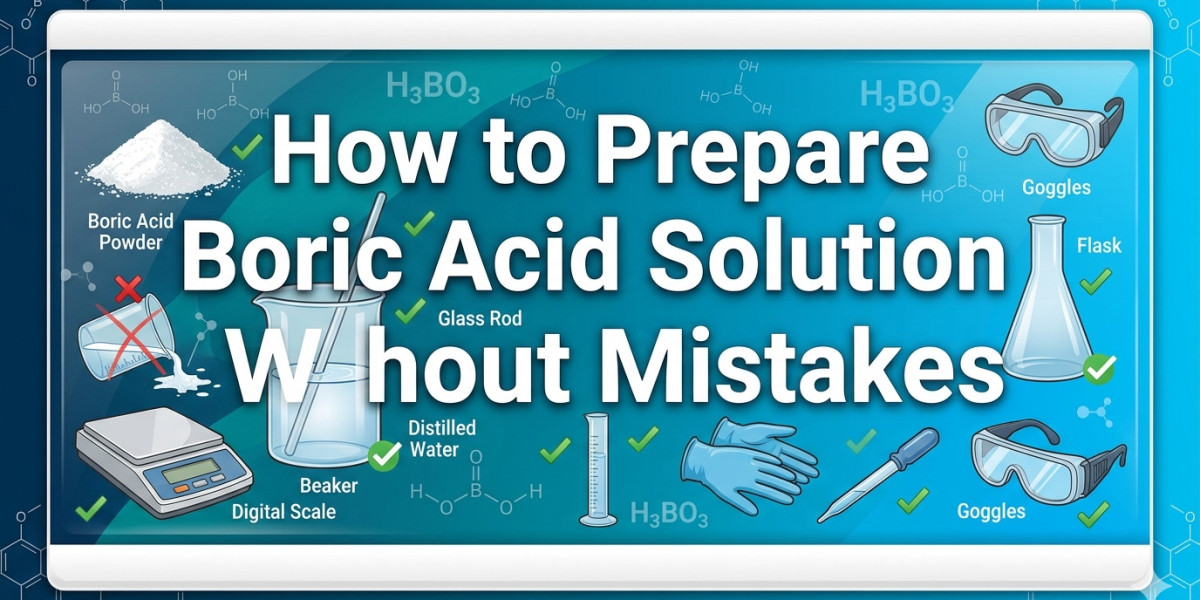
Mixing a chemical sounds simple… until you actually try it. I remember the first time someone casually asked me, “how do you make boric acid solution?” and I thought — well, just mix it with water, right? Turns out, it’s not that careless. Somewhere in the middle of figuring out how do you make boric acid solution, you realize small details matter more than expected.
Not in a scary way. Just… easy to get wrong if you rush.
And honestly, most mistakes happen because people assume it’s too simple.
What Is Boric Acid Solution (and Why People Make It)
A Quick Idea
Boric acid solution is just boric acid powder dissolved in water. That’s it at its core.
But the purpose changes everything.
Some people prepare it for:
- Antiseptic cleaning (mild use)
- Eye wash solutions (very diluted, very specific)
- Pest control mixtures
- General household cleaning
Same chemical. Different concentration. That’s where things start to split.
Why Concentration Matters
This is where people hesitate a bit — and they should.
Too weak, and it doesn’t really work. Too strong, and it can irritate skin or surfaces. Not extreme, but enough to cause issues.
So yeah… eyeballing isn’t the smartest move here.
Things You’ll Need Before You Start
Basic Materials
Nothing complicated:
- Boric acid powder
- Clean water (distilled is better, if you have it)
- A measuring spoon or scale
- A clean container (glass preferred)
That’s it. No fancy lab setup required.
A Small Personal Tip
Use a transparent container if possible.
Not necessary, but it helps you actually see if everything has dissolved properly. I learned that the hard way when I assumed it had mixed… and it hadn’t.
Step-by-Step: How to Make Boric Acid Solution
Start With the Right Ratio
This part depends on your use.
For a general mild solution, a common ratio people go with is:
- 1 teaspoon boric acid powder
- 1 cup warm water
Warm water helps dissolve it faster. Not boiling, just warm enough.
Mixing It
Pour the powder slowly into the water.
Stir continuously. Don’t just dump it all at once and walk away — it tends to clump a bit.
Give it a minute or two. Sometimes longer if the water cools down quickly.
Check If It’s Fully Dissolved
Look closely.
If you see particles sitting at the bottom, it’s not fully mixed. Keep stirring.
A clear solution means you’re good.
Mostly clear, at least. Slight haze can happen depending on purity.
Common Mistakes People Make (Yeah, These Happen a Lot)
Using Too Much Powder
More doesn’t mean stronger in a good way.
It just means unnecessary concentration, which might irritate skin or damage surfaces.
Skipping Proper Mixing
This one’s surprisingly common.
People stir for a few seconds and assume it’s done. Then later, they notice residue.
Using Dirty Containers
Even a slightly unclean container can affect the solution.
Sounds obvious, but easy to overlook.
Guessing Measurements
A pinch here, a little more there… not ideal.
Even simple measurements make a difference.
Adjusting the Solution for Different Uses
For Mild Cleaning
A slightly stronger mix can work for surfaces.
Still, no need to go overboard. It’s not a heavy-duty chemical cleaner.
For Skin-Related Use
This is where caution kicks in.
Dilution should be lighter. And honestly, if it’s for sensitive use like eyes or skin, it’s better to double-check with a professional.
I wouldn’t just experiment here.
For Pest Control
Boric acid is often used in pest control, sometimes mixed with other ingredients.
In that case, the solution might not even be purely liquid — sometimes it’s more of a paste.
Different setup entirely.
Storage Tips (Because People Forget This Part)
Keep It Covered
An open container collects dust, particles… stuff you don’t want in your solution.
A simple lid works.
Don’t Store It Forever
Fresh solution works better.
If it’s been sitting for days, especially in warm conditions, it’s probably time to make a new batch.
Label It
Sounds unnecessary… until someone mistakes it for plain water.
Yeah, that can happen.
Safety Thoughts (Nothing Dramatic, Just Practical)
Avoid Direct Contact in High Concentration
Diluted solution is generally fine for mild use.
Still, if your mix is stronger, avoid prolonged skin contact.
Keep Away From Children
Even though it’s common in households, it’s still a chemical.
Better safe than explaining later.
Don’t Inhale Powder
When handling dry boric acid, try not to create dust.
It’s not pleasant, and honestly, there’s no reason to risk it.
A Small Real-Life Moment
I once saw someone preparing boric acid solution for cleaning.
They added powder to cold water, stirred for maybe 10 seconds, and said, “Done.”
Later, they complained about white residue on surfaces.
Turns out, half the powder hadn’t dissolved.
Simple fix, but it shows how easy it is to miss small steps.
A Final Thought… or just something to keep in mind
Preparing boric acid solution isn’t complicated. Still, it’s not something to rush through either.
Take a minute. Measure properly. Stir a bit longer than you think you need to.
That’s really it.
Funny how something so simple can still trip people up now and then.