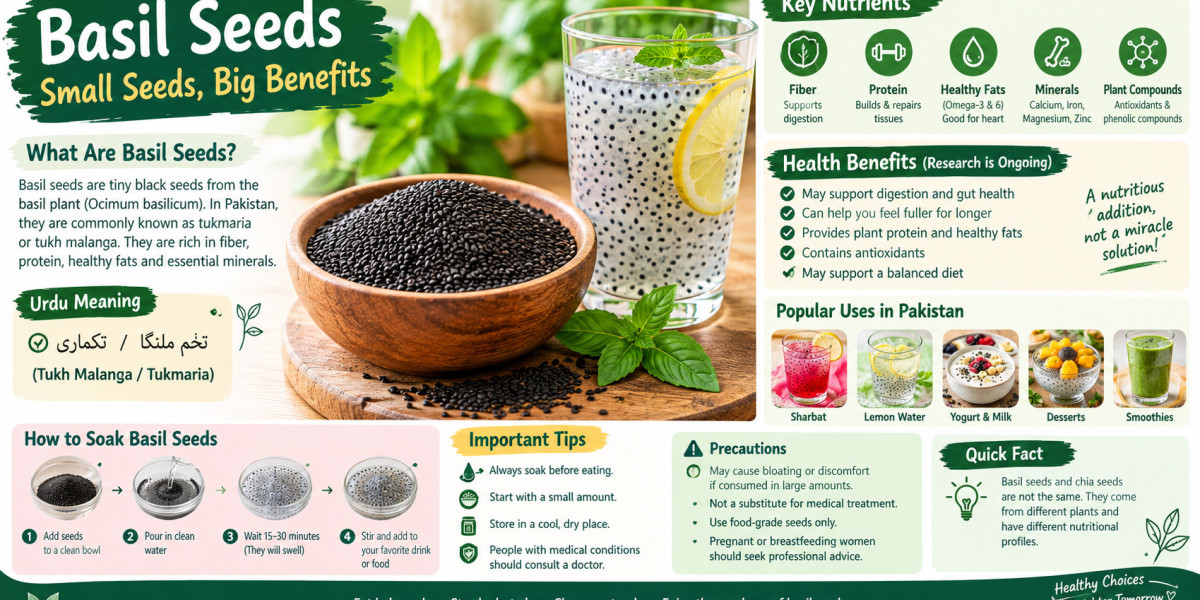
Basil seeds are small black seeds that come from the basil plant, scientifically known as Ocimum basilicum. In Pakistan and many other South Asian countries, they are commonly known as tukmaria, tukh malanga, or simply basil seeds. They are especially popular during the warmer months because they are traditionally soaked in water and added to refreshing drinks such as sharbat. Although these tiny seeds may look simple, they contain dietary fiber, protein, fats, minerals, and various plant compounds that have attracted increasing scientific interest. Research reviews have identified fiber, protein, polyunsaturated fatty acids, minerals, and phenolic compounds among their nutritional components.
In recent years, Basil Seeds have become popular among people interested in healthy eating, digestion, hydration, weight management, and traditional foods. However, it is important to separate traditional uses from scientifically established health effects. Some laboratory and early research suggests potentially beneficial properties, but much of the evidence concerning specific health outcomes comes from laboratory, animal, or food-science studies rather than large human clinical trials. Therefore, basil seeds can be considered a nutritious food that may complement a balanced diet, rather than a miracle ingredient or treatment for disease.
For Pakistani households, one of the biggest advantages is that basil seeds are easy to incorporate into familiar foods and beverages. They can be soaked and added to water, milk drinks, yogurt, smoothies, or homemade desserts. Their ability to develop a gelatinous coating after soaking also gives drinks an interesting texture. Understanding how to prepare them properly, how much to use, and what their realistic nutritional benefits are can help people enjoy them as part of an overall healthy lifestyle.
What Are Basil Seeds and Where Do They Come From?
Basil seeds come from the basil plant, a member of the mint family. Sweet basil (Ocimum basilicum) is cultivated in many warm regions, including parts of South Asia. Scientific literature notes that basil has a long history of cultivation and use in countries including India and Pakistan. The plant is valued not only for its aromatic leaves but also for its seeds, which have traditionally been incorporated into beverages and foods.
Basil Seeds vs Chia Seeds
Basil seeds are sometimes confused with chia seeds because both are small seeds that form a gel-like coating after soaking in water. However, they come from different plants and are not nutritionally identical. Basil seeds come from Ocimum basilicum, while chia comes from Salvia hispanica. Their appearance is also somewhat different, with basil seeds generally being small, dark, and oval-shaped.
Both can contribute fiber and other nutrients, but they should not be treated as interchangeable foods in every recipe. Basil seeds are especially common in traditional South Asian beverages, while chia has become more widely used internationally in puddings, oatmeal, smoothies, and baked foods.
Why Do Basil Seeds Become Gel-Like?
One of the most noticeable characteristics of basil seeds is their ability to swell when soaked. A transparent or whitish mucilaginous layer develops around the dark seed. This happens because components of the seed interact with water and form a hydrated layer.
This characteristic is one reason basil seeds have traditionally been used in drinks and desserts. Scientific research has also examined basil-seed mucilage for food applications because of its water-binding, thickening, stabilizing, and gelling properties.
Nutritional Value of Basil Seeds
The nutritional composition of basil seeds can vary depending on the plant variety, geographical origin, growing conditions, and processing methods. A scientific review found that reported basil-seed samples can contain meaningful amounts of protein, dietary fiber, lipids, carbohydrates, and minerals. Reported protein values in the reviewed studies ranged roughly from 10% to 22.5%, while fiber values also varied considerably between samples.
Rich in Dietary Fiber
One of the most interesting nutritional characteristics is their fiber content. Fiber is an important part of a healthy eating pattern because it contributes to normal digestive function and can help make meals more satisfying.
The amount of fiber in basil seeds varies among studies, partly because different varieties and analytical methods have been used. This means it is better not to assume that every packet of basil seeds contains exactly the same amount of fiber.
For people who do not normally consume much fiber, adding large quantities of seeds suddenly may not be comfortable. Increasing fiber gradually while drinking enough fluids can be a more practical approach.
Source of Plant Protein
Basil seeds also contain plant protein. Research reviewed in the scientific literature has identified several amino acids in basil seeds, although the exact nutritional profile varies according to the species, variety, and growing conditions.
They should not be considered a replacement for major protein foods such as eggs, dairy products, fish, chicken, lentils, or beans. Instead, they can contribute a small amount of protein when incorporated into an otherwise varied diet.
Contains Healthy Fats
Basil seeds contain fats, including polyunsaturated fatty acids. Research has found considerable variation in fatty-acid composition depending on genotype and geographical conditions. Linoleic acid and alpha-linolenic acid have been reported among the major fatty acids in basil-seed oil.
Fats are energy-dense, so portion size remains important even when a food contains unsaturated fats. A small amount of seeds can add nutritional value without requiring large quantities.
Minerals and Plant Compounds
Studies have also identified minerals such as calcium, magnesium, iron, zinc, and manganese in basil seeds. However, the amount can vary considerably between samples, and nutritional composition should not be assumed to be identical across all products.
Basil seeds also contain phenolic compounds and other plant compounds that have been investigated for antioxidant activity. These findings are scientifically interesting, but laboratory antioxidant activity should not automatically be interpreted as proof that eating basil seeds prevents a particular disease in humans.
What Are the Potential Benefits of Basil Seeds?
People often search for basil seeds because of claims about digestion, weight loss, blood sugar, hydration, and overall health. Some of these claims have a basis in traditional use or preliminary scientific research, but the strength of evidence differs considerably from one claim to another.
May Support a High-Fiber Diet
Because basil seeds can provide dietary fiber, they may be useful for people trying to increase the fiber content of their meals. Fiber can contribute to normal bowel function and may help increase fullness when included as part of a balanced diet.
The important point is that basil seeds are not a substitute for vegetables, fruits, legumes, and whole grains. A varied diet remains the best way to obtain different types of fiber and other nutrients.
May Help With Fullness
Foods containing fiber can contribute to a feeling of fullness. Because soaked basil seeds develop a gel-like texture, they may make certain beverages or meals feel more substantial.
However, this does not mean that basil seeds directly burn body fat. Weight loss depends on overall energy balance and long-term eating and activity habits. Adding large amounts of seeds to an otherwise high-calorie diet would not automatically result in weight loss.
May Complement a Healthy Diet
Basil seeds can contribute fiber, plant protein, fats, and minerals to the overall diet. Their nutritional profile makes them an interesting addition to foods and beverages, particularly when they replace less nutritious additions.
For example, adding a small amount of soaked basil seeds to unsweetened yogurt or a homemade fruit drink may be more nutritionally useful than adding large amounts of refined sugar or syrup.
Antioxidant Potential
Research has identified phenolic compounds and antioxidant activity in basil seeds. A scientific review describes antioxidant potential as one of the properties being investigated.
Nevertheless, antioxidant research should be interpreted carefully. Results from laboratory testing do not necessarily demonstrate that consuming a food will prevent cancer, heart disease, diabetes, or another medical condition. More human research is needed to determine the specific health effects of regular basil-seed consumption.
Traditional Digestive Uses
Basil seeds have a long history of traditional use in various cultures. They have been used in beverages and traditional remedies for digestive complaints and other purposes.
Traditional use can provide useful clues for scientific research, but it is not the same as clinical evidence. Anyone experiencing persistent digestive symptoms should not rely on basil seeds as a substitute for appropriate medical evaluation.
How to Soak Basil Seeds Properly
Preparing basil seeds is simple, but soaking them before consumption is important because dry seeds can expand significantly when they come into contact with liquid.
Basic Soaking Method
For a simple preparation, place a small amount of basil seeds in a glass or bowl and add plenty of clean drinking water. Allow them to stand until they develop their characteristic gel-like coating. Once they have swollen, they can be added to a beverage or food.
A simple method includes:
- Add a small amount of basil seeds to a clean glass.
- Pour in enough drinking water to allow the seeds to expand comfortably.
- Wait until a gel-like coating develops around the seeds.
- Stir and use them in a drink, yogurt, smoothie, or another suitable food.
There is no need to consume large quantities simply because the seeds are considered healthy. Starting with a small serving is generally more sensible, particularly for someone who is not accustomed to high-fiber foods.
How Long Should Basil Seeds Be Soaked?
Basil seeds usually need only a short soaking period before they swell and develop their gelatinous coating. The exact time can depend on the amount of water, temperature, seed quality, and the desired texture.
Once properly hydrated, they can be incorporated into a beverage or meal. Clean water should always be used, and prepared drinks should be stored appropriately if they are not consumed immediately.
How to Use Basil Seeds in Pakistani Foods and Drinks
Basil seeds fit naturally into several South Asian foods and beverages. Their traditional use makes them particularly easy to incorporate into Pakistani recipes without creating an entirely unfamiliar meal.
Basil Seeds in Sharbat
One of the most familiar uses is adding soaked seeds to sharbat. The seeds provide their characteristic appearance and texture and are often enjoyed during hot weather.
For a healthier everyday version, consider reducing the amount of added sugar or syrup. This is particularly important if the drink is being consumed regularly because a beverage can become high in calories and free sugar when large quantities of sweeteners are added.
Basil Seeds With Lemon Water
Soaked basil seeds can also be added to homemade lemon water. Lemon juice, water, and a small amount of soaked seeds can create a refreshing drink.
However, the healthiness of the drink depends on the overall recipe. If several tablespoons of sugar or syrup are added, the nutritional advantages of the seeds do not cancel out the added sugar.
Basil Seeds With Milk or Yogurt
Soaked seeds can be added to plain yogurt or milk-based drinks. Adding fruit can provide additional flavor and nutrients without relying heavily on refined sugar.
For example, plain yogurt, seasonal fruit, and a small quantity of soaked basil seeds can work as a simple snack. The combination can provide protein, fiber, and other nutrients while remaining easy to prepare.
Basil Seeds in Desserts
Basil seeds are traditionally used in certain desserts and frozen foods in parts of Asia and the Middle East. Scientific literature also describes their use in products such as ice cream, yogurt, puddings, and beverages because of their functional properties.
When using them in desserts, however, it is important to remember that the seeds themselves do not make a dessert automatically healthy. Sugar, cream, syrups, and other ingredients can still make the final dish high in calories.
Basil Seeds for Weight Loss: What You Should Know
Basil seeds are frequently promoted online as a weight-loss food. Their fiber content and ability to swell in liquid make them potentially useful as part of a filling meal or beverage, but they should not be presented as a fat-burning ingredient.
Can Basil Seeds Burn Belly Fat?
There is no good evidence that simply eating basil seeds specifically burns belly fat. Body-fat reduction occurs through overall changes in energy balance, influenced by food intake, physical activity, sleep, and other factors.
Basil seeds can be included in a weight-management diet, but they should be viewed as one food among many rather than a special solution.
How to Include Them in a Weight-Loss Diet
If someone wants to use basil seeds while trying to manage weight, the simplest approach is to add a modest amount to nutritious foods rather than sugary drinks.
For example, they can be combined with plain yogurt, fruit, unsweetened milk, or water with lemon. The overall meal should still contain an appropriate balance of protein, fiber-rich foods, vegetables or fruit, and reasonable portions.
Are There Any Precautions When Eating Basil Seeds?
Although basil seeds are used traditionally as a food, sensible preparation and portion control are important. Their high fiber content means that consuming a large quantity suddenly may cause digestive discomfort in some people.
Always Soak Them Before Eating
Dry basil seeds expand after absorbing water. For this reason, soaking them before consumption is a practical precaution. Eating large amounts of dry seeds may also be uncomfortable because they can swell after coming into contact with fluids.
Start With a Small Amount
If you have never eaten basil seeds before, start with a small serving and see how your digestive system responds. People who are not accustomed to fiber may experience gas, bloating, or other discomfort if they suddenly increase their intake.
Choose Clean, Food-Grade Seeds
Only use basil seeds intended for human consumption. Seeds sold for planting or agricultural purposes may not be processed or handled in the same way as food products.
Store them in a dry, clean place and check packaging information, especially if the seeds have been purchased from an unfamiliar source.
People With Medical Conditions Should Be Careful
People taking medications or managing conditions such as diabetes, swallowing difficulties, gastrointestinal disorders, pregnancy, or other medical concerns should discuss significant dietary changes with a qualified healthcare professional.
Basil seeds should not be used as a replacement for prescribed medication or medical treatment. Research into their possible antidiabetic, antioxidant, anti-inflammatory, and other properties remains an evolving area, and promising laboratory findings should not be confused with established clinical treatment.
Basil Seeds vs Other Popular Seeds
There are many edible seeds available today, including chia seeds, flaxseeds, sunflower seeds, pumpkin seeds, and basil seeds. Each has a different nutritional profile and culinary purpose.
Basil Seeds and Chia Seeds
Both basil and chia seeds can develop a gel-like coating when soaked. Basil seeds are especially popular in South Asian beverages, while chia seeds are widely used in puddings and breakfast foods.
Neither should automatically be considered superior. The better choice depends on the nutritional needs, recipe, availability, price, and personal preference.
Basil Seeds and Flaxseeds
Flaxseeds are particularly known for their fiber and alpha-linolenic acid content, while basil seeds also provide fiber, protein, fats, and other plant compounds. Research shows that the fatty-acid composition of basil seeds can vary according to genotype and growing conditions.
Using a variety of seeds can be more useful than relying on only one type. Small portions of different nutrient-rich foods can contribute to dietary diversity.
Frequently Asked Questions About Basil Seeds
What are basil seeds called in Pakistan?
Basil seeds are commonly known by names such as tukmaria and tukh malanga. They are traditionally used in drinks such as sharbat and other foods. The exact common name can vary between regions and households.
Can basil seeds be eaten every day?
They can be included as part of a varied diet, provided they are properly prepared and tolerated. There is no need to consume large quantities. A modest serving can be incorporated into drinks, yogurt, or other foods.
Do basil seeds help with weight loss?
Basil seeds may contribute fiber and can be incorporated into filling meals, but they do not directly burn body fat. Sustainable weight loss depends on overall dietary intake, physical activity, and lifestyle habits rather than one particular seed.
Should basil seeds be soaked before eating?
Yes, soaking them is the preferred way to prepare them for drinks and many recipes. The seeds absorb water and develop a gelatinous outer coating, which changes their texture and makes them easier to incorporate into beverages.
Can I drink basil seeds with lemon water?
Yes. Soaked basil seeds can be added to homemade lemon water. For an everyday beverage, limiting added sugar or syrup can help keep the drink lower in free sugar and calories.
Are basil seeds the same as chia seeds?
No. Although they have similar appearances and both form a gel when soaked, they come from different plants and have different nutritional compositions.
Can children eat basil seeds?
Whether they are appropriate for a particular child depends on age, eating ability, preparation, and individual circumstances. Because hydrated seeds have a distinctive texture and can swell, parents should use age-appropriate portions and seek professional advice if they have concerns about swallowing or allergies.
Can basil seeds reduce blood sugar?
Laboratory and preliminary research has investigated possible antidiabetic properties of basil seeds, but this does not establish them as a treatment for diabetes. People with diabetes should continue following their healthcare professional's treatment and dietary recommendations.
Do basil seeds improve digestion?
Their fiber content may contribute to a fiber-rich diet that supports normal digestive function. However, claims that basil seeds can cure digestive diseases are not established by current evidence. Persistent digestive symptoms should be evaluated by a healthcare professional.
How should basil seeds be stored?
Dry basil seeds should generally be kept in a clean, dry, sealed container away from excessive heat and moisture. Always follow the storage instructions provided on the food package.
Conclusion
Basil seeds are small but nutritionally interesting seeds that have been used traditionally in South Asian beverages and foods for generations. They contain dietary fiber, protein, fats, minerals, and various plant compounds, making them a useful addition to a varied diet. Scientific research has also explored their antioxidant potential, food applications, mucilage properties, and possible health effects.
For people in Pakistan, incorporating basil seeds into everyday meals can be relatively simple. Soaked seeds can be added to sharbat, lemon water, yogurt, milk drinks, smoothies, and selected desserts. The healthiest approach is to focus on the overall recipe rather than assuming that adding a small amount of seeds automatically makes a food healthy. A sugary drink with basil seeds can still contain a substantial amount of added sugar.
It is also important to keep expectations realistic. Basil Seeds are not a magic weight-loss ingredient, detox treatment, or substitute for medical care. Their potential value comes from their nutritional composition and their ability to add fiber and texture to foods and beverages. Current scientific literature is promising in several areas, but researchers continue to identify where stronger human evidence is needed.
Ultimately, a balanced diet containing vegetables, fruits, legumes, whole grains, appropriate protein sources, healthy fats, and a variety of nutrient-rich foods remains the foundation of good nutrition. Basil seeds can comfortably be one small part of that pattern. When prepared properly and consumed in reasonable amounts, they offer a traditional, versatile, and interesting ingredient for modern Pakistani diets.