
Learning ECG interpretation becomes more useful when students can connect heart rhythms with other patient measurements. In real patient monitoring, an ECG is rarely viewed in isolation.
Heart rate, blood pressure, respiratory rate, and oxygen saturation all contribute to the overall picture.
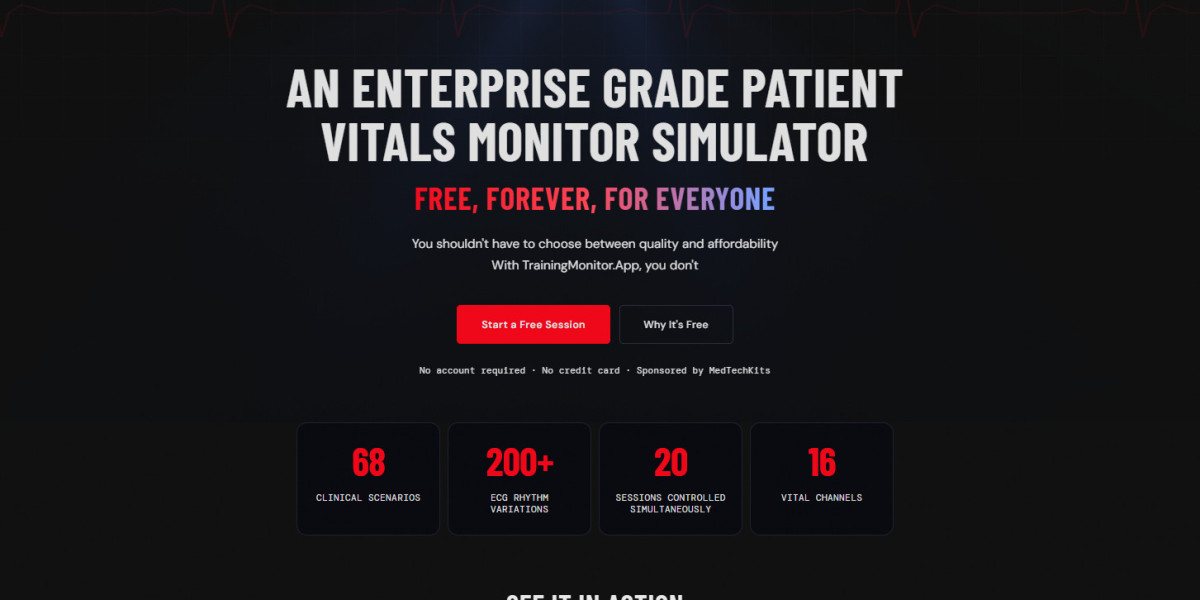
TrainingMonitor.App is a vital signs simulator, web-based free tool designed to give students and healthcare learners a convenient way to practice monitoring concepts online.
Practice ECG and Vital Signs Together
ECG training often begins with learning the appearance of different rhythms, but recognizing a rhythm is only one part of patient monitoring. Learners also need to understand how the patient's other vital signs may change at the same time.
A monitor-style simulator provides an opportunity to observe these measurements together. Students can practice identifying heart rate and reviewing other displayed parameters while becoming more familiar with the way information is organized on a patient monitor.
This makes online practice particularly useful for EMT, paramedic, nursing, and other healthcare students who want additional exposure to monitoring interfaces.
Connect ECG Changes With Patient Vitals
A patient's ECG reading provides information about cardiac electrical activity, while other vital signs provide additional physiological information. Looking at these measurements together encourages students to develop a broader approach to monitoring.
For example, learners can practice observing heart rate alongside blood pressure and oxygen saturation rather than concentrating on a single number.
The purpose is not to make a diagnosis from a simulator, but to develop the habit of looking at multiple measurements when reviewing a patient's condition.
Repeated practice can also make monitor displays feel more familiar before students encounter professional equipment during supervised training.
Learn How to Read a Vital Signs Monitor
Understanding how to read vital signs monitor information is an important foundation for anyone learning patient assessment. Students should know what each displayed measurement represents and understand that readings must be considered in context.
Heart rate shows the number of heartbeats per minute, while an ECG waveform represents electrical activity generated by the heart. Blood pressure is typically displayed using systolic and diastolic values.
SpO₂ provides an estimate of oxygen saturation, while respiratory rate indicates the number of breaths per minute.
Using TrainingMonitor.App, learners can repeatedly review these types of measurements in an online monitoring environment. This can help improve familiarity with monitor layouts and make it easier to locate important information quickly.
Adjust Readings With the Control Vital Signs Page
Interactive practice can make simulator training more engaging than simply looking at fixed values. The TrainingMonitor.App controller allows learners to control vital signs and explore how different settings appear within the monitoring environment.
Students can experiment with changing selected patient parameters and observe the resulting values on the monitor. This provides a practical way to understand how a monitor presents changing information.
For EMS and paramedic students, this can be useful when practicing the observation and reassessment habits that are emphasized during patient-monitoring exercises.
The simulator should be used as an educational supplement alongside instructor guidance and hands-on clinical training.
Explore the Display Monitor
Once learners adjust patient parameters, they can review the display monitor to see how the information is presented. Becoming familiar with monitor layouts can reduce the amount of time students spend figuring out where individual measurements are located.
The display provides an opportunity to practice reading heart rate, ECG information, oxygen saturation, blood pressure, and other available parameters in one interface.
This type of repeated exposure can be particularly helpful for students who are still developing confidence with patient-monitoring equipment.
Understand Normal Vital Signs by Age
ECG interpretation is only one part of monitoring knowledge. Students should also understand normal vital signs by age, because expected ranges can vary between infants, children, adolescents, and adults.
Age-specific reference ranges should be learned from reliable educational resources and the protocols or materials provided by instructors. A value should not automatically be considered abnormal simply because it differs from an adult reference range.
Simulator practice can complement this knowledge by allowing learners to review different vital sign values while thinking about the patient's age and overall clinical context.
Build ECG Recognition Through Repeated Practice
ECG interpretation improves with consistent exposure. Instead of studying rhythms only before an examination, students can use short practice sessions to become more comfortable recognizing monitor information.
A useful routine might include reviewing the ECG display, checking the heart rate, examining other vital signs, adjusting selected parameters, and explaining what changed. This approach encourages learners to pay attention to trends rather than memorizing isolated numbers.
For instructors, an online simulator can also provide an additional resource for demonstrations and classroom discussions.
Start ECG and Vital Sign Practice Online
A free online simulator can make monitor practice easier to fit into a student's study routine. TrainingMonitor.App combines a monitor-style interface with interactive vital sign controls, giving learners a convenient environment for practicing ECG and patient-monitoring concepts.
Whether you are preparing for EMS training, paramedic education, nursing studies, or simply reviewing monitoring fundamentals, repeated practice can help build familiarity with ECG displays and vital sign information.
Use TrainingMonitor.App to explore ECG and vital sign monitoring online and strengthen your understanding before moving into supervised hands-on practice.






