
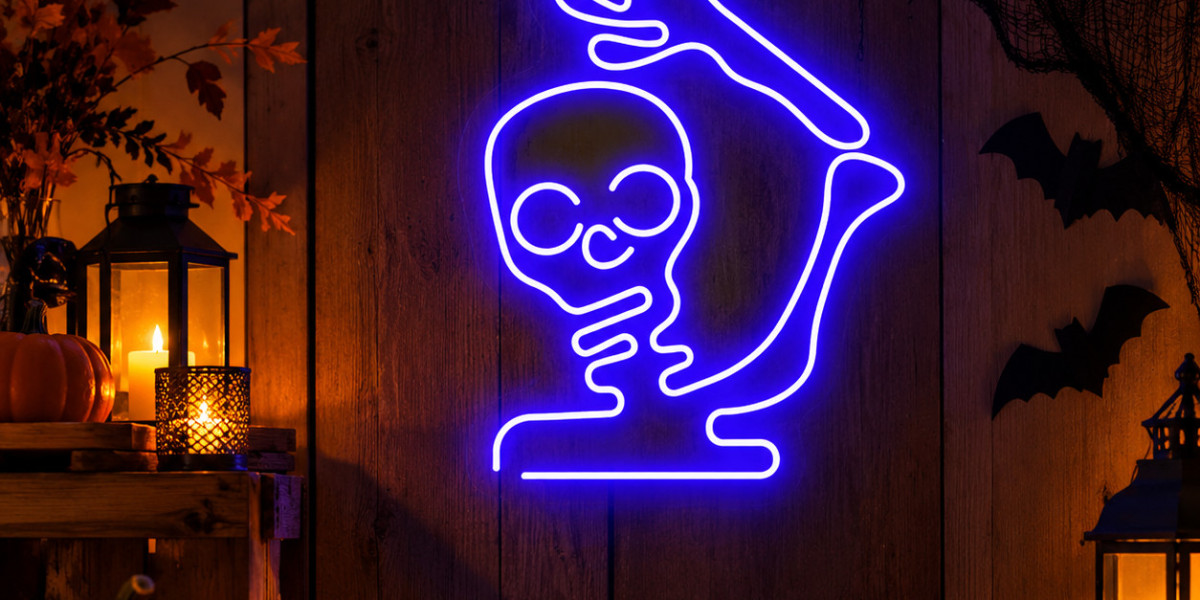
Halloween events are often associated with costumes, decorations, themed food, music, and dramatic visual effects. Yet lighting is one of the elements that can influence how guests experience all of these details. The right lighting can make a familiar space feel mysterious, guide visitors through an event, highlight decorations, and create better conditions for photographs.
At the same time, Halloween lighting needs to be planned carefully. Excessive darkness, glare, exposed cables, or poorly positioned decorative fixtures can create practical problems in an otherwise well-organized event.
This is where Halloween Neon Signs can become one component of a broader event-lighting strategy. Rather than treating illuminated decorations as the entire lighting system, event planners can use them as visual accents alongside general illumination, pathway lighting, and task lighting.
A well-designed Neon Halloween Party therefore depends on more than choosing a spooky design. It requires consideration of atmosphere, visibility, movement, colour, photography, electrical safety, and the different needs of guests.
Why Lighting Matters at Halloween Events
Lighting influences how people perceive a physical environment.
A brightly illuminated room generally feels more open and easier to navigate, while lower lighting can create a more intimate or dramatic atmosphere. Halloween events often intentionally use darker environments, but complete darkness is rarely practical.
Guests still need to:
- Identify entrances and exits
- Walk safely between areas
- Locate food and drinks
- Use stairs and pathways
- Find restrooms
- Take photographs
- Interact with other guests
Good event lighting balances atmosphere with visibility.
This is why decorative illumination should work alongside functional lighting rather than replace it.
Understanding Halloween Neon Lights
Halloween Neon Lights are illuminated decorative features designed around Halloween-related themes, symbols, words, or imagery.
Modern versions frequently use LED-based technology rather than traditional glass neon. This can allow designers to create illuminated outlines and decorative shapes in a range of colours.
Their primary role at an event is usually visual.
They can highlight a wall, establish a themed zone, create a photo background, or reinforce the visual identity of a particular area.
However, they should not automatically be considered sufficient lighting for stairs, walkways, food preparation areas, or other locations where clear visibility is important.
Creating a Strong Halloween Focal Point
Every successful themed event benefits from visual hierarchy.
If every surface contains an equally bright decoration, the room can feel chaotic. Instead, identify several levels of importance.
For example:
Primary focal point: Main Halloween display or photo area.
Secondary features: Table decorations, wall artwork, smaller illuminated elements.
Functional lighting: Pathways, entrances, stairs, food areas, and other practical locations.
A carefully positioned illuminated sign can serve as the primary focal point while less prominent decorations support the overall theme.
This creates a more organized visual experience.
Designing a Neon Halloween Party Around Different Zones
One useful event-planning technique is to divide the venue into functional zones.
Entrance Zone
The entrance establishes expectations before guests enter the main event area.
Lighting here should be visible enough to identify the entrance without creating excessive glare. Halloween-themed illumination can help establish the atmosphere immediately.
Social Zone
This is where guests spend most of their time talking and interacting.
Lighting should create atmosphere without being so bright or intense that it becomes uncomfortable.
Food and Beverage Zone
Food areas require better visibility than purely decorative spaces. Guests need to see what they are eating, identify ingredients where relevant, and move safely around tables.
Decorative lighting can be used nearby, but it should not interfere with functional illumination.
Photography Zone
A dedicated photo area can benefit from a visually distinctive illuminated background.
However, photographers should consider exposure, shadows, reflections, and the brightness difference between the sign and the person being photographed.
Movement Zone
Walkways and transitions between areas should remain sufficiently visible.
A dramatic atmosphere should never come at the expense of basic navigation.
Choosing Colours for Halloween Lighting
Colour is one of the strongest tools for creating a Halloween atmosphere.
Orange, purple, red, green, white, and blue are commonly associated with different Halloween visual themes. However, using every colour simultaneously can reduce visual consistency.
A limited palette can create a stronger result.
For example, a venue may use:
- One dominant colour
- One contrasting accent
- Neutral or low-intensity supporting light
The surrounding walls and furniture should also be considered because coloured light can change the appearance of nearby surfaces.
White walls may reflect coloured light strongly, while darker surfaces may absorb more of it.
How Bright Should Halloween Neon Signs Be?
Brightness is not simply a matter of choosing the strongest available setting.
A decorative sign that is too dim may disappear into the background. One that is excessively bright can create glare and overpower other decorations.
The appropriate level depends on:
- Room size
- Wall colour
- Ambient lighting
- Viewing distance
- Sign size
- Camera exposure
- Event timing
An indoor event should be evaluated under the actual lighting conditions expected during the celebration.
A sign that looks balanced during the afternoon may appear much brighter after sunset when surrounding light levels decrease.
Lighting and Guest Photography
Photography has become an important part of modern events.
Guests frequently take photographs and videos throughout a Halloween celebration, making background lighting an important design consideration.
A well-positioned illuminated feature can provide visual structure to photographs. However, there are several technical factors to consider.
If a light source is significantly brighter than the subject, a smartphone or camera may adjust exposure for the bright area. This can result in darker faces.
To improve photographs:
- Keep the main decorative light slightly behind or beside the subject.
- Avoid placing extremely bright lights directly at eye level.
- Use supplementary front lighting when necessary.
- Test photographs before guests arrive.
- Check the background for distracting objects.
The objective is to make the lighting contribute to the photograph rather than dominate it.
Outdoor Halloween Events Require Additional Planning
Outdoor Halloween celebrations introduce additional considerations.
Weather exposure, moisture, wind, temporary cables, uneven ground, and changing daylight conditions all affect lighting decisions.
A lighting product designed exclusively for indoor use should not be placed outdoors simply because it looks suitable.
Before using illuminated decorations outside, check their stated environmental rating and installation requirements.
Electrical connections should be protected according to applicable safety requirements, and extension cords should be suitable for the intended environment.
Outdoor pathways also need particular attention because decorations should never create unexpected obstacles.
Safety Should Be Part of the Design
Halloween decorations often involve numerous electrical and physical components.
Safety planning should begin before installation.
Check:
- Power cables for visible damage
- Connections and adapters
- Mounting hardware
- Cable routing
- Ventilation around electrical components
- Distance from heat sources
- Indoor or outdoor suitability
- Stability of wall-mounted decorations
Cables should not cross major walking paths unless they are properly protected and secured.
Decorations should also be kept away from open flames or other heat-producing equipment.
For venues hosting children, cable accessibility and decoration stability require additional attention.
If permanent electrical work is needed, it should be handled by an appropriately qualified professional.
Combining Neon With Other Halloween Lighting
A strong event does not rely on one type of lighting.
Instead, different sources can perform different functions.
Ambient lighting provides general visibility.
Task lighting supports practical activities.
Accent lighting highlights decorations.
Decorative Halloween Neon Lights generally belong to the accent category.
Combining these layers allows an event organizer to create atmosphere without compromising functionality.
For example, a restaurant hosting a Halloween event might use decorative illuminated artwork on one wall while maintaining appropriate lighting around tables, entrances, and service areas.
This layered approach creates greater control over the environment.
Common Halloween Lighting Mistakes
Several mistakes can reduce both visual quality and practicality.
Making Everything Bright
If every decoration is illuminated at maximum intensity, there may be no clear focal point.
Making the Venue Too Dark
A spooky atmosphere does not require unsafe visibility levels.
Ignoring Reflections
Glossy surfaces, mirrors, windows, and screens can reflect bright lighting and create unwanted glare.
Overloading One Wall
Too many signs and decorations can make the space feel crowded.
Poor Cable Management
Loose cables can create both visual and physical hazards.
Forgetting Daylight
Outdoor and window-based installations may look completely different during the day and at night.
Ignoring Guest Movement
Decorative elements should never obstruct normal movement through the venue.
Selecting the Best Halloween Neon Signs for an Event
There is no single design that is objectively the “best” for every Halloween event. The appropriate choice depends on the venue, audience, theme, wall space, and lighting conditions.
When comparing Best Halloween Neon Signs, consider practical criteria rather than appearance alone.
Ask:
- Is the design recognizable from the intended viewing distance?
- Does its size suit the wall?
- Does the colour complement the event palette?
- Is the brightness appropriate?
- Is the product suitable for indoor or outdoor use?
- Does installation require additional equipment?
- Can cables be managed safely?
- Will it work well in photographs?
- Does it compete with other decorations?
- Can it be safely operated for the expected event duration?
These questions help separate visual appeal from practical suitability.
Planning Halloween Lighting Before the Event
A lighting plan should ideally be completed before decorations are permanently installed.
Start with a simple floor plan.
Mark:
- Entrances
- Exits
- Walkways
- Food areas
- Seating
- Photo areas
- Main decorations
- Power sources
Then determine where accent lighting will have the greatest visual effect.
Testing the arrangement before guests arrive is particularly valuable. Turn on all lighting simultaneously and walk through the venue as a guest would.
Look for dark spots, glare, blocked pathways, distracting reflections, and areas that feel visually overloaded.
Small adjustments at this stage can significantly improve the final environment.
Energy Considerations for Extended Events
Halloween events may last several hours, and some decorations may remain illuminated before and after guests arrive.
Energy consumption depends on the technology, size, power rating, and operating time of each lighting element.
LED-based decorative lighting is generally designed for efficient operation, but actual consumption should be evaluated using the stated electrical specifications.
Switches, timers, or smart controls can also help prevent unnecessary operation when lighting is not required.
For larger venues, calculating the combined electrical load of all decorative equipment is important before connecting multiple devices to the same circuit.
Final Thoughts
A memorable Neon Halloween Party is created through more than dramatic decorations. Lighting should help establish the atmosphere while supporting guest comfort, movement, photography, and safety.
Halloween Neon Signs can provide strong focal points, while Halloween Neon Lights can contribute colour and visual character to different event zones. However, the most effective approach is to combine decorative illumination with appropriate ambient and functional lighting.
When choosing among the Best Halloween Neon Signs, consider size, brightness, colour, viewing distance, installation requirements, electrical safety, and the overall design of the venue.
The result should be a Halloween environment that feels atmospheric and visually engaging while remaining practical for the people who experience it.






