
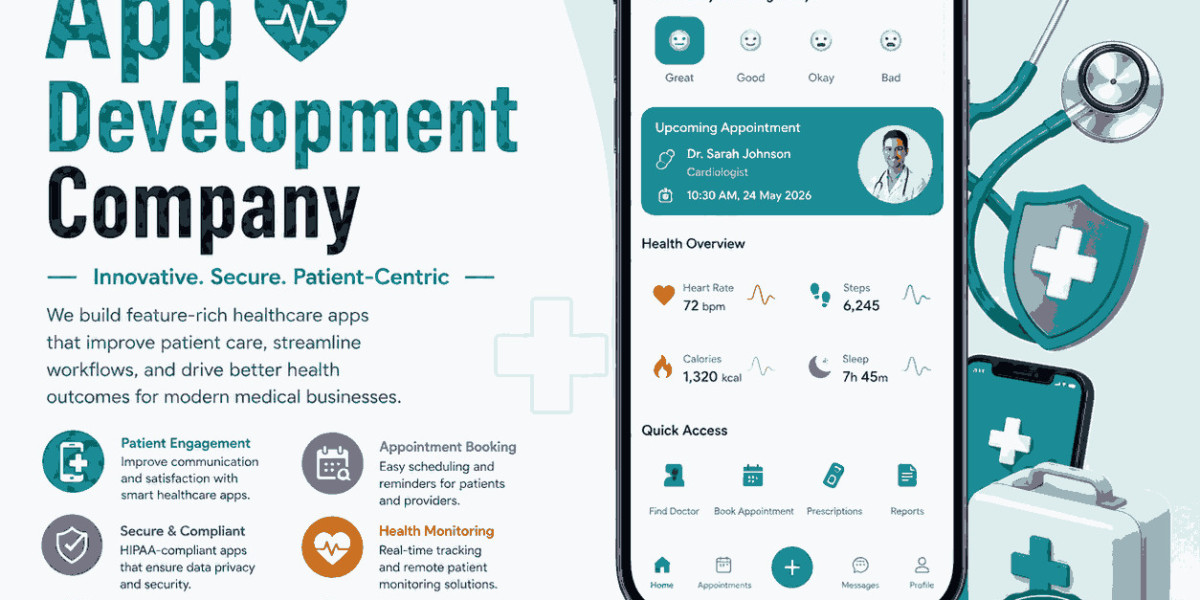
Healthcare applications handle highly sensitive information, including patient records, diagnoses, prescriptions, insurance details, and medical histories. Because of this, security and privacy must be considered throughout the development lifecycle rather than added after an application is completed.
HIPAA compliance requires organizations to establish appropriate administrative, physical, and technical safeguards for electronic protected health information (ePHI). The U.S. Department of Health and Human Services (HHS) also emphasizes that compliance is an ongoing process involving risk analysis, security measures, documentation, and periodic evaluation.
For businesses building a healthcare application, the following practices can help create a stronger HIPAA-focused development process.
1. Start With a Comprehensive Risk Analysis
Risk analysis should be one of the first steps in a HIPAA-focused development project. Organizations need to identify where ePHI is collected, stored, processed, and transmitted and determine the potential threats and vulnerabilities affecting its confidentiality, integrity, and availability.
HHS describes risk analysis as a foundational requirement and explains that there is no single methodology that works for every organization. The assessment should reflect the application's architecture, users, vendors, infrastructure, and operating environment.
A practical assessment should examine:
- Data storage locations
- API integrations
- User access points
- Cloud infrastructure
- Third-party services
- Mobile devices
- Authentication processes
- Potential security vulnerabilities
The findings should then guide security controls and remediation priorities.
2. Apply Strong Access Controls
Not every employee, healthcare professional, administrator, or application user should have access to every piece of patient information.
Role-based access controls can restrict information according to job responsibilities. For example, a physician may require access to clinical records, while an administrative employee may only need appointment or billing information.
The minimum necessary principle is also important. HIPAA generally requires covered entities to take reasonable steps to limit uses, disclosures, and requests for PHI to the minimum necessary for the intended purpose.
Developers should therefore implement granular permissions, session controls, authentication mechanisms, and appropriate authorization checks throughout the application.
3. Encrypt Data at Rest and in Transit
Encryption provides an important layer of protection when sensitive information is stored or transmitted.
Data transmitted between mobile applications, servers, APIs, and third-party services should use secure communication protocols. Stored ePHI should also be protected through appropriate encryption mechanisms based on the organization's risk analysis.
Encryption should cover relevant databases, backups, storage systems, and communication channels. Key management is equally important because poorly protected encryption keys can undermine otherwise strong security controls.
HHS identifies encryption as one of the technical safeguards organizations may need to implement based on their risk assessment.
4. Implement Secure Authentication
Healthcare applications should verify user identities before granting access to protected information.
Strong authentication can include passwords, multi-factor authentication, biometric verification, device authentication, and secure session management. Developers should also implement protections against common threats such as credential stuffing, brute-force attacks, stolen sessions, and unauthorized account access.
Authentication should be combined with authorization. Verifying who a user is does not automatically mean that the user should have access to every resource within the application.
5. Maintain Detailed Audit Controls
Healthcare applications should maintain appropriate records of activities involving sensitive information. Audit controls can help organizations identify unusual activity, investigate security incidents, and understand who accessed or modified specific information.
Depending on the application architecture, audit logs may capture events such as:
- User authentication
- Record access
- Data modification
- Administrative actions
- Permission changes
- API activity
- Security events
Logs should themselves be protected against unauthorized modification and access. Monitoring and review procedures should also be established so that suspicious activity can be investigated.
6. Choose HIPAA-Compatible Third-Party Services
A healthcare application rarely operates in isolation. It may rely on cloud hosting, payment services, analytics platforms, communication tools, storage providers, or other external systems.
Before integrating a third-party service that handles PHI, organizations should determine whether the provider's role creates HIPAA obligations and whether the appropriate contractual arrangements are in place.
For business associates, HHS states that covered entities generally need written business associate agreements containing required assurances concerning protection of PHI.
Cloud service providers can also have responsibilities under HIPAA when they function as business associates. Therefore, vendor evaluation should be part of the application's security and compliance planning.
7. Build Secure APIs
APIs frequently connect healthcare applications with electronic health records, laboratories, pharmacies, payment platforms, wearable devices, and other systems.
Every API that handles sensitive information should have appropriate authentication, authorization, encryption, validation, rate limiting, logging, and error-handling controls.
Developers should also avoid exposing unnecessary patient information through API responses. API endpoints should provide only the information required for the specific function, helping reduce unnecessary exposure.
8. Protect Mobile Devices and Application Data
Mobile healthcare applications introduce additional security considerations because smartphones and tablets can be lost, stolen, rooted, or compromised.
Developers should avoid unnecessarily storing sensitive information locally. Where local storage is required, sensitive data should receive appropriate protection. Secure session expiration, biometric authentication, remote account controls, and device-level protections can further reduce risks.
The application should also be tested across supported operating systems and device configurations to identify security weaknesses.
9. Conduct Security Testing Before Launch
Security testing should happen throughout development instead of being postponed until the final stage.
A comprehensive testing process may include:
- Vulnerability assessments
- Penetration testing
- API security testing
- Authentication testing
- Authorization testing
- Code reviews
- Dependency scanning
- Configuration reviews
Testing should also be repeated after major application updates or infrastructure changes. HHS emphasizes that HIPAA compliance is not a one-time achievement and that organizations should perform ongoing evaluations of their security environment.
10. Prepare for Security Incidents and Breaches
Even well-designed applications need an incident-response plan. Organizations should define how suspected security incidents will be identified, investigated, contained, documented, and reported.
The HIPAA Breach Notification Rule establishes requirements for certain breaches of unsecured PHI. For example, affected individuals generally must be notified without unreasonable delay and no later than 60 days after discovery, subject to the rule's requirements.
Business associates also have notification responsibilities when applicable, making contractual and operational coordination essential.
11. Continue Compliance After Launch
HIPAA compliance should continue after an application reaches production. New features, integrations, vendors, operating systems, infrastructure changes, and emerging threats can introduce new risks.
Organizations should periodically review access permissions, security controls, vendor relationships, audit logs, incident-response procedures, backups, and risk assessments. Employee training and updated policies should also form part of the ongoing compliance program.
A capable Healthcare App Development Company can incorporate these considerations into architecture, development, testing, deployment, and maintenance rather than treating compliance as a final checklist.
Conclusion
Ensuring HIPAA compliance during healthcare app development requires a complete security strategy covering risk analysis, access control, encryption, authentication, auditing, APIs, third-party vendors, testing, incident response, and ongoing monitoring. There is no single technology or feature that automatically makes an application HIPAA compliant. The appropriate safeguards depend on the organization's environment, risks, responsibilities, and use of ePHI.
Businesses should therefore integrate privacy and security requirements from the earliest planning stages and continuously evaluate them as the application evolves.






