
Imagine walking home after a long day and suddenly noticing that someone is behaving aggressively nearby. Your first reaction might be uncertainty. Should you move away? Should you ask for help? What is the safest thing to do?
Situations like this are exactly why learning how to recognise risks and respond calmly can be valuable.
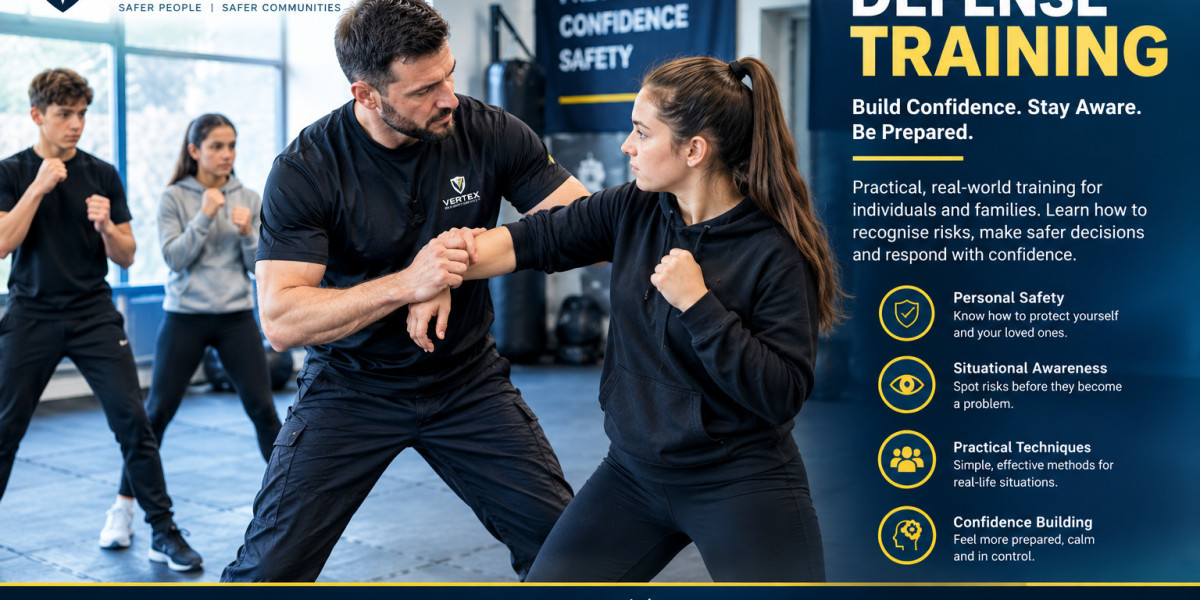
Professional Defense Training is not simply about physical techniques. Responsible training can teach people awareness, confidence, communication, de-escalation, and sensible ways to respond when they feel threatened.
For families, individuals, and security professionals, these skills can provide useful knowledge for handling unexpected situations more responsibly.
What Is Defense Training?
Defense training is structured instruction designed to help people understand personal safety, risk awareness, and appropriate responses to potentially difficult situations.
Depending on the course and the people being trained, sessions may cover situational awareness, verbal communication, conflict avoidance, personal safety principles, emergency procedures, and controlled defensive exercises.
The emphasis should always be on preventing situations from becoming worse.
Good training does not encourage unnecessary confrontation. Instead, it helps participants understand when creating distance, leaving the situation, contacting emergency services, or seeking assistance is the safer choice.
Why Does It Matter?
Unexpected situations can make people panic. When someone is frightened or confused, it can become difficult to think clearly.
Training gives participants an opportunity to learn and practise sensible responses in a controlled environment.
For security personnel, this can be especially useful. Their role may involve dealing with difficult people while remaining professional and calm.
For members of the public, awareness and communication skills can also help them recognise potentially uncomfortable situations before they develop into something more serious.
Common Problems People Face
Many people have never received formal personal-safety training. As a result, they may be unsure about what to do when faced with an aggressive or unpredictable situation.
Common concerns include:
- Not recognising warning signs early
- Feeling unsure in unfamiliar environments
- Becoming overwhelmed during confrontation
- Not knowing how to de-escalate an argument
- Struggling to communicate calmly under pressure
- Not knowing when to leave or seek help
- Lacking confidence in emergency situations
Training cannot predict every situation, but it can help people develop a more thoughtful approach to personal safety.
Techniques That Make a Difference
Situational Awareness
Awareness starts with paying attention to your surroundings. Participants can learn to notice unusual behaviour, environmental risks, exits, and changes in their surroundings.
The goal is not to become constantly fearful. It is to become more observant.
Verbal De-Escalation
Calm communication can sometimes prevent a difficult situation from becoming more serious.
Training may focus on using a steady voice, maintaining appropriate distance, avoiding provocative language, and knowing when continuing a conversation is no longer productive.
Safe Decision-Making
One of the most important lessons is understanding that walking away can often be the safest response.
Participants can learn to consider options such as moving to a safer location, contacting colleagues, informing venue security, or calling emergency services when appropriate.
Controlled Practical Exercises
Where practical exercises are included, they should take place in a controlled environment with appropriate supervision.
The focus should be on learning, awareness, and responsible responses rather than encouraging unnecessary confrontation.
Benefits of Professional Training
A structured training programme can provide several practical benefits.
Participants may develop:
- Greater awareness of their surroundings
- Improved confidence
- Better communication skills
- A clearer understanding of personal safety
- Greater awareness of de-escalation
- Improved decision-making under pressure
- A more responsible approach to difficult situations
For security staff, training can also complement wider professional responsibilities such as access control, incident reporting, customer service, and emergency procedures.
For families, the most valuable benefit may simply be increased awareness and confidence when dealing with unfamiliar situations.
How Vertex Security Services Ltd Can Help
Vertex Security Services Ltd, based in Blackburn, Lancashire, can provide security-focused training designed around practical safety and professional awareness.
Training needs are not identical for everyone. A security professional working at a busy venue may face different situations from someone seeking general personal-safety awareness.
A suitable programme should therefore consider the participants, environment, responsibilities, and level of experience.
Vertex Security Services Ltd can focus on practical learning that encourages participants to remain aware, communicate professionally, and make sensible decisions when faced with challenging circumstances.
The emphasis is on responsible security practice rather than unnecessary confrontation.
What Should Families Expect?
Families should expect responsible training to focus on safety first.
Participants may learn how to identify potential risks, communicate calmly, create appropriate distance, and seek assistance when necessary.
Parents may also want to ask about the trainer's experience, course structure, supervision, age suitability, and safety procedures before enrolling children or young people.
For younger participants especially, training should be appropriate to their age and focused on awareness, confidence, boundaries, and getting help from trusted adults.
Frequently Asked Questions
Is defense training only for security professionals?
No. Depending on the programme, training can be designed for security staff, employees, organisations, or individuals interested in improving their personal-safety awareness.
Does training encourage physical confrontation?
Responsible training should prioritise awareness, avoidance, communication, de-escalation, and seeking help. Physical intervention should never be treated as the automatic solution to a difficult situation.
Can beginners take part?
Many training programmes can accommodate beginners. The appropriate course depends on the participant's age, experience, responsibilities, and objectives.
Is training suitable for families?
Age-appropriate safety and awareness training can be useful for families, particularly when it focuses on recognising risks, setting boundaries, communicating clearly, and knowing when to seek help.
How often should security professionals receive training?
Training requirements vary according to the role, employer, and applicable industry standards. Refresher training can help professionals maintain awareness and keep relevant knowledge up to date.
Building Confidence Through Responsible Training
Personal safety is not about living in fear. It is about being prepared enough to make sensible decisions when something does not feel right.
With the right guidance, people can become more aware of their surroundings, communicate more effectively, and understand when the safest option is to move away and seek assistance.
If you are looking for professional security-focused training in Blackburn and the surrounding Lancashire area, Vertex Security Services Ltd can discuss your requirements and help identify an appropriate training approach.






