
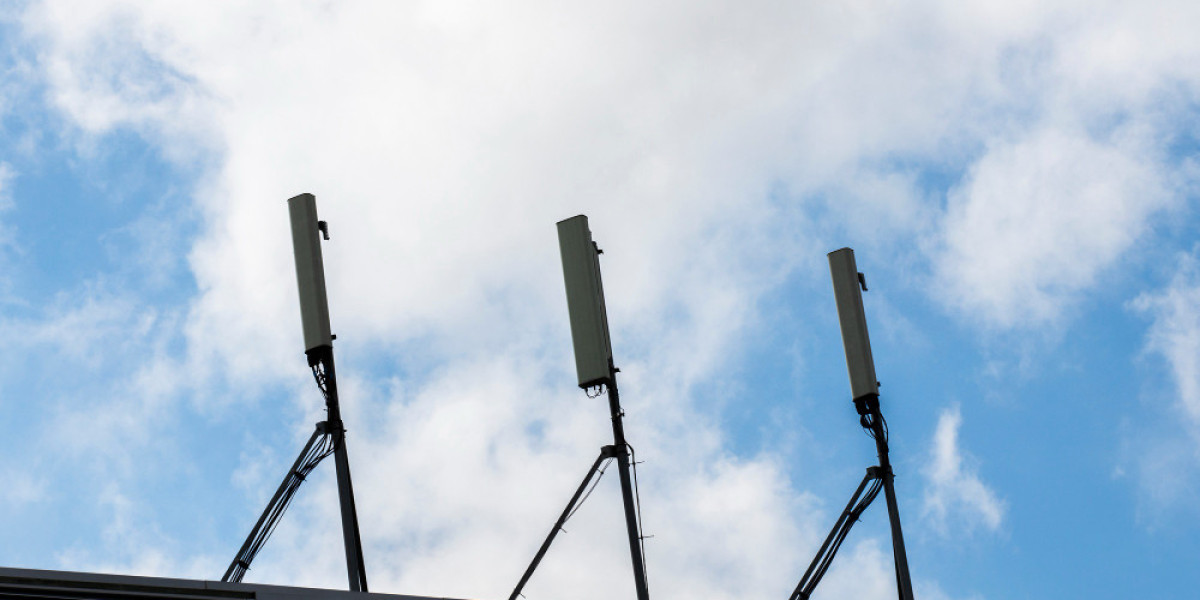
Why Your Building's Wireless Coverage Problem Isn't Going Away on Its Own
Walk through any large commercial building in the United States and you'll find the same pattern: solid signal in the lobby, spotty coverage in the conference rooms, and virtually nothing in the stairwells, parking garage, or basement. People hold their phones up near windows, step outside to take calls, and miss notifications while sitting at their desks.
This isn't a carrier problem. It's a building problem. And it's one that a well-designed cellular distributed antenna system is built to solve completely.
If you manage, own, or develop commercial real estate — office towers, healthcare facilities, hotels, stadiums, universities, or mixed-use developments — understanding how cellular DAS works and why it matters for your building is no longer optional knowledge. It's fundamental to delivering the connectivity experience that tenants, guests, employees, and first responders increasingly depend on.
This guide covers everything you need to know, from how the technology works to what the installation process looks like and why the regulatory landscape makes proactive action the smart move.
What a Cellular Distributed Antenna System Actually Is
The name is descriptive if you unpack it. A cellular distributed antenna system is a network of small, strategically placed antennas installed throughout a building and connected to a centralized signal source — either a direct connection to carrier networks or an on-site signal amplification system. Instead of relying on a single cell tower signal that may struggle to penetrate your building's walls and floors, the DAS creates multiple localized signal distribution points that blanket every corner of the structure with consistent, strong cellular coverage.
Think of it as bringing the cell tower inside — distributing its signal through the building's own infrastructure rather than hoping the outdoor signal is strong enough to reach every occupied space.
Passive versus active systems
There are two primary DAS architectures worth understanding. Passive distributed antenna systems use coaxial cable and splitters to distribute a signal from an amplifier throughout the building. They're simpler and less expensive for smaller applications. Active distributed antenna systems convert the radio frequency signal to digital, transport it via fiber optic cable to remote units throughout the building, and reconvert it at each antenna location. Active systems scale better for large, complex buildings and support more carriers and frequency bands simultaneously.
Hybrid systems
Many modern deployments use a hybrid approach that combines elements of both architectures to optimize performance, coverage, and cost across complex building footprints. The right architecture depends on building size, construction materials, carrier requirements, and the specific coverage and capacity goals the system needs to meet.
The Problem DAS Solves: More Than Just Dead Zones
Poor in-building wireless coverage has real costs that go beyond the inconvenience of dropped calls.
Productivity and tenant satisfaction
In commercial office buildings, reliable cellular connectivity is as much a basic expectation as working elevators. Tenants negotiate lease renewals with connectivity as a factor. Companies evaluating office space assess cellular signal quality as part of the walkthrough. A building that can't deliver consistent connectivity is at a competitive disadvantage in leasing conversations — and that disadvantage compounds as workforce expectations around seamless mobile connectivity continue to rise.
Healthcare and critical operations
In hospitals and healthcare facilities, cellular connectivity isn't a convenience — it's part of the operational infrastructure. Clinical staff rely on mobile devices for patient communication, medication management, and coordination. Patient experience scores are affected by whether family members can make calls from the waiting room. And in critical situations, communication reliability is literally a patient safety issue.
Hotels and hospitality
Guest experience in hospitality is shaped by countless touchpoints, and reliable in-room cellular signal is one of the most consistently mentioned factors in guest reviews and satisfaction surveys. A hotel that delivers five-star service but has spotty cellular coverage in half its rooms is sending a mixed message to guests who depend on their phones for everything.
First Responder Coverage: The Regulatory Reality
Here's where the conversation shifts from preference to requirement. Across the United States, fire codes and building codes are increasingly mandating that commercial buildings maintain reliable in-building coverage for public safety communications — specifically for first responder radio systems.
ERRCS — Emergency Responder Radio Communication Systems — are the public safety radio systems that firefighters, police, and emergency medical services rely on when operating inside buildings. When first responders enter a structure for an emergency, their ability to communicate with each other and with command outside the building can be the difference between a controlled response and a tragedy.
Many jurisdictions now require new buildings above a certain size to demonstrate compliance with minimum signal strength standards for first responder radio systems. Existing buildings are increasingly facing retrofit requirements as local fire marshals and building code authorities enforce updated standards. Failure to comply can result in certificate of occupancy issues, failed inspections, and in some cases, liability exposure if a communication failure during an emergency is linked to inadequate in-building coverage infrastructure.
A cellular distributed antenna system that is properly designed and integrated can support both commercial cellular coverage and public safety radio requirements — addressing both the tenant experience objective and the regulatory compliance mandate in a single infrastructure investment.
How a DAS Installation Actually Works
Understanding the process helps building owners plan effectively and set realistic expectations.
Site survey and RF assessment
Every quality DAS installation begins with a thorough radio frequency survey of the existing building. This documents current signal levels from all carriers throughout the structure, identifies coverage gaps, maps building construction materials that affect signal propagation, and establishes the baseline the design must improve upon. Without this data, any system design is guesswork.
System design and carrier coordination
The design phase produces a detailed specification of antenna placement, cable routing, head-end equipment location, and expected signal coverage at every point in the building. For carrier-connected systems, this phase also involves coordinating with wireless carriers to establish the signal source agreements that allow their networks to be distributed through your building's infrastructure. Carrier coordination can be one of the longer elements of the timeline and benefits from working with installers who have established carrier relationships.
Installation and commissioning
Physical installation involves running cable infrastructure through the building — often through existing conduit pathways — mounting antennas at specified locations, and installing head-end equipment in a dedicated telecom space. Commissioning involves testing signal levels throughout the building against the design specifications and making adjustments until performance meets requirements.
Ongoing monitoring and maintenance
A well-designed distributed antenna system includes remote monitoring capability that allows performance to be tracked continuously. Carrier network changes, building modifications, and equipment degradation can all affect system performance over time. Proactive monitoring catches issues before they become coverage complaints.
What Buildings Need DAS Most Urgently
While any large building benefits from a properly designed cellular DAS, certain building types have particularly urgent need.
Large commercial office towers with multiple floors, structural concrete, and low-e glass — all of which impede outdoor signal penetration — experience the most severe coverage challenges. Healthcare facilities, where communication reliability is operationally and clinically critical, have among the strongest ROI cases for DAS investment. Hotels and convention centers, where guest experience directly affects revenue and reputation, have strong business cases. And any building subject to fire code ERRCS requirements — which is an expanding universe as jurisdictions update their codes — faces a compliance-driven timeline regardless of the commercial connectivity argument.
Choosing the Right DAS Partner
The quality of a cellular DAS installation depends enormously on the expertise of the team designing and installing it. This is not a commodity service where the lowest bid wins. Key questions to ask any potential DAS provider include: What carrier relationships do they have, and can they manage the carrier coordination process? Do they have specific experience with buildings of your type and size? Can they handle both commercial cellular and public safety radio requirements in an integrated system? What does their commissioning and ongoing support process look like?
References from comparable completed projects are the most reliable indicator of capability. Ask for them and follow up on them seriously.
Your Building Deserves Reliable Coverage — And So Do Your Occupants
Whether you're driven by tenant expectations, operational requirements, regulatory compliance, or all three — the case for investing in a cellular distributed antenna system for your building is clear and compelling.
Don't wait for a failed fire inspection, a lost lease renewal, or an emergency communication breakdown to make this a priority. The right time to act is before those events, not after.
Connect with a certified DAS design and installation specialist in the US today. Get a professional RF assessment of your building, understand your options, and make an informed decision about the wireless infrastructure investment that protects your building's value and the people inside it.
Schedule your building RF assessment today — and take the first step toward coverage you can count on.






