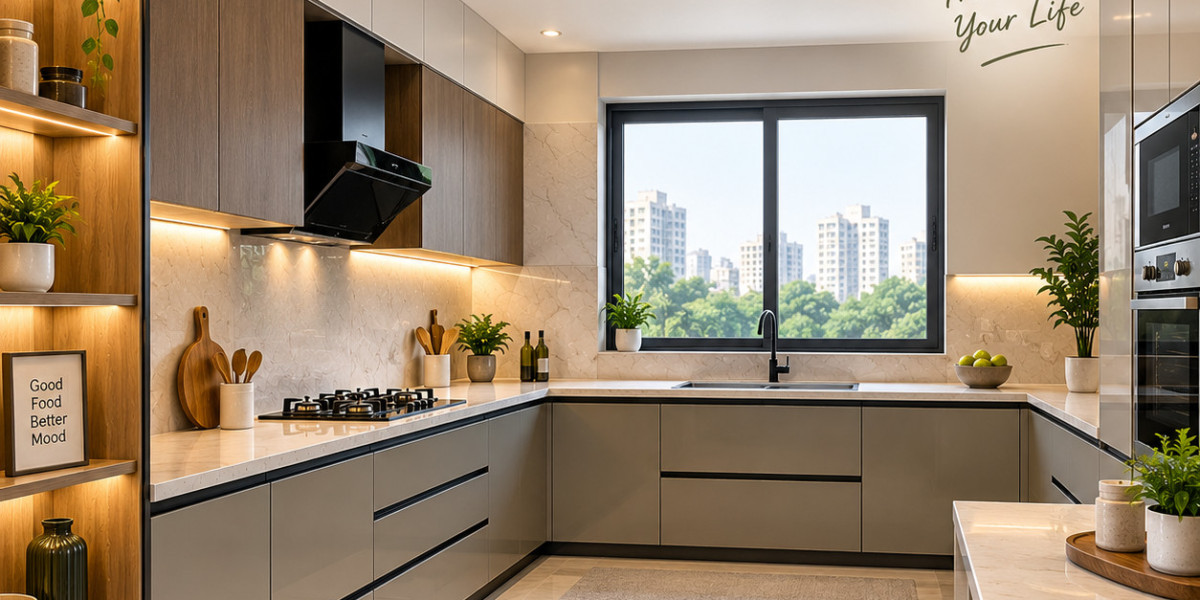
A modular kitchen is expected to handle repeated daily use for many years. Cabinets are opened and closed multiple times a day, countertops are exposed to food preparation, sinks encounter water continuously, and appliances generate heat and moisture. Because of this, kitchen planning should consider more than appearance.
A kitchen that looks attractive when newly installed may become difficult to use if its hardware wears quickly, storage is poorly organized, or important components cannot be repaired without major dismantling.
For homeowners researching modular kitchen manufacturers in Noida, understanding durability, maintenance and repairability can make the selection process more objective. Instead of evaluating a kitchen only through colour, finish or photographs, homeowners can examine how its materials, construction and components are expected to perform over time.
This guide explains the major factors that influence the long-term usability of a modular kitchen.
Think About the Kitchen as a Long-Term System
A modular kitchen is made up of multiple interconnected components.
These include:
- Cabinet carcasses
- Shutters
- Shelves
- Drawers
- Hinges
- Channels
- Baskets
- Countertops
- Sink systems
- Plumbing
- Electrical connections
- Appliances
Each component has a different function and may experience different levels of wear.
For example, a drawer used several times a day experiences considerably more movement than a cabinet storing occasional serving dishes.
A durable kitchen therefore requires appropriate specifications for different applications rather than identical materials and hardware everywhere.
Start With Actual Household Requirements
Before selecting materials, identify how the kitchen will be used.
Consider:
- How many people cook regularly?
- How frequently is the kitchen used?
- Is heavy Indian cooking common?
- How much cookware needs to be stored?
- Which appliances are used every day?
- How much grocery storage is required?
- Is the kitchen shared by several people?
A kitchen used for extensive daily cooking may require different storage and hardware choices from a kitchen used mainly for light meal preparation.
This user-based approach is more useful than selecting a standard design simply because it looks attractive.
Understand the Cabinet Carcass
The cabinet carcass forms the structural body of the kitchen.
It supports shelves, drawers, shutters and stored items.
Common board materials include:
- Plywood
- MDF
- Particle board
- Other engineered wood products
The appropriate material depends on the application, construction method, environmental conditions and budget.
When comparing Top modular kitchen manufacturers Noida, ask for the exact material specifications instead of relying on broad descriptions such as "premium quality."
Also check whether different components use different materials.
The carcass, shutters, shelves and back panels may have different requirements.
Board Thickness Matters
Thickness should be evaluated according to the function of each component.
A shelf carrying lightweight containers does not necessarily have the same structural requirements as a large panel supporting a heavily loaded storage section.
Ask about the thickness of:
- Side panels
- Bottom panels
- Shelves
- Shutters
- Drawer components
- Back panels
Clear specifications make it easier to compare different quotations.
Moisture Management Is Important
Water is one of the most important environmental factors in a kitchen.
The sink area, dishwasher, water purifier and plumbing connections can expose nearby cabinets to moisture.
Good kitchen planning should therefore consider:
- Proper plumbing connections
- Sealing where required
- Water-resistant specifications appropriate to the application
- Easy access for leak inspection
- Adequate ventilation
Even moisture-resistant materials should not be treated as waterproof under every condition.
The best protection is a combination of appropriate material selection, proper installation and prompt repair of leaks.
Pay Special Attention to the Sink Cabinet
The cabinet below the sink has a unique environment because it contains plumbing.
It may need to accommodate:
- Water inlet pipes
- Drain pipes
- Waste connections
- Filters
- Cleaning supplies
- Waste-management systems
Do not overload this area with storage that makes plumbing inaccessible.
A small leak can become a major problem if it remains unnoticed because the entire cabinet is packed with objects.
Accessibility is therefore part of durability.
Hardware Determines Everyday Performance
Cabinet hardware is exposed to repeated movement.
Important components include:
- Hinges
- Drawer channels
- Sliding systems
- Lift-up mechanisms
- Basket runners
- Handles
When evaluating the Best modular kitchen manufacturers in Noida, homeowners should ask which hardware is being used and whether the specification matches the expected load and frequency of use.
A large drawer carrying heavy cookware needs suitable hardware.
Similarly, tall shutters may require appropriate hinge configurations.
The goal is not necessarily to select the most expensive hardware but to use hardware appropriate for its intended application.
Soft-Close Mechanisms Are Functional Features
Soft-close systems can reduce the force with which doors and drawers are closed.
They can improve the everyday experience of using the kitchen and reduce repeated impact.
However, a soft-close mechanism is still a mechanical component and may eventually require adjustment or replacement.
When specifying such systems, homeowners should understand:
- Which drawers include them
- Which shutters include them
- What load the mechanism supports
- Whether replacement components are available
This provides a more realistic understanding of long-term maintenance.
Plan Shelves According to Load
Shelves are often treated as simple horizontal panels, but their requirements depend on what they store.
Heavy cookware, bulk groceries and appliances can create significant loads.
Before filling a kitchen, check the manufacturer's guidance for shelf loading where available.
Adjustable shelves can also provide flexibility as storage requirements change.
Rather than creating one large shelf for everything, dividing storage according to weight and object size can improve organization.
Choose Countertops Based on Usage
The countertop experiences:
- Cutting
- Mixing
- Cooking-related activity
- Water exposure
- Food spills
- Cleaning
Different countertop materials have different characteristics and maintenance requirements.
When selecting a countertop, consider:
- Resistance to everyday wear
- Cleaning requirements
- Heat exposure
- Water exposure
- Joint placement
- Edge treatment
- Repair considerations
The correct choice depends on the material, household use and installation conditions.
Consider the Finish Separately
The surface finish determines how the kitchen looks, but it also affects cleaning and everyday maintenance.
Common finishes may include different laminate, acrylic-type, veneer or other decorative surfaces.
Instead of asking which finish is "best," consider:
- How frequently the kitchen is used
- How much cleaning is expected
- Whether fingerprints are a concern
- Exposure to moisture
- Exposure to heat
- Ease of replacement or repair
A practical finish is one that suits the household rather than simply following a design trend.
Design for Repairability
Repairability is an important but often overlooked part of modular furniture.
Some components naturally experience wear over time.
These may include:
- Hinges
- Drawer channels
- Sliding rollers
- Handles
- Baskets
- Seals
A repair-friendly kitchen should allow commonly replaceable components to be serviced without dismantling large sections unnecessarily.
This can reduce future maintenance effort and expense.
When comparing manufacturers, ask whether individual hardware components can be replaced.
Plan Electrical Services for Future Maintenance
Electrical connections should not only be convenient during installation.
They should remain reasonably accessible for future servicing.
Before the kitchen is manufactured, confirm the locations of:
- Refrigerator socket
- Oven connection
- Microwave point
- Chimney supply
- Water purifier point
- Countertop sockets
- Lighting connections
Electrical work should be performed by qualified professionals and follow applicable safety requirements.
Do not assume that a hidden socket is automatically a better-designed socket.
Accessibility matters when appliances need to be removed or serviced.
Think About Appliance Replacement
Kitchen appliances do not necessarily have the same lifespan as cabinets.
A refrigerator, oven, dishwasher or microwave may eventually be replaced.
Cabinet openings should therefore be designed around confirmed appliance dimensions while allowing reasonable access for installation and removal.
A built-in appliance should not be installed in a way that makes future replacement unnecessarily difficult.
This is another reason accurate appliance information should be available before cabinet manufacturing.
Leave Access for Plumbing
Plumbing should be planned with maintenance in mind.
The sink and related water connections should remain accessible enough for inspection.
If a dishwasher or water purifier is installed, its inlet and drainage connections should also be considered.
A kitchen should not be designed so that a minor plumbing repair requires dismantling multiple cabinets.
Consider Ventilation and Heat
The cooking area experiences heat, steam and airborne particles.
A suitable ventilation system can help manage the kitchen environment.
The hob, chimney and surrounding cabinets should be planned together according to the appliance manufacturer's requirements.
Do not reduce required clearances simply to create additional storage.
Safety and correct appliance installation should take priority over maximizing cabinet volume.
Design for Changing Storage Needs
Households change over time.
People may purchase new appliances, change cooking habits, increase grocery storage or require additional space for serving items.
A kitchen with some flexible storage can adapt more easily.
Useful features may include:
- Adjustable shelves
- Flexible drawer configurations
- General-purpose cabinets
- Modular accessories
- Replaceable hardware
Not every component needs to be adjustable. The goal is simply to avoid making the entire kitchen dependent on today's exact requirements.
Avoid Over-Optimizing Every Cabinet
More storage is not always better.
If every available area is filled with specialized compartments, the kitchen may become difficult to modify later.
For example, a highly specific storage section designed for one appliance may become useless when that appliance is replaced.
A combination of specialized and general-purpose storage often provides better long-term flexibility.
Maintenance Should Be Part of the Design
A kitchen will eventually need cleaning and minor maintenance.
Ask whether the design allows easy access to:
- Sink plumbing
- Electrical connections
- Drawer hardware
- Hinges
- Sliding systems
- Upper storage
- Appliance service areas
Surfaces should also be selected with realistic cleaning routines in mind.
A kitchen that requires complicated maintenance every week may become frustrating even if the initial design is attractive.
A Practical Long-Term Kitchen Checklist
Before finalizing a modular kitchen, review the following:
Materials
- Is the board material clearly specified?
- Are thicknesses documented?
- Are different components specified appropriately?
Hardware
- Are hinges and drawer channels identified?
- Are load requirements considered?
- Can hardware be replaced?
Countertop
- Is the material suitable for the intended use?
- Are joints and edges properly planned?
Services
- Are plumbing connections accessible?
- Are electrical points appropriately located?
- Is ventilation properly coordinated?
Appliances
- Are actual appliance dimensions confirmed?
- Can appliances be removed for future replacement?
Flexibility
- Can shelves be adjusted?
- Is there some spare storage capacity?
- Can the kitchen accommodate changing requirements?
Maintenance
- Can surfaces be cleaned?
- Can common hardware be serviced?
- Can leaks be detected and repaired quickly?
How to Compare Modular Kitchen Manufacturers
People searching for modular kitchen manufacturers in Noida may compare portfolios, reviews, prices and finishes.
Those factors can provide useful context, but technical specifications deserve equal attention.
Ask manufacturers to explain:
- What materials are being proposed
- Which hardware is included
- How the kitchen will be installed
- How plumbing and electrical services will be coordinated
- What maintenance is expected
- What warranty is provided
- How replacement components are handled
A detailed quotation and clearly documented specifications make comparisons more meaningful.
Final Thoughts
A modular kitchen should be planned for the years after installation, not only for the day it is completed.
Materials, hardware, moisture management, countertop selection, appliance integration, repairability and service access all influence long-term performance.
For homeowners researching modular kitchen manufacturers in Noida, comparing Top modular kitchen manufacturers Noida, or evaluating claims about the Best modular kitchen manufacturers in Noida, a specification-based approach can provide more useful information than promotional descriptions alone.
Look at how the kitchen is constructed, how frequently used components are supported, how services can be maintained and whether the storage can adapt to changing household needs.
A durable kitchen is not necessarily one with the most expensive materials or the largest number of accessories. It is one where each component has been selected for its intended purpose and where maintenance, repair and future use have been considered from the beginning.
Author Bio
The author is a residential interior and modular kitchen specialist with experience in kitchen planning, cabinetry, material selection, hardware, appliance integration, ergonomics and space optimization. The approach focuses on practical, experience-based and technically informed guidance that helps homeowners evaluate modular kitchens according to construction quality, functionality, maintenance, safety and long-term usability.